Why Sally Port at Fort Canning Park matters.
Sally Port at Fort Canning Park is a concealed military passage where Fort Canning's colonial heritage, defensive engineering, British military strategy, and living history preserve one of Singapore's most intriguing nineteenth-century fortification remnants.
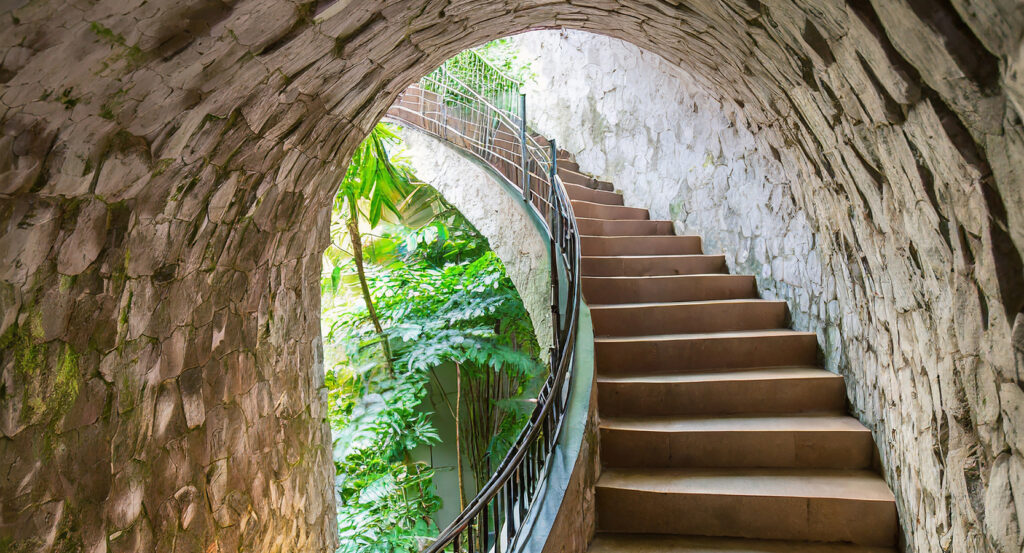
Set along Fort Canning Rise near Canning Walk and just steps from Fort Gate, this discreet brick-lined tunnel slips quietly beneath the former fortress through a hidden passage once reserved for military movement beyond the fort's defensive walls. Curving masonry, weathered brickwork, vaulted construction, and surrounding tropical vegetation create an atmosphere where military engineering and nature exist in remarkable harmony. Every step through the passage evokes the strategic purpose of a structure designed to remain largely invisible while supporting the defense of colonial Singapore. The result is a landmark defined by military ingenuity, architectural preservation, and one of Fort Canning Park's most compelling historic survivals.
What defines Sally Port at Fort Canning Park.
Sally Port at Fort Canning Park is best known for being constructed between 1859 and 1861 as one of three concealed military exits incorporated into the British fortress atop Fort Canning Hill, allowing soldiers to leave or reinforce the fort without exposing themselves to enemy observation while forming an essential component of Singapore's principal colonial defensive installation. Following the fort's decommissioning in 1907 and the demolition of most of its military structures in 1926, the Sally Port was sealed for decades before being carefully reopened during conservation works in the 1980s, becoming one of the few surviving architectural elements that directly demonstrate the operational design of nineteenth-century Fort Canning.
The brick-vaulted passage demonstrates the practical military engineering of Victorian fortifications, where concealed movement routes complemented artillery positions, magazines, defensive walls, and the principal entrance to the fortress. Today the tunnel allows visitors to experience a remarkably authentic fragment of Singapore's colonial military landscape while revealing how defensive architecture balanced security, mobility, and strategic planning on one of the island's most historically significant hills. Every preserved brick and carefully restored surface reinforces the Sally Port's importance as one of the last surviving operational features of the original Fort Canning fortress.
How Sally Port at Fort Canning Park fits.
Sally Port at Fort Canning Park works as part of an exploration through Fort Canning's extraordinary military and colonial heritage.
Begin at Fort Gate, where the fortress's surviving ceremonial entrance introduces the history of the nineteenth-century fort before descending through Sally Port to experience its concealed military passage. Continue to Battlebox, whose underground command bunker reveals the dramatic final days preceding Singapore's surrender in 1942. Conclude at Fort Canning Centre, where exhibitions and heritage displays provide broader historical context for the hill's evolution from royal seat to colonial fortress and public park. The progression moves naturally from the fortress's grand entrance to its hidden escape passage before concluding through two defining military landmarks, revealing why Sally Port remains one of Singapore's most fascinating surviving defensive structures.
Where your story begins.
Foresyte Travel reveals places that feel extraordinary long before you arrive.
Enjoy editorial crafted for luxury travelers.
Foresyte may earn a commission when you book.