Why Sazón matters.
Sazón is a distinguished Mexican fine-dining restaurant where Downtown Santa Fe's centuries-old cultural crossroads meets Fernando Olea's James Beard Award-winning culinary leadership, the regional complexity of Mexican mole and a sophisticated interpretation of Mexico's Indigenous gastronomic heritage.
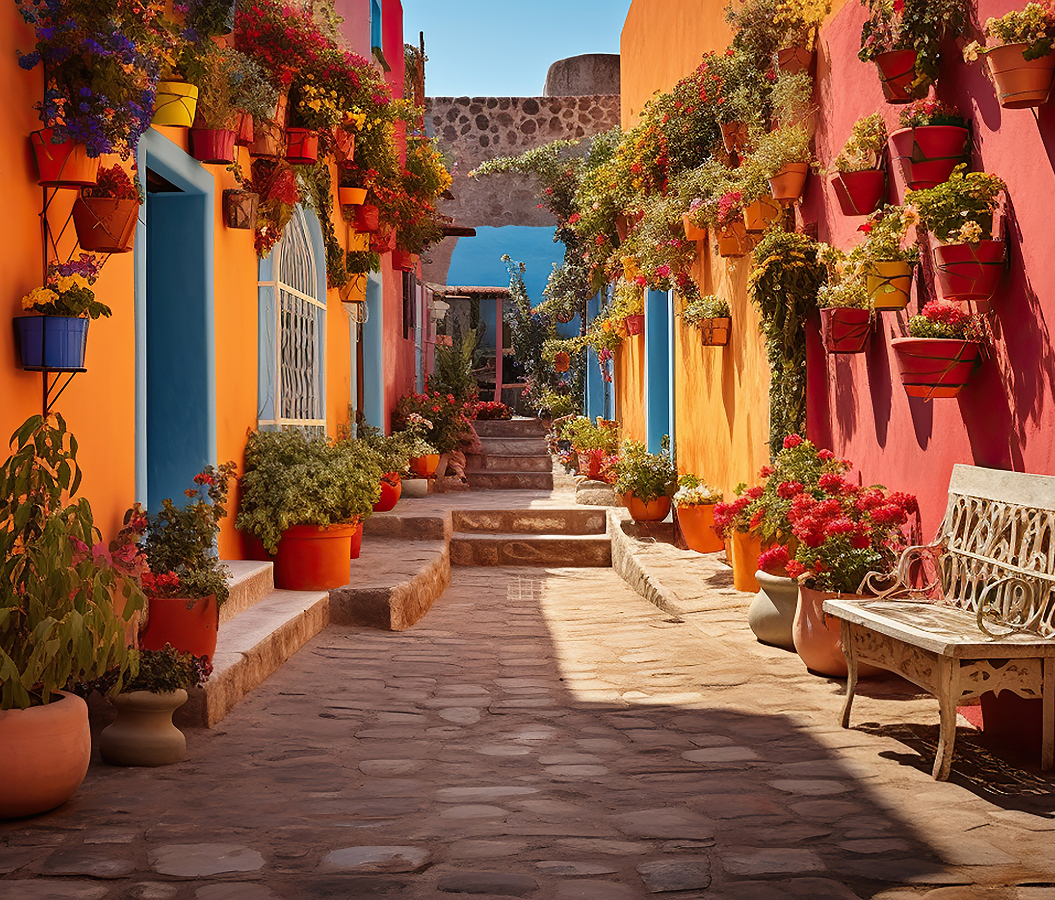
Positioned along Shelby Street near East San Francisco Street and two blocks southeast of Santa Fe Plaza, the restaurant occupies the historic commercial center of Santa Fe, between the Palace Avenue corridor, the traditional adobe buildings surrounding the Plaza and the galleries extending toward the city's eastern neighborhoods. Its intimate dining rooms combine warm lighting, richly colored walls and contemporary Mexican artwork, establishing an elegant setting within the historic downtown streetscape. Large-scale paintings introduce the colors and symbolism of Mexican culture, with carefully arranged tables and decorative details reinforcing the restaurant's formal hospitality. A prominent mural devoted to the ingredients of mole connects the dining room's visual character with the culinary traditions at the center of Olea's cooking. The result is a restaurant whose intimate architectural setting and substantial collection of Mexican artwork complement an ambitious culinary program devoted to the depth and diversity of traditional Mexican cuisine.
What defines Sazón.
Sazón is best known for chef Fernando Olea's sophisticated interpretation of Mexican regional cooking, particularly his mastery of mole and his recognition as the James Beard Foundation's 2022 Best Chef: Southwest. Born in Mexico City, Olea developed his culinary perspective through the traditions of Central Mexico, where complex sauces, Indigenous ingredients and elaborate celebratory preparations occupy important positions in regional cooking. He arrived in Santa Fe in 1991, beginning a professional relationship with the city that subsequently shaped his approach to Mexican cuisine. His work brought the culinary traditions of his birthplace into a restaurant culture strongly associated with New Mexican chile, Pueblo foodways and Southwestern interpretations of Mexican cooking. Olea developed a distinctive approach centered on the historical diversity of Mexican gastronomy, drawing upon the ingredients and techniques of different regions to construct carefully balanced dishes. His professional reputation became particularly associated with mole, whose numerous regional variations provided an extensive foundation for culinary experimentation. In 2009, Olea created a New Mexican Mole commemorating Santa Fe's four-hundredth anniversary, connecting the culinary traditions of Mexico with the city's commemorative history. Mexican artist Federico León de la Vega subsequently presented Olea with a substantial painting illustrating the ingredients of the sauce, establishing a lasting relationship between the chef's culinary work and contemporary Mexican art. Olea's professional development culminated in Sazón, the downtown restaurant operated in partnership with Lawrence and Suzanna Becerra. The partnership combined Olea's culinary leadership with Lawrence's hospitality interests and Suzanna's distinctive interior design, creating an establishment whose artistic character became closely associated with its cooking. Sazón developed a reputation for sophisticated Mexican dining through a deliberately focused menu and an extensive repertoire of traditional sauces. Its culinary ambitions also extended into a nine-course degustación program, introducing a formal tasting format devoted to the sequence of Mexican flavors and ingredients. The restaurant's growing national reputation brought Olea recognition as a James Beard Award semifinalist in 2020, establishing his position among the Southwest's leading chefs. He subsequently advanced to the regional finals in 2022, joining Santa Fe chef Martín Rios and Albuquerque's Salazar brothers among the five nominees. At the James Beard Restaurant and Chef Awards ceremony in Chicago on June 13, 2022, Olea won Best Chef: Southwest, becoming Santa Fe's first recipient of the regional distinction since Mark Kiffin in 2005. His achievement followed Mark Miller's 1996 recognition at Coyote Cafe, connecting Olea with an influential succession of chefs who advanced Santa Fe's national culinary reputation. The award brought particular attention to traditional Mexican cooking within a regional category encompassing New Mexico, Arizona, Nevada and Oklahoma. Sazón's significance rests on this sustained development of Mexican gastronomy in Santa Fe, establishing Olea's mole-centered cooking as an important contribution to the city's contemporary fine-dining culture.
Fernando Olea's cooking develops through the historical complexity of Mexican mole, treating sauces as expressions of regional agriculture, Indigenous culinary knowledge and centuries of cultural exchange. His approach recognizes the substantial differences among the moles of Puebla, Oaxaca and Michoacán, whose preparations draw upon distinctive combinations of chiles, seeds, nuts, spices and other ingredients. Many traditional recipes incorporate more than thirty components, requiring careful control of roasting, grinding and simmering to achieve depth and balance. Olea's mole repertoire demonstrates how sweetness, bitterness, acidity and heat develop through the interaction of these ingredients, with chocolate contributing one element within a much broader culinary structure. His interpretation of chiles en nogada provides a representative expression of Central Mexican celebratory cooking through a poblano chile filled with seasoned meats, nuts and dried fruit. A cool walnut sauce and pomegranate seeds introduce contrasting richness, sweetness and acidity, preserving the preparation's relationship with the traditional cuisine of Puebla. Enmoladas extend the restaurant's mole-centered approach through tortillas filled with Muscovy duck and sweet potatoes, accompanied by Mole Poblano. The preparation connects the natural richness of duck with the aromatic complexity of the sauce, bringing established Mexican ingredients into a refined composition. Seafood introduces a complementary dimension through Coyoacán, a shrimp enchilada accompanied by a creamy sauce of zucchini blossoms and poblano chile. The combination draws upon ingredients associated with Central Mexican markets, particularly the longstanding culinary use of squash blossoms and fresh chiles. Vegetable-centered cooking develops through Xochimilco, which presents huitlacoche over small tortillas with native spices and queso fresco. Huitlacoche, the edible fungus that develops on corn, contributes an earthy flavor and connects the dish with the agricultural importance of maize in Mexican food culture. The restaurant's nine-course degustación extends these traditions through a structured sequence that incorporates savory preparations, regional sauces and contrasting desserts. Olea's signature Sopa de Amor combines poblano cream with blue crab, amaretto foam and a dusting of cinnamon and chocolate, demonstrating his interest in unexpected relationships among familiar ingredients. The beverage program complements the cooking through Mexican wines, including producers from the Valle de Guadalupe, alongside tequila, mezcal and other agave spirits. Dedicated tastings introduce the geographical and production differences among these spirits, extending the restaurant's exploration of Mexican regional traditions beyond the kitchen. Sazón's culinary distinction emerges from this disciplined treatment of mole and Indigenous ingredients, bringing the complexity of Mexico's regional cooking into a sophisticated contemporary dining program.
How Sazón fits.
Sazón works as the dining culmination of an exploration connecting Santa Fe's Spanish colonial government, the development of Pueblo Revival architecture and the preservation of nineteenth-century religious craftsmanship, placing the restaurant within the historical institutions surrounding the city's Central Plaza.
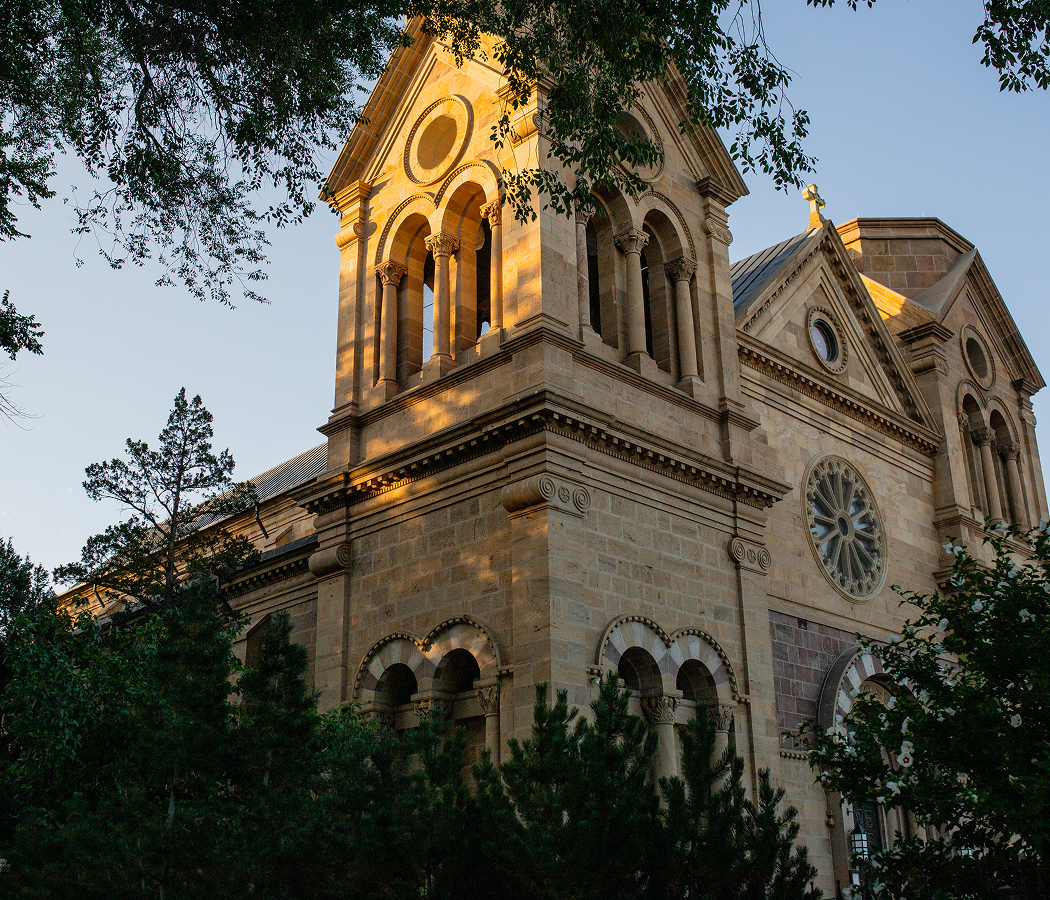
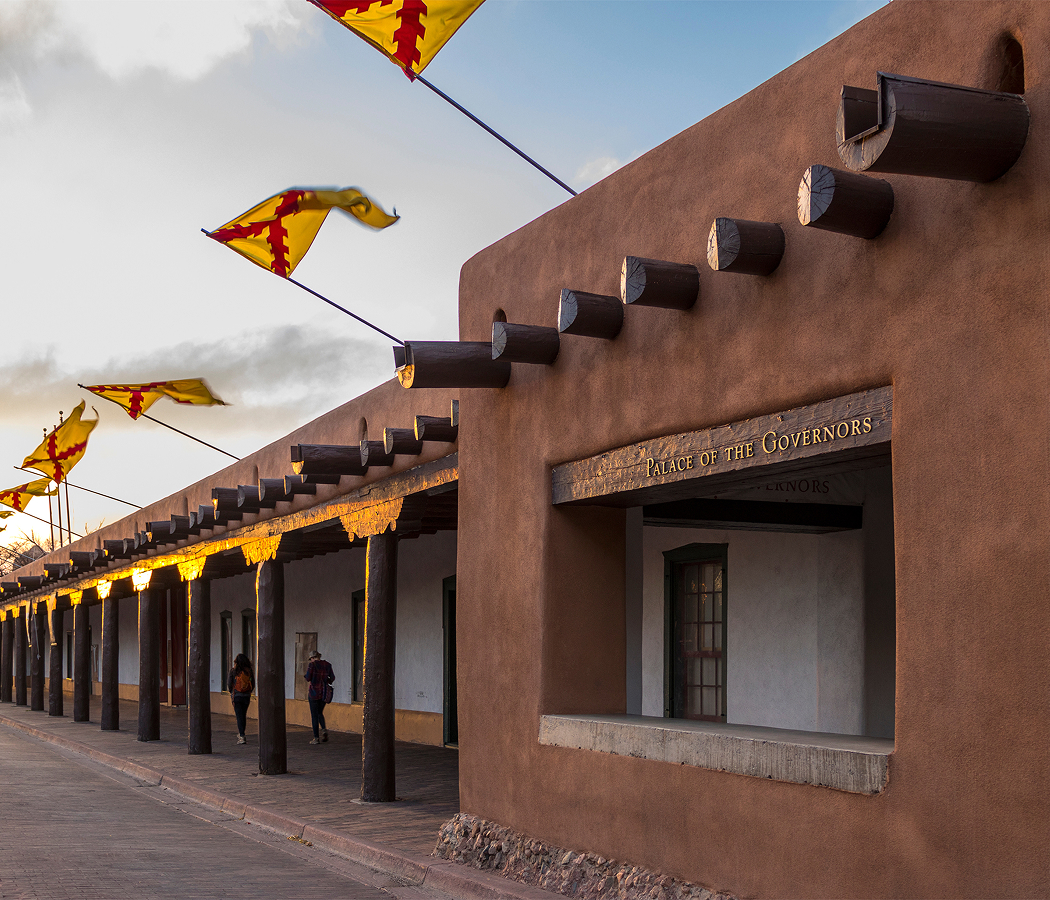
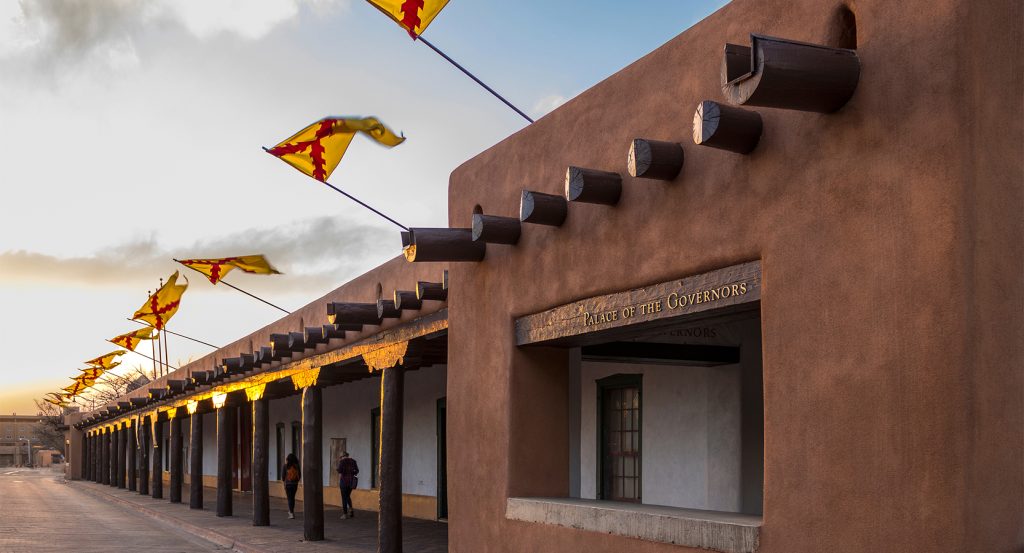
Begin at Palace of the Governors, the historic adobe building constructed in 1610 under the authority of Spanish governor Pedro de Peralta. Originally serving as the administrative center of the Spanish colony, the building subsequently accommodated Mexican officials and American territorial governors, reflecting successive changes in political authority across New Mexico. Its long northern portal became an important commercial and civic space, eventually supporting a program through which Native American artisans sell handmade jewelry and other works directly to visitors. The building entered the Museum of New Mexico system in 1909, establishing a permanent role in the preservation and interpretation of regional history. Its designation as a National Historic Landmark in 1960 recognized the architectural and historical significance of one of the oldest surviving public buildings constructed by European settlers in the continental United States. Continue to New Mexico Museum of Art, the institution established in 1917 as the Fine Art Gallery of the Museum of New Mexico. Architects Isaac Hamilton Rapp and William Morris Rapp developed its Pueblo Revival design from their earlier New Mexico pavilion at the 1915 Panama-California Exposition in San Diego. The building incorporated architectural influences from historic Pueblo and Spanish colonial structures, contributing substantially to the development of Santa Fe's distinctive regional architectural style. Its collection includes works associated with the Taos Society of Artists, Los Cinco Pintores, Georgia O'Keeffe and Gustave Baumann, connecting the institution with the development of modern art in the American Southwest. The museum's St. Francis Auditorium and central courtyard preserve important elements of its original architectural program. Conclude at Loretto Chapel, the Gothic Revival religious building completed in 1878 for the Sisters of Loretto and their educational institution. Its architectural character reflects Archbishop Jean-Baptiste Lamy's interest in European ecclesiastical design, with pointed arches, stained glass and a facade influenced by the Sainte-Chapelle in Paris. The chapel's celebrated spiral staircase ascends to the choir loft through two complete turns, supported by a curved wooden stringer and constructed using an unusual system of wooden joinery. Popular tradition associates the staircase with a mysterious carpenter who appeared following prayers to St. Joseph, although its craftsmanship belongs to the broader history of nineteenth-century woodworking. The building's preservation following the closure of the adjoining academy established an important surviving example of Gothic Revival architecture in Santa Fe. The progression connects the city's colonial administrative history with the emergence of its regional artistic institutions and concludes at a preserved nineteenth-century chapel, establishing the historical setting surrounding Sazón.
Where your story begins.
Foresyte Travel reveals places that feel extraordinary long before you arrive.
Enjoy editorial crafted for luxury travelers.
Foresyte may earn a commission when you book.