Why you should experience Shelter Cove Harbour Shops & Restaurants in South Carolina.
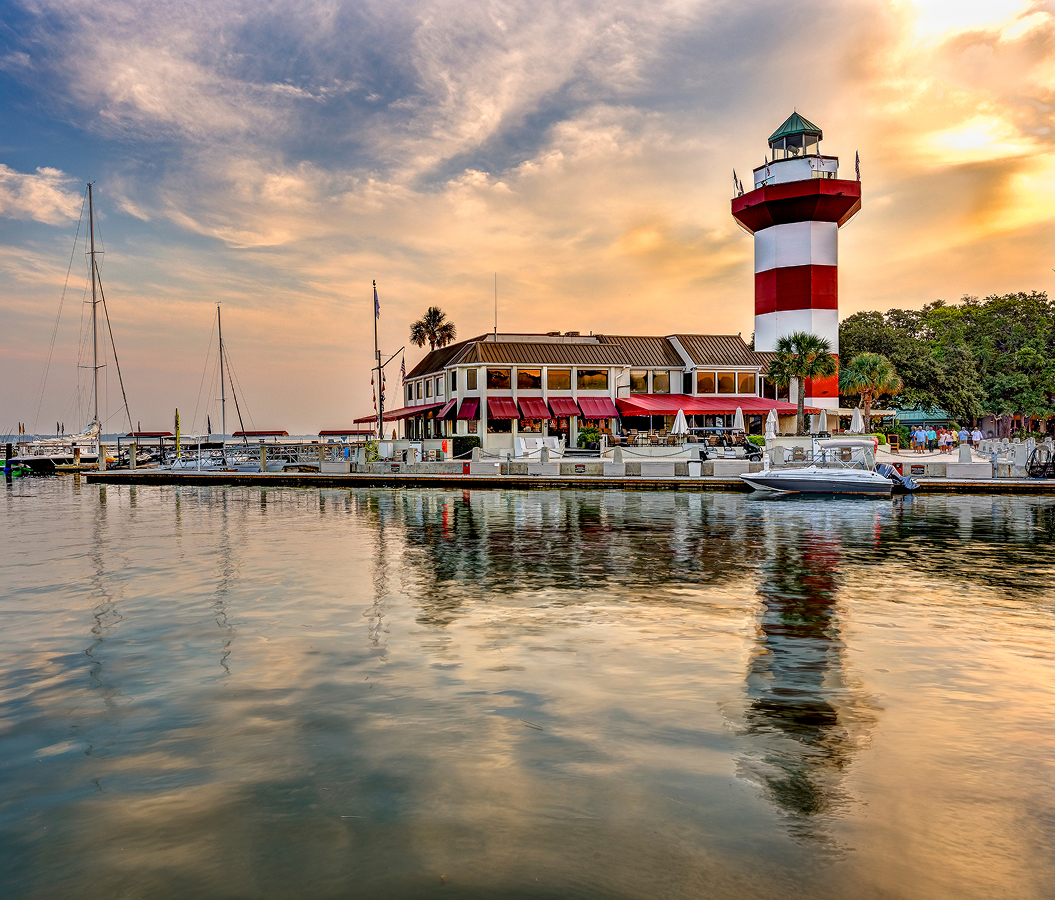
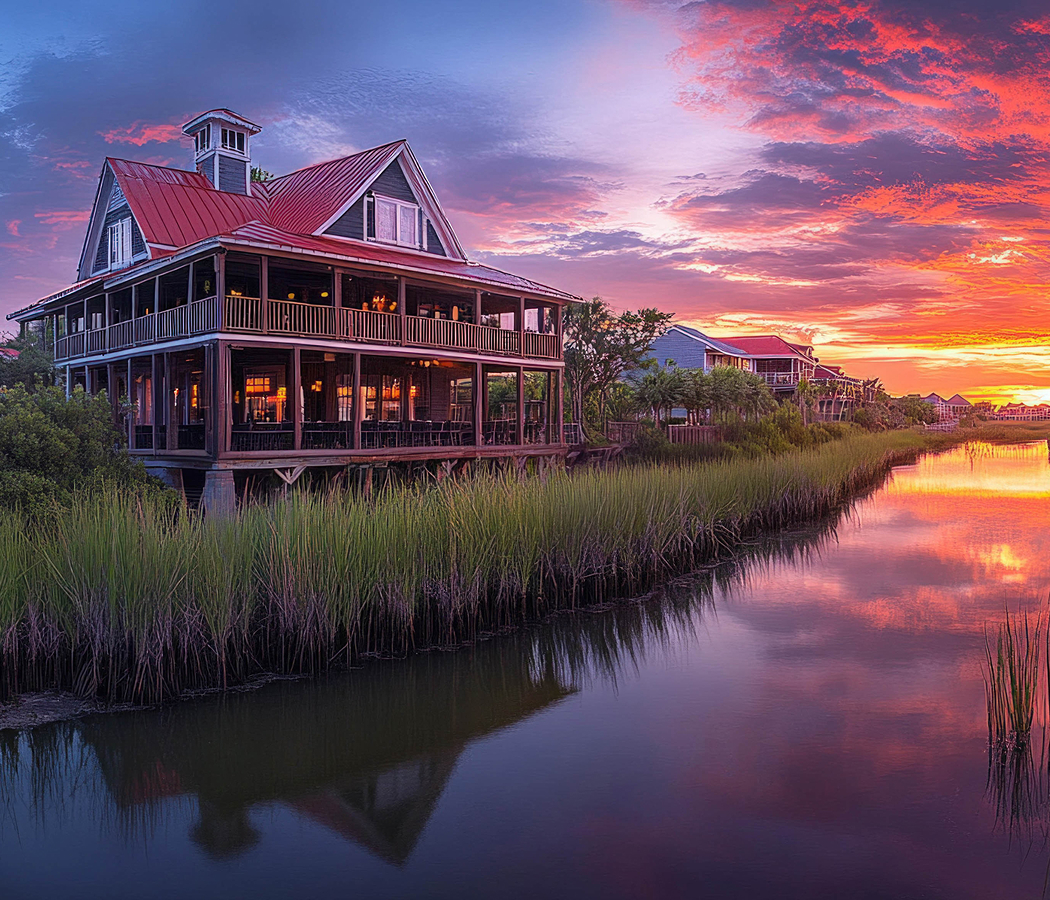
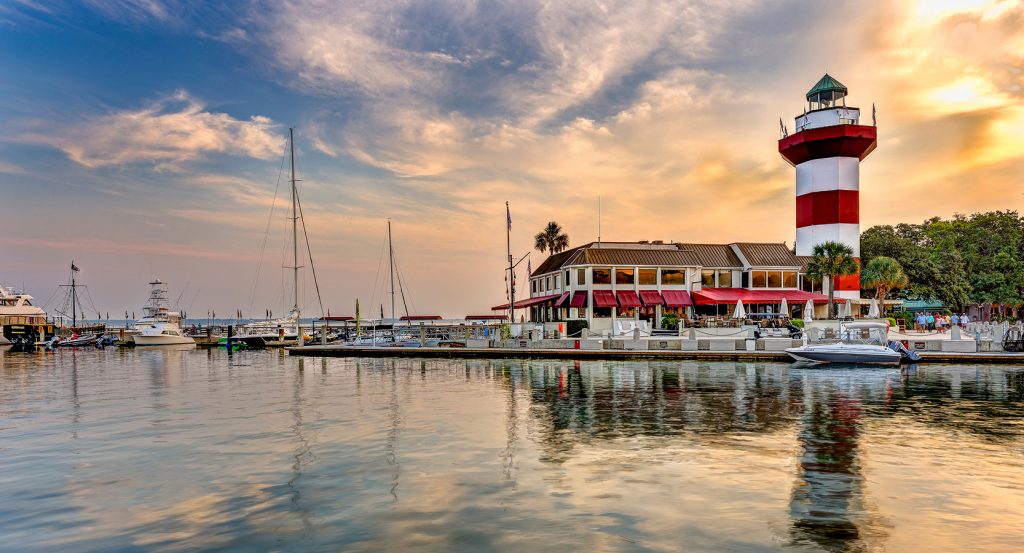
Shelter Cove Harbour Shops & Restaurants is a distinctive waterfront village where Shelter Cove's Broad Creek shoreline meets an engineered deep-water harbor, Mediterranean-style architecture and a promenade shaped around boating, dining and independent retail.
Set along Shelter Cove Lane near William Hilton Parkway and just steps from Broad Creek, the village occupies the water-facing heart of Shelter Cove, where docks extend into a protected tidal waterway bordered by marsh and the developed shoreline of Central Hilton Head. Harbourside I and II frame the principal pedestrian area with warm-toned façades, arcades, balconies and ground-level storefronts arranged directly around the marina. Restaurant terraces and shopfronts follow the water, keeping yachts, charter boats and smaller vessels continuously visible across the promenade. Eight waterfront dining operations join boutiques, galleries and specialty retailers, giving the harbor enough variety to support an extended walk before or after a meal. The result is a Shelter Cove destination whose strongest attraction comes from the direct physical union of marina activity, waterfront dining and pedestrian-scale commerce.
What you should know about Shelter Cove Harbour Shops & Restaurants.
Shelter Cove Harbour Shops & Restaurants is best known for emerging from one of Hilton Head's most consequential resort-engineering projects, which converted undeveloped Broad Creek shoreline into the commercial and recreational center of Shelter Cove. Greenwood Development shifted its attention across William Hilton Parkway from Palmetto Dunes in 1980 and began dredging the future harbor after seven years of planning and an investment exceeding $1 million; 600,000 cubic yards of excavated sand simultaneously replenished the Palmetto Dunes oceanfront. Harbourside I and II entered construction in 1982 as the first buildings surrounding the new basin, and covenants created the Shelter Cove Harbour Company that year. The first docks opened in 1983, establishing a deep-water marina that eventually reached 178 slips accommodating vessels up to 145 feet and became the largest marina on Hilton Head. Sculptor Wayne Edwards gave the development its central work of public art that same year after approaching Greenwood with a four-foot clay model of Neptune holding a trident designed to function as a sundial. Edwards spent more than a year developing the sculpture, enlisted Frank Yerkes and Richard Hamilton of Sea Island Engineering for the astronomical calculations and had the bronze cast at Johnson Atelier in Princeton, New Jersey before its August 11, 1983 dedication. The finished Neptune stands 12 feet above a 26-foot circular dial, with the trident casting the working time indicator and converting the harbor entrance into a union of sculpture and engineering. HarbourFest followed in 1988, turning the marina into a recurring summer performance site whose contemporary season extends from Memorial Day through Labor Day with live entertainment and fireworks.
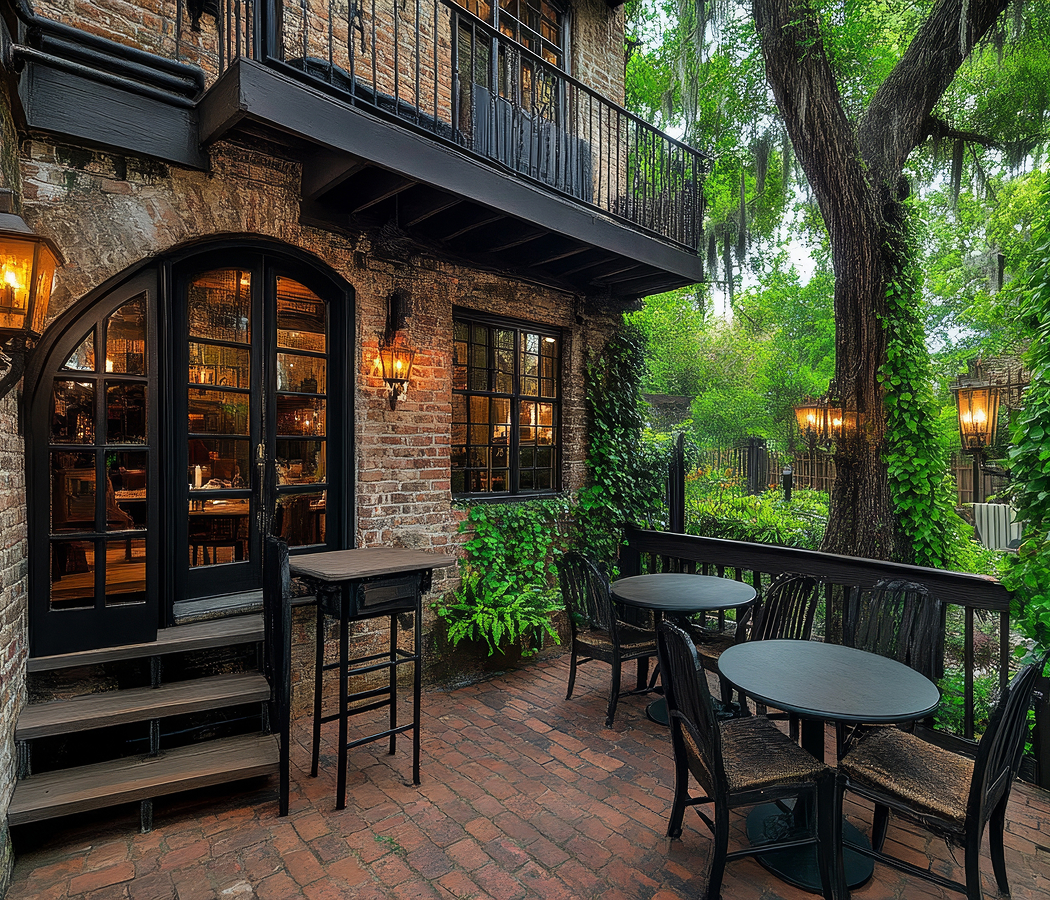
The marina supplies the organizing experience: 178 slips place recreational boats, charter vessels and larger yachts directly beside the pedestrian circuit, so movement through the village repeatedly returns to the water. Bistro 17 develops the quieter end of the dining sequence through seafood, steaks and pasta beside its covered waterfront terrace, and ELA'S On The Water pushes dinner toward fresh catch and prime cuts overlooking Broad Creek. Scott's Fish Market has spent more than three decades pairing seafood with hand-cut steaks and house-made pasta, establishing long-running continuity within the harbor's restaurant collection. San Miguel's Mexican Cafe shifts the waterfront toward margaritas, Mexican cooking and an outdoor bar, then Hilton Head Social Bakery introduces French pastry through chef Philippe Feret and Marissa Feret. Nash Gallery extends the walk beyond food through handcrafted work from more than 400 North American craftspeople spanning glass, ceramics, jewelry, furniture and metalwork. Restaurants, specialty retail and working docks consequently remain physically intertwined throughout the harbor, allowing the boats and Broad Creek shoreline to govern the visit even as individual storefronts change.
How to fold Shelter Cove Harbour Shops & Restaurants into your trip.
Shelter Cove Harbour Shops & Restaurants works as the waterfront anchor for an outing through Central Hilton Head that connects the island's visual-arts institutions, twentieth-century civic waterfront development and nineteenth-century navigation infrastructure.
Begin at Arts Center of Coastal Carolina, whose origins trace to a conversation at the home of Helen Racusin, wife of Hilton Head's first mayor, where author John Jakes became involved in the idea of establishing a permanent arts institution on an island initially envisioned partly as an artists' colony. Delos “Deke” DeLoach subsequently led the seventeen-year effort toward a dedicated facility, which opened on 4.6 acres in Shelter Cove in March 1996 with two performances by Bernadette Peters and developed into a producing regional theater with visual-arts and educational programs. Continue to Shelter Cove Community Park, officially opened on April 1, 2015 after redevelopment shifted the earlier park southwest along Broad Creek as part of the transformation surrounding Shelter Cove Towne Centre. A partnership between the Town of Hilton Head and the Towne Centre developers produced the new waterfront site, carrying the district's public gathering functions into a larger Broad Creek setting as Shelter Cove expanded beyond its original 1980s harbor. Conclude at Hilton Head Rear Range Lighthouse, constructed by the United States Lighthouse Board in 1879-1880 as part of a navigation system directing ships toward Port Royal Sound. Its cast-iron skeleton supported a light with an 87-foot focal plane visible 15 miles away; the original keeper's house and forward beacon disappeared, leaving the rear tower and brick oil house as surviving elements of the station before National Register designation in 1985. The progression moves from a seventeen-year campaign for a permanent island arts institution through Shelter Cove's twenty-first-century expansion of its Broad Creek civic waterfront into a nineteenth-century federal navigation system, connecting contemporary cultural development with the maritime geography that shaped Hilton Head long before the harbor existed.
Where your story begins.
Foresyte Travel reveals places that feel extraordinary long before you arrive.
Experience premium editorial crafted for luxury travelers.