Why you should experience Skull Creek Dockside in South Carolina.
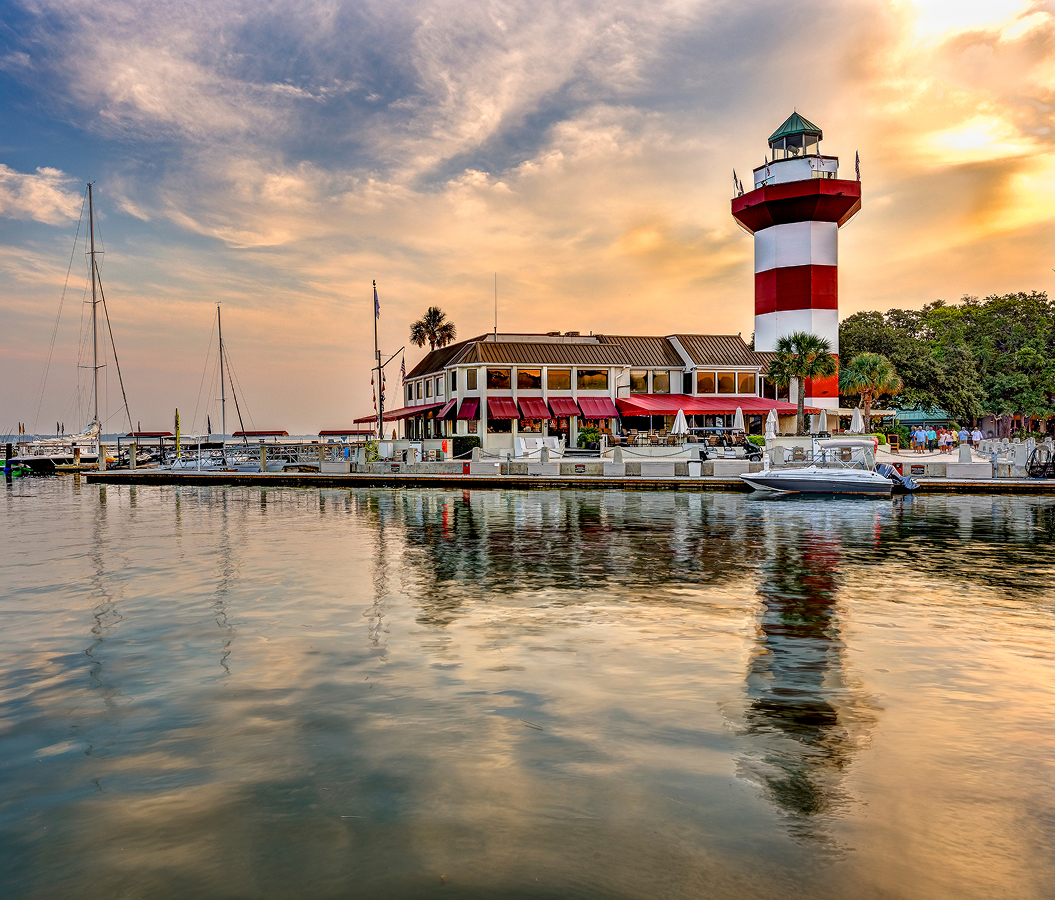
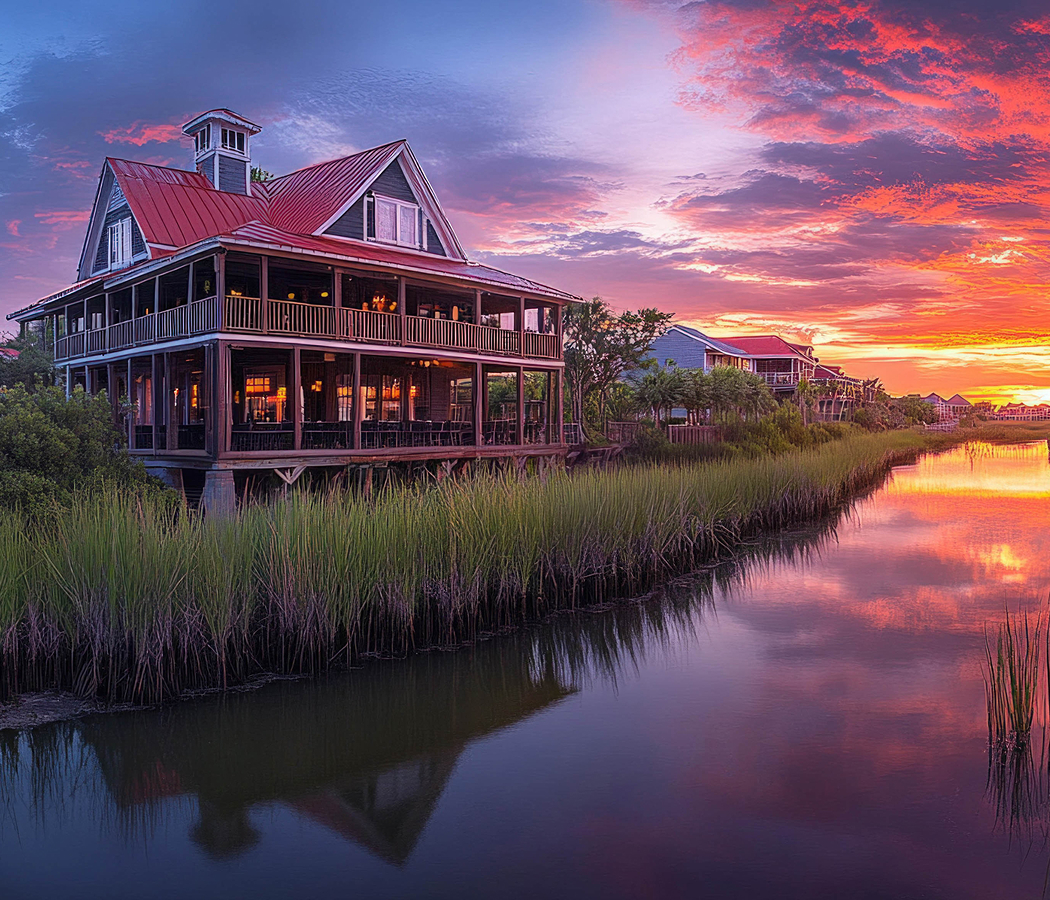
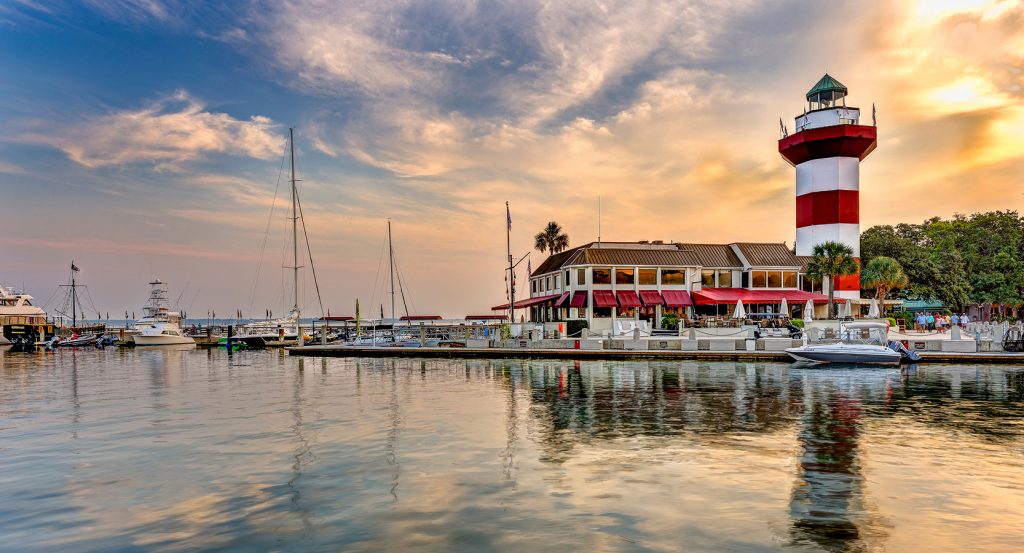
Skull Creek Dockside is a waterfront Lowcountry restaurant where Skull Creek's working-maritime character meets a river-house-inspired dining room, broad creek views and an outdoor complex built around Hilton Head's tidal setting.
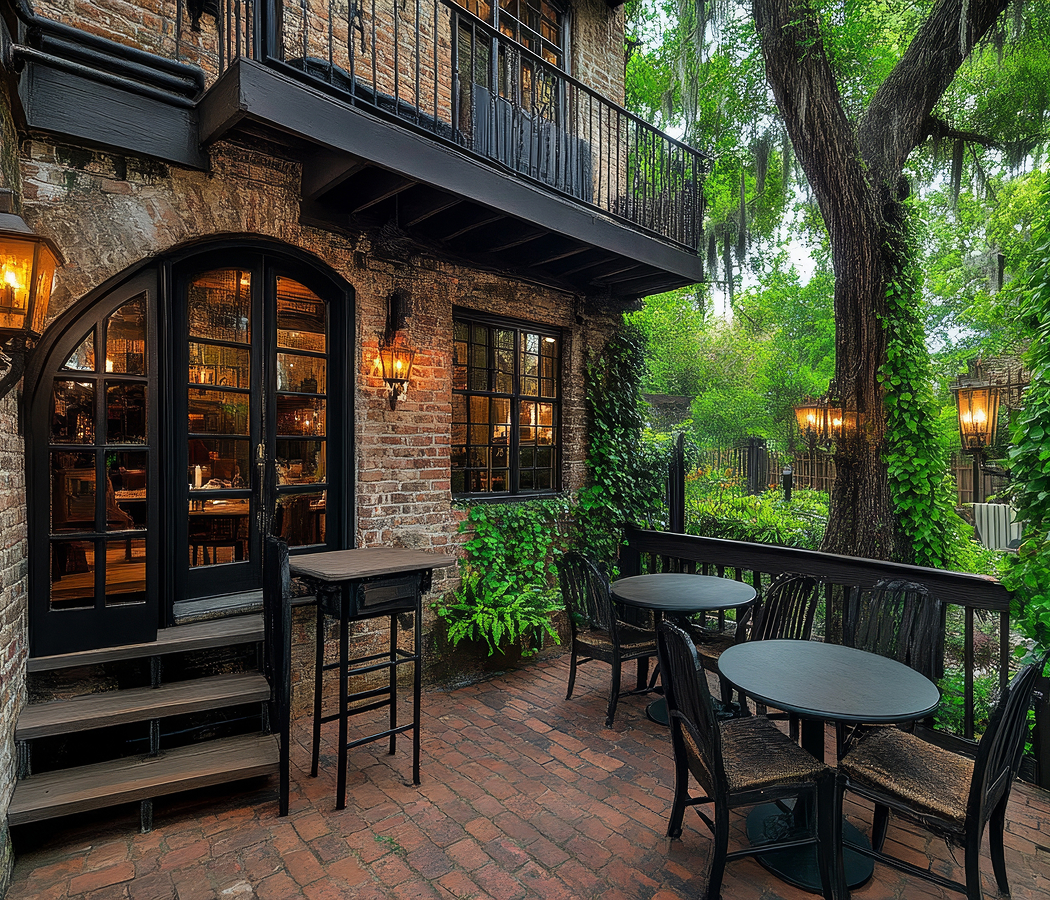
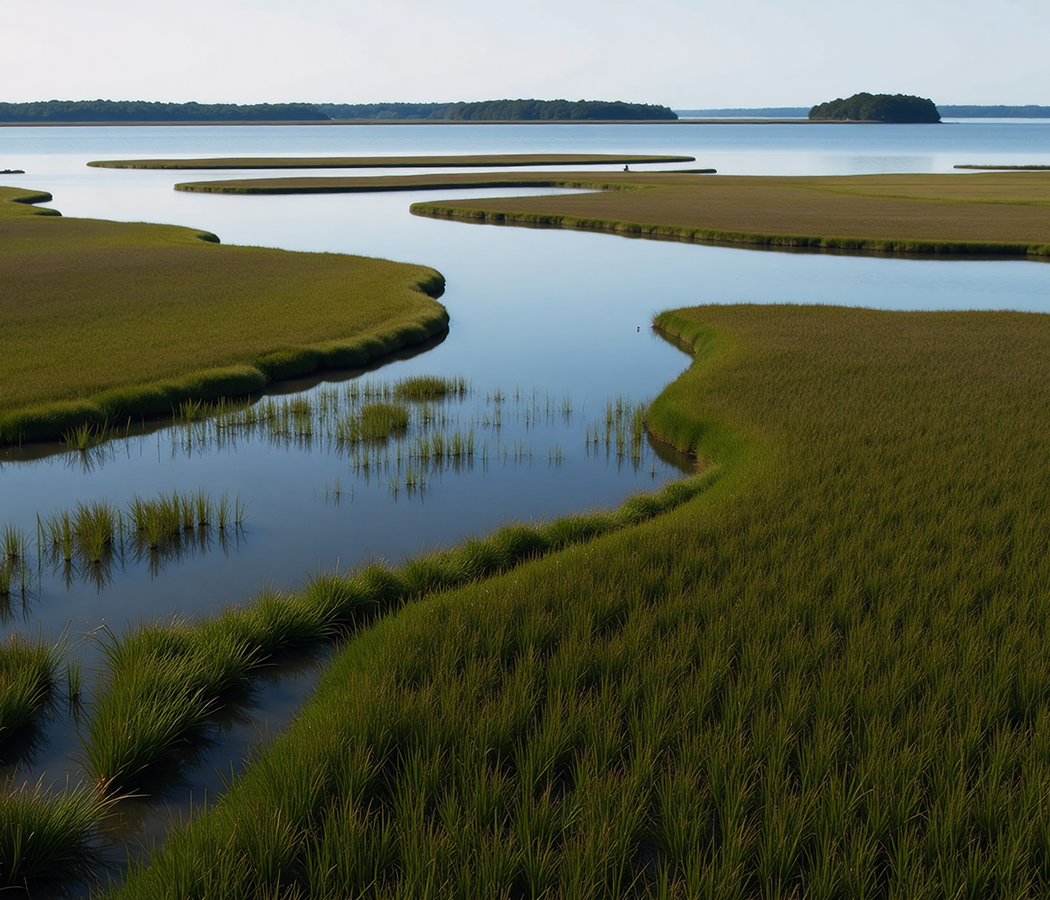
Set along Hudson Road near Squire Pope Road and just steps from Skull Creek, the restaurant occupies Hilton Head's northern shoreline where docks, charter boats and seafood businesses maintain a direct relationship with Port Royal Sound. Full-pane windows stretch across the dining room, placing the creek and its changing tidal landscape behind the interior's reclaimed wood and nautical detailing. A covered waterside patio extends that relationship outdoors, with the large Sharkbar opening the restaurant toward the rebuilt dock and western horizon. The private lower dock remains active through slips used by the North End Charter Fleet, keeping working sport-fishing boats directly within the restaurant's waterfront scene. The result is a Skull Creek restaurant where river-house architecture and an active dock place Lowcountry seafood culture directly against the water that sustains it.
What you should know about Skull Creek Dockside.
Skull Creek Dockside is best known for SERG Restaurant Group's 2017 reinvention of a familiar Skull Creek restaurant site as its eleventh original concept, combining Lowcountry seafood with a serious barbecue program under chef Alecia Angioletti. The property had previously housed Chart House, whose operation ended after Hurricane Matthew struck Hilton Head in October 2016. SERG began construction in March 2017, connecting the redevelopment with neighboring Skull Creek Boathouse and creating a second major restaurant within the group's established northern-island waterfront cluster. Dockside opened that fall, giving SERG a concept whose culinary scope reached beyond its neighboring seafood operation through Angioletti's combination of coastal cooking, steaks and smokehouse technique. Her kitchen made barbecue a principal component of the restaurant, bringing prime beef brisket, Carolina-grown pork and chicken into the same program as locally sourced shrimp, oysters and dayboat scallops. Seasonal oyster roasts and Full Moon Parties subsequently extended Dockside's role beyond routine restaurant service, connecting the operation with recurring waterfront events. The combination gave SERG a distinct second Skull Creek concept whose seafood and smokehouse specialties draw from two enduring South Carolina food traditions.
Prime beef brisket, pulled pork, baby back ribs and Carolina-grown chicken enter the smoker after seasoning with the house rub, with cherry and hickory wood supplying the smoke. Three sauces divide the finishing profile among house barbecue, Carolina vinegar and Carolina mustard, joined by mac and cheese and creamy coleslaw. Local white shrimp shift the meal toward the creek through a Lowcountry boil with kielbasa, corn and potatoes steamed in seasoned broth, then return sautéed over pimento-cheese grits with peppers, onions and barbecue sauce. Dayboat scallops, oysters and East Coast flounder appear fried or broiled, giving the seafood repertoire crisp and butter-basted expressions alongside the smoked meats. Charleston she-crab soup concentrates lump and claw crab with cream, sherry and chives, and the chilled seafood tower gathers oysters, local shrimp, snow crab, lobster salad and tuna sashimi into the coldest end of the kitchen's range. Hickory smoke, vinegar, mustard, shellfish liquor, frying and seasoned butter give Dockside a culinary sequence rooted as strongly in Carolina barbecue as in coastal seafood.
How to fold Skull Creek Dockside into your trip.
Skull Creek Dockside works as the dining endpoint for an exploration of Hilton Head's northern end through the military occupation of Skull Creek, the defense of a community created by formerly enslaved residents and the town that emerged from that pivotal Civil War transformation.
Begin at Fort Mitchel, an earthwork fort laid out on a bluff above Skull Creek during late 1861 and early 1862 as Union forces developed a defensive system across Hilton Head after the Battle of Port Royal. The position formed part of the fortifications extending from Fort Sherman toward Skull Creek and received the name of Major General Ormsby MacKnight Mitchel after his death from yellow fever in October 1862, connecting the surviving earthworks with the commander whose brief tenure produced a far more consequential development nearby. Continue to Fort Howell, a pentagonal earthwork constructed in 1864 by the 32nd United States Colored Infantry and 144th New York Infantry under engineering supervision that included Captain Patrick McGuire and the 1st New York Engineers. Built with picks, axes, shovels and spades as a semi-permanent artillery position, the fort protected the nearby settlement of formerly enslaved people and survives as a discernible earthen fortification more than 160 years later. Conclude at Historic Mitchelville Freedom Park, preserving the site where Ormsby Mitchel directed formerly enslaved refugees to construct a town in 1862 after encountering their conditions in military barracks. Residents built homes on quarter-acre lots, established churches and schools and governed municipal affairs through their own elected officers; by 1863 the population had reached several thousand, making Mitchelville the first self-governed town of formerly enslaved people in the United States. The progression moves from Fort Mitchel's defense of Union-held Skull Creek through the United States Colored Infantry's construction of Fort Howell to Mitchelville's creation of an autonomous community, tracing the northern island's transformation from military occupation into organized freedom.
Where your story begins.
Foresyte Travel reveals places that feel extraordinary long before you arrive.
Experience premium editorial crafted for luxury travelers.