Why you should experience the Hofburg Imperial Courtyard in Vienna.
The Hofburg Imperial Courtyard, or In der Burg, as locals call it, is the ceremonial heart of Vienna's imperial legacy, where centuries of Habsburg power converge in a single, awe-striking square.
Step into it, and the air itself seems to shift, a blend of marble, history, and quiet grandeur echoing beneath the domes and façades of the surrounding palace wings. At its center stands the commanding bronze statue of Emperor Francis I, robed in classical drapery, extending his hand in calm authority. Around him, the Hofburg's wings rise like a living chronicle: the Swiss Wing, the Amalienburg, and the Leopoldine Wing, each representing a different chapter of Austrian history. The courtyard's proportions are nearly perfect, an open-air museum of imperial geometry, every window, balustrade, and cornice in deliberate conversation with the next. Morning light gilds the upper levels in gold, while twilight softens the stone to a silvery calm that feels eternal. You can almost hear the carriages that once rolled across its cobblestones, carrying diplomats, soldiers, and queens beneath the fluttering imperial banners. Standing there, you feel what the Habsburgs intended their subjects to feel: reverence, order, and the weight of civilization itself.
What you should know about the Hofburg Imperial Courtyard.
The Hofburg Imperial Courtyard was not built in one moment of inspiration, but layer by layer across seven centuries, each monarch leaving behind a physical expression of power.
The oldest structure bordering the square, the Swiss Wing, dates back to the 13th century and once served as the original medieval fortress of the Habsburgs. The Amalienburg Wing, with its distinctive clock tower and onion dome, was added in the late Renaissance and still houses the apartments once occupied by Empress Maria Theresa. The Leopoldine Wing, facing the courtyard from the south, became home to the imperial chancery and later the office of the Austrian president, a living link between monarchy and republic. But what few realize is that the courtyard's design was as symbolic as it was functional. Its symmetrical layout mirrored the ideal of divine order, an earthly reflection of heaven's harmony. Even the statue of Emperor Francis I, unveiled in 1846, carries layers of allegory: his outstretched hand captures enlightened rule, while the four female figures at the pedestal's corners represent the cardinal virtues of peace, justice, strength, and wisdom. Below the cobblestones, remnants of older fortifications lie preserved, a reminder that beneath Vienna's grace lies a foundation of resilience. In many ways, the courtyard was the political and spiritual axis of an empire; ambassadors were received here, proclamations read, and royal processions staged. Yet despite its grandeur, the space was always meant to feel open, a visual invitation to step into history.
How to fold the Hofburg Imperial Courtyard into your trip.
Experiencing the Hofburg Imperial Courtyard is best done slowly, not as a stop, but as a pause.
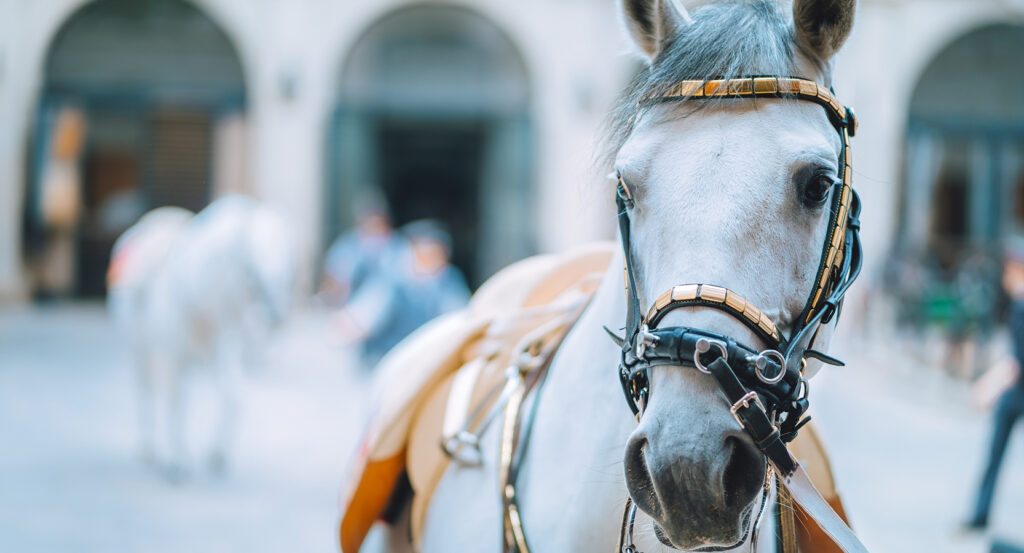
Enter through the Burgtor or the Swiss Gate, letting the gradual transition from Vienna's thriving streets into this silent quadrangle work its quiet magic. The space has no single “correct” direction, each façade reveals a different era, a different architectural mood. Visit early in the morning to have the courtyard almost to yourself, when the echo of your footsteps mingles with the calls of pigeons circling the domes. At midday, you'll often find classical musicians performing under the statue's shadow, their violins carrying softly between the arcades. Take a seat on the low stone benches near the Amalienburg Wing and look up, the clock tower's gilded details catch the light just as they did in Maria Theresa's day. If you're visiting the Imperial Apartments, Sisi Museum, or the Spanish Riding School, allow time to linger here afterward, this courtyard is the axis around which they all revolve. As evening falls, the façades glow in amber tones, and the courtyard feels transformed, less a relic, more a living stage for Vienna's enduring dignity. To truly feel its power, stand in its center, close your eyes, and imagine the centuries of decisions, ceremonies, and silent moments that began right where you stand. The Hofburg Imperial Courtyard isn't just the center of the palace, it's the still-beating heart of Vienna itself.
Where your story begins.
Foresyte Travel reveals places that feel extraordinary long before you arrive.
Experience premium editorial crafted for luxury travelers.