Why The Compound Restaurant matters.
The Compound Restaurant is a distinguished American fine-dining institution where Canyon Road's historic adobe architecture meets Alexander Girard's modernist design legacy, Mark Kiffin's James Beard Award-winning culinary leadership and six decades of sophisticated Santa Fe hospitality.
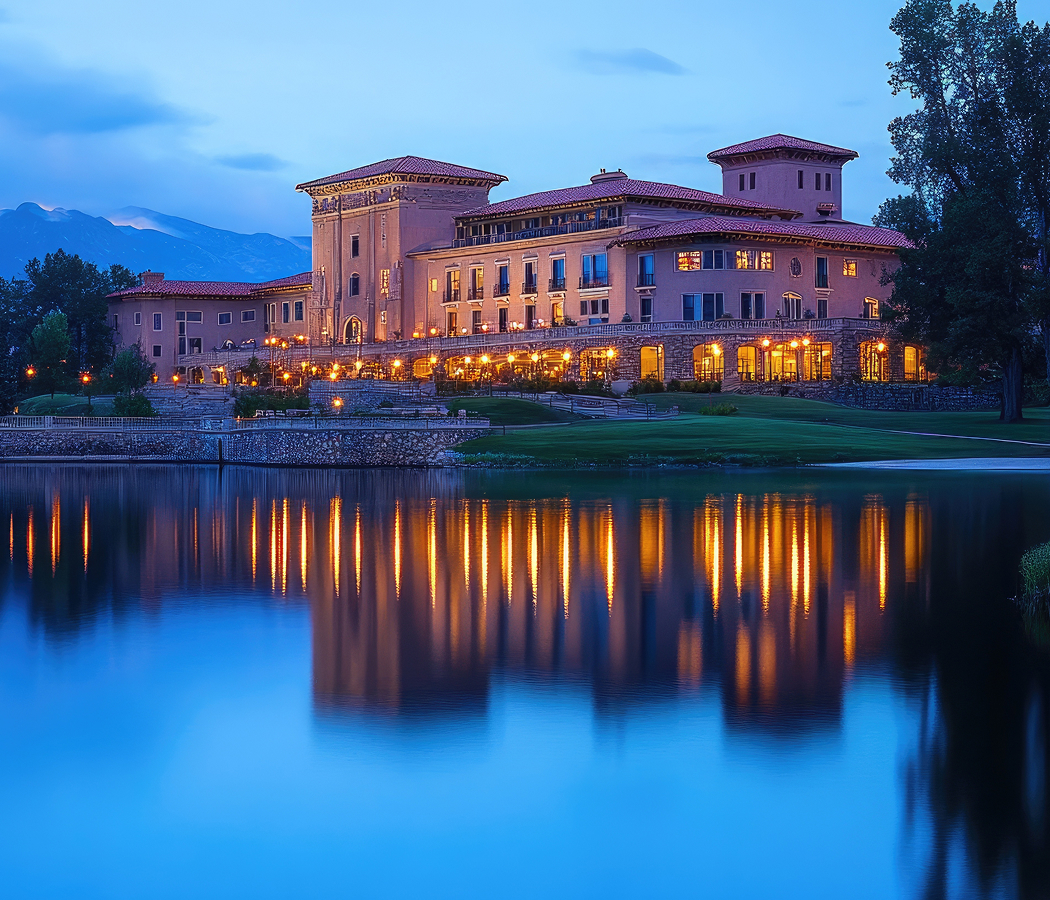
Positioned along Canyon Road near Delgado Street and a short walk from the galleries surrounding Acequia Madre, the restaurant occupies a historic residential compound east of Santa Fe Plaza, between the established arts district, the Santa Fe River corridor and the adobe neighborhoods extending toward the Sangre de Cristo foothills. Its two-story adobe building retains the intimate scale of a traditional Santa Fe residence, with white plaster walls, exposed wooden beams and carefully arranged dining rooms preserving the character of its original domestic setting. Original design elements include a recessed cocktail bar, colorful textiles, custom furnishings and distinctive decorative objects drawn from international folk traditions. Shaded garden patios extend the dining spaces outdoors beneath mature trees, with traditional portals connecting the restaurant to its landscaped grounds. The result is an unusually accomplished architectural setting whose historic adobe structure and carefully preserved modernist interiors establish an important connection between Santa Fe's artistic heritage and its fine-dining culture.
What defines The Compound Restaurant.
The Compound Restaurant is best known for its association with Alexander Girard, among the twentieth century's most influential American designers, and its transformation under James Beard Award-winning chef Mark Kiffin. The property originated as the principal residence within the McComb Compound, a collection of Canyon Road buildings associated with Santa Fe's early twentieth-century community of artists, writers and prominent visitors. Its secluded grounds attracted figures from the entertainment industry and the wider cultural world during a period when the city was developing an international reputation as an artistic retreat. Will and Barbara Houghton acquired the principal residence and converted it into a restaurant in 1966, introducing an ambitious dining establishment into a neighborhood increasingly associated with galleries and historic preservation. They commissioned Girard to direct the interior design, drawing upon his extensive experience in textiles, architecture and the integration of decorative arts into public environments. Born in New York in 1907 and educated in Europe, Girard had developed a distinguished career through collaborations with Herman Miller and the creation of influential interiors for restaurants and commercial clients. His work on New York's La Fonda del Sol and L'Etoile established his reputation for integrating furniture, graphics, textiles and architectural space into comprehensive design programs. At The Compound, Girard developed a restrained interior distinguished by carefully positioned color, custom tableware and furnishings, and decorative elements influenced by his extensive collection of international folk art. His work coincided with a major commission for Braniff International Airways, whose visual transformation supplied textiles subsequently incorporated into the restaurant's ceiling treatments. The resulting interior became the last surviving example of Girard's restaurant designs, preserving a significant expression of American midcentury modernism within a traditional New Mexican building. Victor Sagheer, the restaurant's original general manager, acquired the establishment during the 1970s and developed a reputation for formal French dining, white-gloved service and elaborate hospitality. His tenure strengthened The Compound's position among Santa Fe's principal special-occasion restaurants, establishing traditions that continued through successive ownership changes. Mark Kiffin acquired the property from Sagheer and reopened the restaurant on May 30, 2000, introducing a contemporary American culinary direction grounded in regional ingredients and Mediterranean influences. Kiffin had developed his professional career through an appointment at The Inn & Links at Spanish Bay in California before spending eight years working with Mark Miller at Santa Fe's influential Coyote Cafe. Miller's pioneering approach to modern Southwestern cooking shaped Kiffin's understanding of regional ingredients and their relationship with classical culinary technique. Kiffin subsequently helped develop restaurants elsewhere in the United States, acquiring substantial experience in culinary management before returning to Santa Fe. His leadership brought a renewed emphasis on seasonal menus, professional service and the preservation of the restaurant's architectural character. In 2005, the James Beard Foundation named Kiffin Best Chef: Southwest, establishing his national reputation and strengthening The Compound's standing within American fine dining. Executive chef Weston Ludeke subsequently assumed responsibility for the kitchen in 2022, bringing professional experience that included MICHELIN-starred restaurants and continuing the establishment's seasonal culinary direction. The restaurant's historical significance rests on this convergence of architectural preservation, influential design and sustained culinary achievement, connecting Girard's creative legacy with the development of contemporary American gastronomy in Santa Fe.
Mark Kiffin's culinary philosophy centers on the relationship between seasonal American ingredients, Mediterranean traditions and the disciplined techniques of classical European cooking. His approach developed through the regional experimentation of modern Southwestern cuisine, emphasizing the agricultural character of individual ingredients and the importance of careful preparation. The kitchen changes its menu with the seasons, incorporating regional vegetables, carefully selected meats and seafood into compositions shaped by the availability of fresh produce. Maine lobster carbonara provides a representative expression of this approach, combining the richness of lobster with fresh fettuccine, pancetta, egg and Parmesan in a preparation grounded in traditional Italian pasta-making. The dish demonstrates the kitchen's ability to integrate a substantial American seafood ingredient into an established European culinary form through controlled cooking and balanced richness. Chicken schnitzel contributes a complementary Central European influence, developing crisp texture through careful breading and pan-frying, with seasonal accompaniments providing freshness and acidity. Its longstanding popularity reflects the restaurant's commitment to familiar preparations executed with technical precision. Vegetable-centered cooking occupies an equally important position, particularly through wild mushrooms accompanied by organic stone-ground polenta and black truffle relish. The preparation brings together earthy flavors, contrasting textures and the traditional relationship between mushrooms and maize-based dishes in northern Italian cooking. Seafood preparations introduce additional seasonal variation, with fish selected for its quality and accompanied by carefully developed sauces and regional produce. The kitchen's use of classical stocks, reductions and emulsified sauces contributes depth across the menu, supporting a culinary approach grounded in ingredient quality and measured technique. Local sourcing reinforces this direction through relationships with New Mexico farmers and producers, connecting the restaurant's seasonal menus with the agricultural economy of the surrounding region. The wine program complements the cooking through a substantial selection of American and European producers, with particular attention to the requirements of seafood, rich sauces and carefully prepared meats. Formal table service preserves an important aspect of the restaurant's historical character, connecting contemporary cooking with the established traditions of elegant American dining. The Compound's culinary distinction emerges from this sustained relationship between seasonal ingredients, classical technique and sophisticated hospitality, preserving the restaurant's established reputation through successive generations of kitchen leadership.
How The Compound Restaurant fits.
The Compound Restaurant works as the dining culmination of an exploration connecting Canyon Road's historic preservation movement, contemporary artistic production and the development of American modernist art in Santa Fe, placing the restaurant within the cultural institutions and creative communities that shaped the city's international reputation.
Begin at El Zaguán, the historic adobe residence and garden associated with Santa Fe Trail merchant James L. Johnson and the subsequent development of architectural preservation in Santa Fe. Johnson acquired the property during the 1850s and expanded the original residence into a substantial family compound, incorporating additional rooms and cultivated grounds. In 1928, preservationist Margretta Stewart Dietrich purchased the property and commissioned Kate Chapman to direct its restoration and enlargement, preserving traditional adobe construction through a period of substantial architectural change. The property subsequently entered the stewardship of the Historic Santa Fe Foundation in 1979, becoming its headquarters and an exhibition space dedicated to the preservation of regional architecture. Its surviving garden and traditional residential features provide a direct introduction to the domestic history that preceded Canyon Road's development as an internationally recognized arts district. Continue to Olive Rush Memorial Studio, the former home and workplace of American painter Olive Rush, whose career connected Santa Fe with the Arts and Crafts movement and the development of modern American painting. Born in Indiana in 1873, Rush trained at the Corcoran School of Art and the Art Students League of New York before establishing herself as an illustrator and painter. She settled permanently in Santa Fe in 1920, developing a body of work influenced by the landscape, Indigenous cultures and artistic communities of the Southwest. Her Canyon Road property subsequently became associated with the Santa Fe Society of Friends, preserving an important connection between her artistic career, Quaker commitments and the neighborhood's early cultural development. The surviving studio retains a direct relationship with the environment in which Rush worked, providing an important historical perspective on Santa Fe's emergence as an American art center. Conclude at Turner Carroll Gallery, the contemporary art institution established by Tonya Turner Carroll and Michael Carroll on Canyon Road. Its exhibition program has developed through sustained relationships with contemporary artists working across painting, sculpture, photography and mixed media. The gallery has represented internationally recognized artists alongside emerging figures, contributing to Santa Fe's position within the contemporary art market. Its programming has included artists associated with important social and cultural movements, connecting the city's established collecting traditions with contemporary artistic concerns. The gallery's location within a historic adobe setting reinforces the relationship between Canyon Road's preserved architecture and its continuing commercial art community. The progression connects Santa Fe's architectural preservation movement with the artistic legacy of an influential early twentieth-century painter and concludes at a contemporary gallery, establishing the broader cultural setting surrounding The Compound Restaurant.
Where your story begins.
Foresyte Travel reveals places that feel extraordinary long before you arrive.
Enjoy editorial crafted for luxury travelers.
Foresyte may earn a commission when you book.