Why you should experience Val de Bagnes in Switzerland.
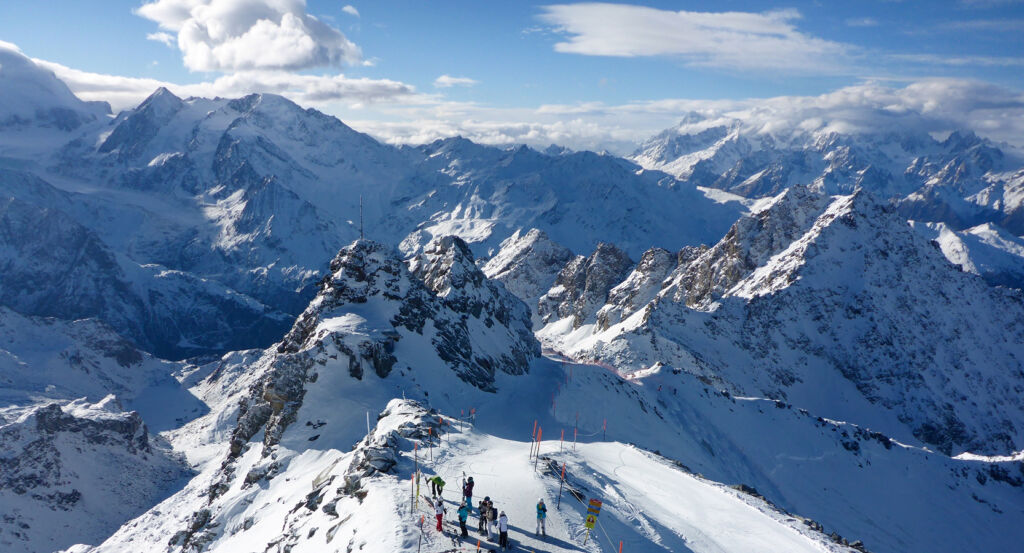
Val de Bagnes (Val de Bagnes Valley) is the soul beneath Verbier, a long green corridor where glacier melt becomes river song and every village still carries the sound of bells.
Stretching from the peaks above Mauvoisin Dam to the vineyards near Martigny, this valley holds everything that defines the Swiss Alps in one sweep of light and shadow. It's a landscape built on contrast: wild glaciers that feed gentle meadows, silence broken only by streams, old chapels catching the sun beside modern chalets. The Dranse River threads through it all, carving its way past orchards, stone bridges, and forests so still they seem painted. From the road, it looks vast; on foot, it feels intimate, every bend revealing another hamlet, another view that humbles. The air smells of pine, grass, and snow just out of sight. You don't need a plan here; the valley carries you. By the time you reach its end, you'll realize you've crossed more than distance, you've crossed into calm.
What you should know about Val de Bagnes.
The Val de Bagnes is older than its mountains' names, a place where the Alps' history is written in water and stone.
Human life here dates back over 8,000 years, long before the Roman road crossed the Great St. Bernard Pass nearby. The valley's name comes from “bagn,” meaning bath, a reference to the natural springs that once drew travelers long before skiing or tourism existed. Its villages, Le Châble, Bruson, Fionnay, and Lourtier, still follow the rhythm of the land, their barns and chapels tracing medieval boundaries untouched by modern grids. The Mauvoisin Dam, completed in 1958, transformed the upper valley into one of Switzerland's most important hydroelectric networks, generating power from the same meltwater that feeds the Dranse below. Yet even that act of engineering feels quiet here, folded into the landscape. Few realize that the region is also a UNESCO biosphere reserve, home to ibex, marmots, and wild orchids that bloom only for a few weeks each year. Every season rewrites the view, snow draping the roofs in winter, green flooding the meadows by May, the whole valley turning gold and copper by October. Beneath Verbier's polished energy, Val de Bagnes endures as the valley that made it possible, patient, fertile, and alive.
How to fold Val de Bagnes into your trip.
The best way to experience Val de Bagnes is to slow down, trade altitude for depth, and let the valley teach you its tempo.
Start in Le Châble, the valley's gateway and the base station for Verbier's gondola, then follow the Dranse upstream by car, bike, or trail. Stop at Bruson, a sun-soaked village that feels untouched by time, and wander among chalets built from larch so old it glows in late light. Continue toward Lourtier and Fionnay, where wooden roofs slope under snow and the river runs clear enough to drink. Beyond that lies Mauvoisin, a dramatic amphitheater of rock and ice framed by the dam and the waterfalls that pour down its sides like silk. Hike the trail above the reservoir to glimpse the glacier that feeds it; the air here smells faintly of minerals and thunder. In summer, bring a picnic and sit by the water; in winter, the valley narrows into silence, the world reduced to white and sound. On the drive back, stop at one of the small fromageries for Tomme or Raclette made on-site, or linger at a café in Le Châble where locals talk quietly over wine. The Val de Bagnes isn't an excursion, it's the Alps unpolished, a living bridge between past and present, noise and stillness. Come here after Verbier and you'll understand: the mountain dazzles, but the valley heals.
Where your story begins.
Foresyte Travel reveals places that feel extraordinary long before you arrive.
Experience premium editorial crafted for luxury travelers.