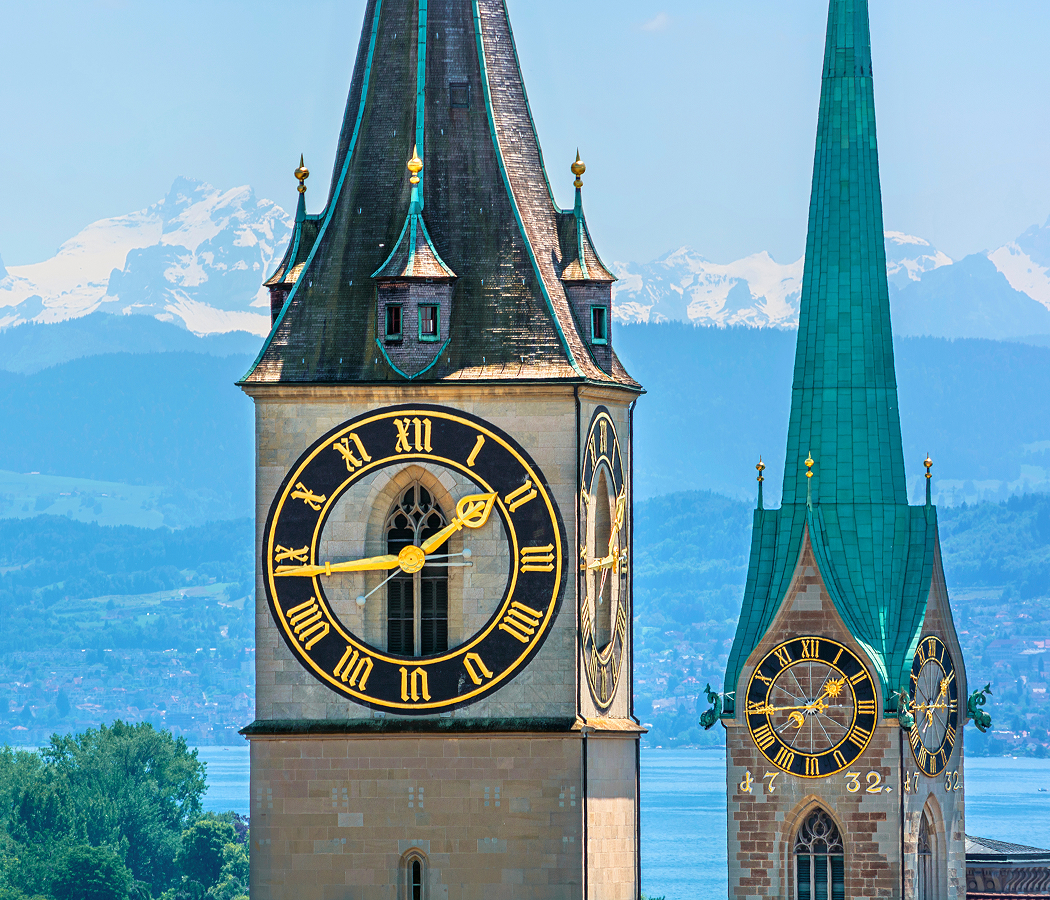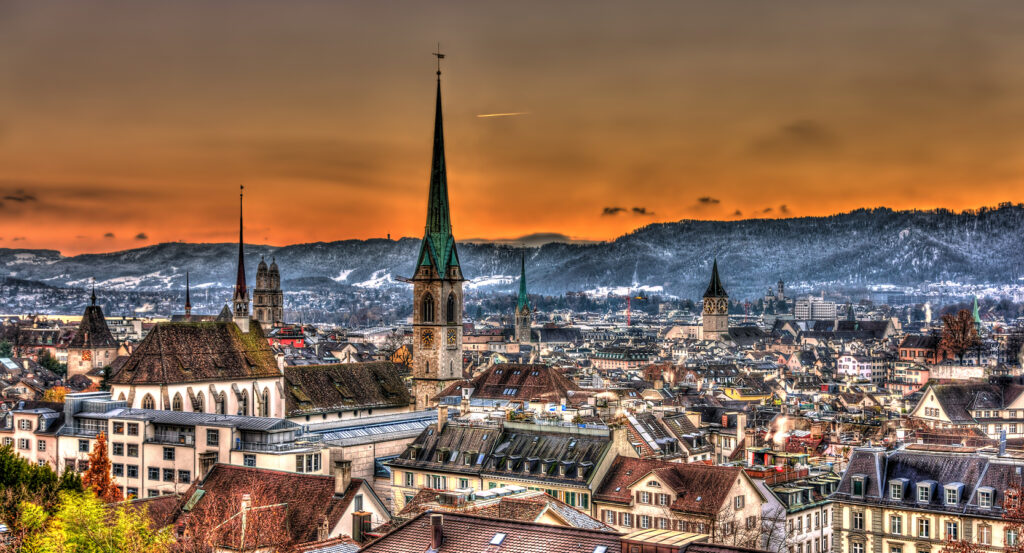
Why you should experience Wasserkirche in Zürich, Switzerland.
Beneath Zurich's elegant facades and riverfront calm lies one of its most enigmatic secrets, Wasserkirche, a subterranean portal into the city's spiritual and political birth. Once rising from an island in the Limmat River, the medieval Wasserkirche (“Water Church”) was believed to stand on the exact site where Zurich's patron saints, Felix and Regula, were executed in the 3rd century. Today, its atmospheric crypt reveals the church's layered foundations, Roman, Gothic, and Reformation-era stonework all woven together in haunting silence.
As you descend the narrow staircase into the ruins, the city above fades into muffled echoes, replaced by the cool breath of history. Low lights skim across ancient walls that have survived floods, iconoclasm, and centuries of reinvention. It's not a grand space, but a sacred one, intimate, reflective, and timeless. Every arch and altar fragment tells a story of faith, destruction, and renewal, reminding visitors that Zurich's polished exterior rests upon centuries of struggle and devotion.
What you didn’t know about Wasserkirche.
Wasserkirche was once an island sanctuary, separated from the mainland by the swift currents of the Limmat. In medieval times, it stood as both a chapel and a warning, a place of martyrdom and miracle. When the Reformation swept through Zurich, the church was stripped of its relics and converted into a library under the reformer Heinrich Bullinger's watch, symbolizing the city's shift from faith to reason.
The ruins you can visit today were rediscovered during 20th-century excavations beneath the church's nave. Archaeologists unearthed stone foundations, burial fragments, and remnants of the original shrine dedicated to Felix and Regula. What few realize is that this unassuming crypt holds some of the oldest Christian remains in the region, an underground archive of Zurich's transformation from Roman frontier to Protestant stronghold.
How to fold Wasserkirche into your trip.
Begin your visit along the Limmatquai, letting the hum of trams and river breezes guide you to the modest Gothic facade of Wasserkirche. Step inside, and look for the small entrance to the crypt near the choir, a discreet portal leading downward into shadow.
Take your time exploring the illuminated pathways that trace the contours of the early church. Pause before the ancient altar stones and let the stillness settle, this is where Zurich's spiritual identity took root. Afterward, step back into daylight and walk across the Münsterbrücke toward the Grossmünster towers, completing a pilgrimage that mirrors the city's own evolution. In that quiet transition from ruin to skyline, you'll feel the pulse of Zurich, ancient, unbroken, and alive.
Where your story begins.
Start your planning journey with Foresyte Travel.
Experience immersive stories crafted for luxury travelers.