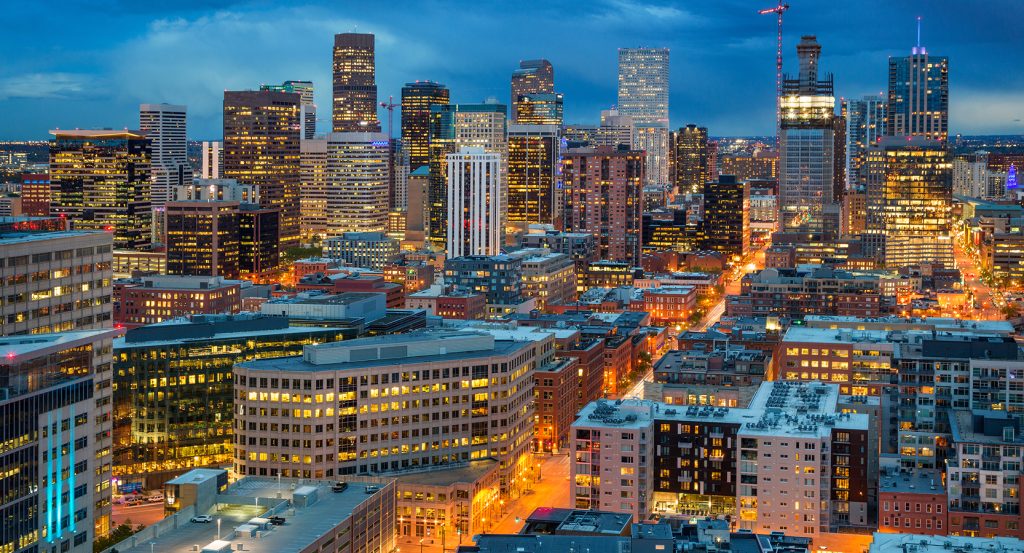
Why you should experience 22nd Street in Denver, Colorado.
22nd Street is a storied corridor where Five Points' railroad heritage, African American history, commercial legacy, and cultural influence remain inseparably connected.
Running through Five Points between Curtis Park and Ballpark, the corridor developed alongside Denver's earliest rail infrastructure, where residential blocks, commercial buildings, and neighborhood institutions collectively shaped one of Colorado's most historically significant urban communities. Historic masonry buildings, surviving nineteenth-century streetscapes, former commercial storefronts, and enduring street grids preserve successive chapters of the corridor's evolution. The corridor ultimately reflects the convergence of transportation, migration, commerce, and community that established Five Points as one of Denver's defining historic neighborhoods. The result is an experience defined by continuity, cultural significance, and an enduring sense of place.
What you should know about 22nd Street.
22nd Street is best known for becoming one of Denver's earliest residential corridors for African American railroad workers during the 1870s, when laborers arriving from Georgia established a community known locally as “Deep South” along the street. By the early 1890s, demographic analysis demonstrated that a majority of Denver's African American residents lived within the surrounding Five Points district, while by the 1920s more than 90 percent of the city's Black population resided within Five Points and adjacent Whittier, making the corridor central to Denver's African American history. The intersection of 22nd Street and Larimer Street became an important arrival point for Japanese Americans during World War II, as the Burlington Hotel provided accommodations for families relocating to Denver. Successive waves of African American, Mexican American, and Japanese American residents established 22nd Street as one of Denver's most culturally diverse historic corridors during the first half of the twentieth century.
Demographic change continued reshaping the corridor as restrictive housing practices concentrated much of Denver's Black population within the surrounding neighborhood throughout the early twentieth century, creating one of the city's most influential centers of Black-owned businesses, churches, social organizations, and civic leadership. Documentary records tracing residential occupancy along 22nd Street preserve evidence of railroad employment, migration from the American South, and long-term family settlement patterns that collectively distinguish the corridor from neighboring streets. Cultural continuity remained evident through generations of residents whose businesses, religious institutions, and civic organizations helped establish Five Points as the historic heart of African American life in Colorado. Together, migration history, documented demographic concentration, wartime relocation, and long-term residential continuity establish 22nd Street as one of Denver's most historically significant cultural corridors.
How to fold 22nd Street into your trip.
22nd Street works as an exploration of Five Points' cultural heritage, architectural legacy, and musical history.
Begin at Five Points Plaza, where interpretive installations introduce the neighborhood's remarkable cultural legacy before exploring the surrounding historic district. Continue to the Blair-Caldwell African American Research Library, whose archives and exhibitions provide deeper insight into the people, organizations, and achievements that shaped Black Denver across generations. Conclude at the Rossonian Hotel, whose celebrated performance history represents the cultural high point of the neighborhood's national significance during the jazz era. The progression moves naturally from public interpretation through historical scholarship before concluding at the building that most powerfully captures Five Points' enduring cultural legacy.
Where your story begins.
Foresyte Travel reveals places that feel extraordinary long before you arrive.
Experience premium editorial crafted for luxury travelers.