Why you should visit Canal de l’Ourcq Walkway.
There’s something undeniably magnetic about the Canal de l’Ourcq, a ribbon of water that cuts through Paris with poetic calm, offering a reprieve from the city’s unrelenting energy.
Stretching from the Bassin de la Villette toward the outskirts, this walkway invites both wanderers and locals into a different rhythm, where bicycles glide past, café terraces hum softly with conversation, and the reflection of bridges ripples like impressionist brushstrokes. Walking here isn’t just an urban stroll; it’s a passage into a more intimate Paris, one where the metropolis exhales. In summer, the canal transforms, floating bars serve chilled rosé, boats drift lazily beneath willow trees, and art installations line the path in playful bursts of color. The juxtaposition is intoxicating: industrial relics coexist with creative spaces, modern murals flirt with the water’s edge, and every bend seems to reveal another secret. To visit the Canal de l’Ourcq is to experience a quieter, more authentic side of Paris, less spectacle, more soul.
What you didn’t know about Canal de l’Ourcq Walkway.
What most travelers never realize is how the Canal de l’Ourcq rewrote the city’s geography and shaped its modern identity.
Commissioned by Napoleon in the early 19th century to bring clean water into Paris, it began as a feat of engineering before evolving into a cultural artery. The canal’s route connects not just neighborhoods but eras, from the warehouses of La Villette to the creative enclaves of Pantin, now home to ateliers and performance spaces. The bridges you cross aren’t mere crossings; they’re thresholds into transformation. Some are over a century old, forged from the iron bones of industrial expansion, while others are sleek expressions of contemporary design. Even today, the canal continues its dual life, still part of the city’s water system yet reimagined as a place of leisure, creativity, and collective expression. The walls are a gallery, the barges a stage, and the air hums with the rhythm of reinvention.
How to fold Canal de l’Ourcq Walkway into your trip.
To weave the Canal de l’Ourcq into your Paris journey, approach it as more than a destination, treat it as an experience that unfolds slowly.
Begin your walk at the Bassin de la Villette, where locals gather for picnics and film screenings in summer. From there, follow the towpath eastward, rent a bike if you prefer motion to meandering, and stop often: perhaps for a café crème at Pavillon des Canaux, or to linger over the street art that turns the canal’s walls into a living museum. If you have time, continue all the way to Pantin, where the former grain warehouses now host galleries and music venues like Le Dock B. Visit during sunset, when the water mirrors the pink and gold of the sky, and you’ll understand why Parisians love this stretch so fiercely. It’s a place to exhale, to rediscover the beauty of stillness, and to see that even in the world’s most visited city, there’s always a corner left just for you.
Hear it from the Foresyte community.
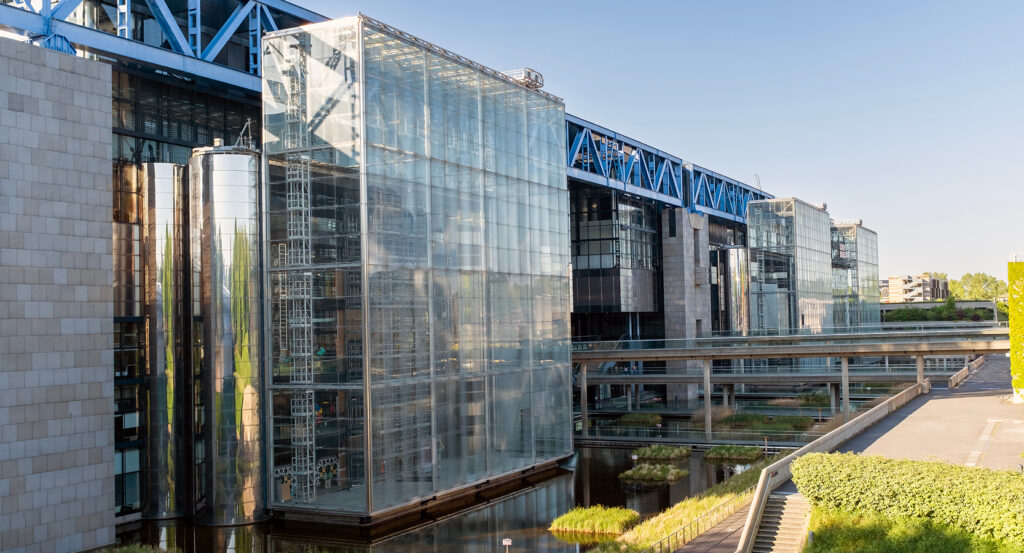
Exploring here feels like stepping into the future. Bold design, playful gardens, and buzzing cultural energy all share the same space.
Where meaningful travel begins.
Start your journey with Foresyte, where the planning is part of the magic.
Discover the experiences that matter most.