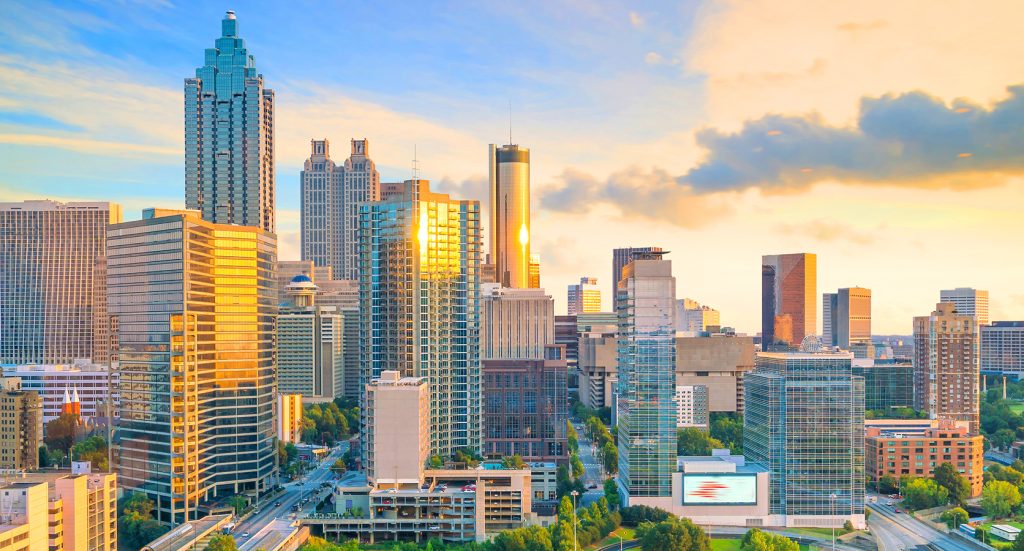
Why you should experience Brady Avenue in Atlanta, Georgia.
Brady Avenue is a historic West Midtown corridor where industrial innovation, railroad heritage, and creative reinvention converge along one of Atlanta's most transformative streets.
Running through Blandtown between Howell Mill Road and Northside Drive, this energetic corridor connects adaptive reuse warehouses, design studios, breweries, technology companies, neighborhood restaurants, and creative workspaces that have redefined one of Atlanta's oldest industrial districts. Historic brick factories, converted manufacturing buildings, modern offices, and energetic pedestrian spaces create a streetscape where the city's industrial past continues to fuel contemporary entrepreneurship. Once serving the warehouses and rail spurs that powered Atlanta's manufacturing economy, Brady Avenue has evolved into one of West Midtown's defining commercial corridors. The result is a street defined by reinvention, creativity, and enduring industrial character.
What you should know about Brady Avenue.
Brady Avenue is best known for preserving the legacy of Blandtown, among Atlanta's oldest post-Civil War African American communities, established during Reconstruction by formerly enslaved resident Isaiah Bland, whose settlement became a thriving neighborhood of homeowners, churches, schools, and businesses decades before industrial expansion transformed Atlanta's Westside.
Isaiah Bland acquired land following the Civil War and helped establish a self-sustaining community that grew into one of Atlanta's earliest African American neighborhoods at a time when opportunities for Black landownership remained extraordinarily limited. Despite later waves of industrial development, urban renewal, and zoning changes that displaced many residents, Blandtown's history remains one of resilience, entrepreneurship, and community building. Brady Avenue developed through the heart of this historic landscape, preserving an important connection to a neighborhood whose story reflects both the challenges and achievements of Reconstruction-era Atlanta. Today, the corridor continues to embody the remarkable transformation of a historic community into one of the city's most dynamic creative districts.
How to fold Brady Avenue into your trip.
Brady Avenue works as an exploration of West Midtown's industrial heritage, adaptive reuse, and creative culture.
Begin at The Works, where restored industrial buildings immediately establish the district's remarkable transformation. Continue toward Westside Provisions District, whose celebrated collection of boutiques, restaurants, and preserved warehouse architecture reflects the neighborhood's continuing evolution. From there, make your way to the Atlanta BeltLine Westside Trail, where landscaped pathways and public art provide a broader perspective on the revitalization of Atlanta's historic industrial corridors. Along the route, you'll encounter adaptive reuse architecture, locally owned businesses, public art, creative workspaces, neighborhood cafés, and energetic gathering spaces that demonstrate how Brady Avenue seamlessly connects one of Atlanta's oldest African American communities with one of its most innovative contemporary districts. The progression moves naturally from landmark mixed-use destination to historic warehouse district to transformative greenway, revealing why Brady Avenue remains one of West Midtown's most compelling corridors.
Where your story begins.
Foresyte Travel reveals places that feel extraordinary long before you arrive.
Experience premium editorial crafted for luxury travelers.