Why Broadway matters.
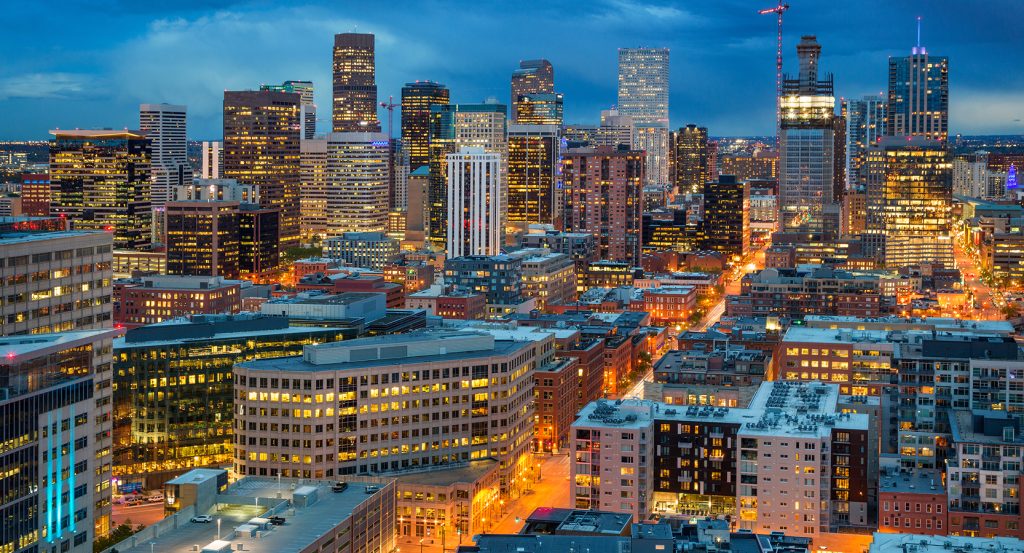
Broadway is an animated corridor where Baker's independent spirit, civic history, commercial vitality, and creative culture converge along one of Denver's most recognizable urban thoroughfares.
Running through Baker between Speer and Overland, Broadway connects historic commercial blocks, performing arts venues, neighborhood businesses, restored storefronts, and evolving residential districts that collectively trace more than a century of Denver's urban development immediately south of downtown. Early twentieth-century brick façades, illuminated theater marquees, independent retailers, music venues, cafés, and adaptive reuse projects create a streetscape where historic architecture and contemporary enterprise reinforce one another throughout the day and late into the evening. The corridor reaches its defining character where entrepreneurial energy, preserved architecture, and neighborhood continuity remain inseparable across successive generations. The result is an experience defined by authenticity, creativity, and Broadway's enduring role as one of Denver's defining cultural corridors.
What defines Broadway.
Broadway is best known for originating as one of Denver's earliest north-south transportation routes before becoming U.S. Highway 85 through the city, linking downtown with communities throughout Colorado's Front Range during the twentieth century. Electric streetcar service along Broadway accelerated commercial and residential expansion during the late nineteenth and early twentieth centuries, establishing a continuous urban business corridor lined with hotels, theaters, automobile dealerships, banks, and masonry storefronts that served Denver's rapidly growing population. Construction of numerous Art Deco, Classical Revival, Commercial Style, and Mid-Century Modern buildings between the 1890s and 1950s created one of Denver's most architecturally varied commercial streets, while the surrounding Baker Historic District, listed on the National Register of Historic Places in 1985, preserves hundreds of contributing Victorian-era buildings immediately adjoining the corridor. Broadway continues functioning as one of Denver's principal commercial avenues, where historic architecture, transportation history, and long-established independent businesses collectively document more than a century of urban development.
Preservation of early commercial buildings encouraged adaptive reuse that introduced galleries, music venues, locally owned retailers, restaurants, and creative workspaces into structures originally constructed for retail, automotive, and warehouse purposes during Denver's principal era of expansion. Organizations including Historic Denver, History Colorado, and the Colorado Historic Preservation Office have documented Broadway's architectural significance through surveys, rehabilitation guidance, and preservation advocacy that continue protecting the corridor's historic character. Decorative terra-cotta façades, pressed-metal cornices, structural brick masonry, cast-iron storefront elements, and original display windows remain visible throughout much of the corridor, illustrating the craftsmanship that distinguished Denver's commercial construction during the late nineteenth and early twentieth centuries. Together, adaptive reinvestment, preservation leadership, enduring architectural craftsmanship, and Broadway's commercial legacy explain why the corridor remains one of Denver's most influential historic main streets.
How Broadway fits.
Broadway works as an exploration of Denver's architectural heritage, performing arts, and independent creative culture.
Begin at History Colorado Center, where immersive exhibitions establish the historical context behind Denver's urban growth before naturally introducing the neighborhoods that developed along Broadway. Continue to Mayan Theatre, whose celebrated 1930 Mayan Revival architecture and enduring independent cinema tradition deepen the experience through one of the corridor's most distinctive cultural institutions. Conclude at Kirkland Museum of Fine & Decorative Art, where internationally significant collections of decorative arts, regional painting, and modern design provide a fitting finale celebrating the artistic creativity that continues defining Broadway and its surrounding neighborhoods. The progression moves naturally from Colorado's historical foundations through a celebrated neighborhood theater before culminating in one of Denver's foremost art museums.
Where your story begins.
Foresyte Travel reveals places that feel extraordinary long before you arrive.
Enjoy editorial crafted for luxury travelers.
Foresyte may earn a commission when you book.