Why you should experience The Dark Side Tunnel Exhibit in Toronto, Ontario.
The Dark Side Tunnel Exhibit is an immersive historical exhibition where Casa Loma's architectural legacy, hidden infrastructure, urban history, and atmospheric storytelling reveal one of Toronto's most distinctive museum experiences.
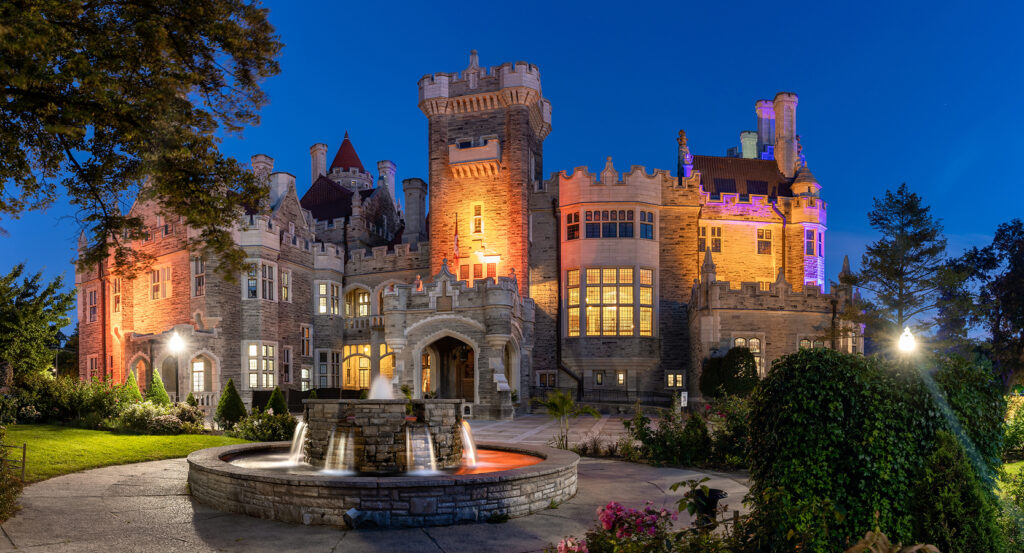
Set beneath Casa Loma along Austin Terrace near the castle's lower level and just steps from the Stable and Carriage House, this atmospheric underground passage guides visitors through a dimly illuminated limestone tunnel where archival photography, interpretive displays, and carefully curated historical narratives transform a former service corridor into a compelling journey through Toronto's lesser-known past. Cool stone walls, vaulted passageways, subdued lighting, and the tunnel's original engineering create an environment that evokes the hidden workings of Sir Henry Pellatt's remarkable estate. Every step reinforces the contrast between Casa Loma's grand public interiors and the unseen infrastructure that sustained one of Canada's most ambitious private residences. The result is an exhibition defined by historical authenticity, architectural intrigue, and one of Toronto's most memorable underground experiences.
What you should know about The Dark Side Tunnel Exhibit.
The Dark Side Tunnel Exhibit is best known for occupying the 800-foot (244-meter) underground service tunnel constructed between 1911 and 1914 as part of Casa Loma, the extraordinary Gothic Revival residence commissioned by financier Sir Henry Mill Pellatt and designed by renowned Toronto architect E. J. Lennox. Descending 18 feet beneath Austin Terrace, the tunnel originally served as a protected all-weather connection between the castle and its stables, carriage house, potting shed, and hunting lodge, allowing servants, supplies, coal, horses, and mechanical services to move discreetly beneath the estate regardless of weather conditions. Today the restored passage houses The Dark Side Tunnel Exhibit, an interpretive installation presenting archival photographs and historical narratives documenting many of Toronto's defining tragedies and overlooked chapters, including the Great Fire of Toronto (1904), the 1918 influenza pandemic, Prohibition, the Great Depression, Hurricane Hazel, Toronto's first fatal airplane crash, and other moments that shaped the city's social and urban development. The exhibition transforms what was once a purely functional engineering structure into a chronological exploration of Toronto's history, using the tunnel's atmospheric setting to reinforce themes of resilience, hardship, and transformation. Beyond the historical displays, the tunnel itself remains an important artifact of early twentieth-century estate engineering, illustrating the sophisticated planning behind Casa Loma's operation through concealed utility systems, service circulation, and underground infrastructure rarely preserved at such a scale in North America. The seamless integration of architectural conservation with historical interpretation has made the exhibit one of Casa Loma's most distinctive permanent installations while revealing a side of Toronto's history seldom encountered within conventional museum galleries.
Architecturally, the tunnel demonstrates the remarkable level of planning invested in Casa Loma through its substantial masonry construction, generous proportions, carefully engineered gradients, and durable materials designed to support daily estate operations beneath one of Canada's grandest private residences. Rather than recreating history through theatrical effects, the exhibition relies upon authentic archival imagery, documentary interpretation, and the original underground environment to establish a powerful sense of place. The transition from the castle's richly decorated interiors into this concealed service corridor offers a rare perspective on the operational realities behind Edwardian luxury while preserving one of Toronto's most unusual surviving examples of subterranean estate infrastructure. Every passage demonstrates how architectural preservation, historical research, and thoughtful exhibition design have combined to create one of the city's most compelling museum experiences.
How to fold The Dark Side Tunnel Exhibit into your trip.
The Dark Side Tunnel Exhibit works as the historical centerpiece of an exploration through Casa Loma's extraordinary estate.
Begin inside Casa Loma, where Sir Henry Pellatt's lavish state rooms, library, conservatory, and towers establish the extraordinary ambition behind Canada's most celebrated castle before descending into The Dark Side Tunnel Exhibit. Continue to the Stable and Carriage House, where vintage automobiles, historic carriages, and estate infrastructure naturally extend the story introduced within the tunnel. Conclude at the Casa Loma Gardens, where sweeping terraces, landscaped grounds, and panoramic views across Toronto provide a memorable finale celebrating the remarkable vision that transformed a private residence into one of Canada's defining historic landmarks. The progression moves naturally from grand architecture to hidden underground engineering before concluding through the estate's celebrated gardens, revealing why The Dark Side Tunnel Exhibit remains among Casa Loma's most distinctive historical experiences.
Where your story begins.
Foresyte Travel reveals places that feel extraordinary long before you arrive.
Experience premium editorial crafted for luxury travelers.