Why you should experience Cecil Street in Toronto, Ontario.
Cecil Street is an eclectic corridor where Kensington Market's multicultural heritage, academic influence, architectural diversity, and creative energy define one of Downtown's most distinctive urban streets.
Running through Kensington Market between Chinatown and Grange Park, the corridor connects Victorian residential blocks, historic institutional campuses, independent businesses, and long-established immigrant communities that collectively demonstrate Toronto's evolution into one of Canada's most culturally layered urban districts. Successive blocks reveal how nineteenth-century subdivision, successive waves of immigration, educational expansion, and neighbourhood entrepreneurship transformed a modest residential street into a corridor celebrated for its cultural richness. Throughout the street, preserved brick buildings, intimate streetscapes, and enduring community institutions express more than a century of urban continuity. The result is an experience defined by authenticity, diversity, and one of Toronto's most compelling downtown corridors.
What you should know about Cecil Street.
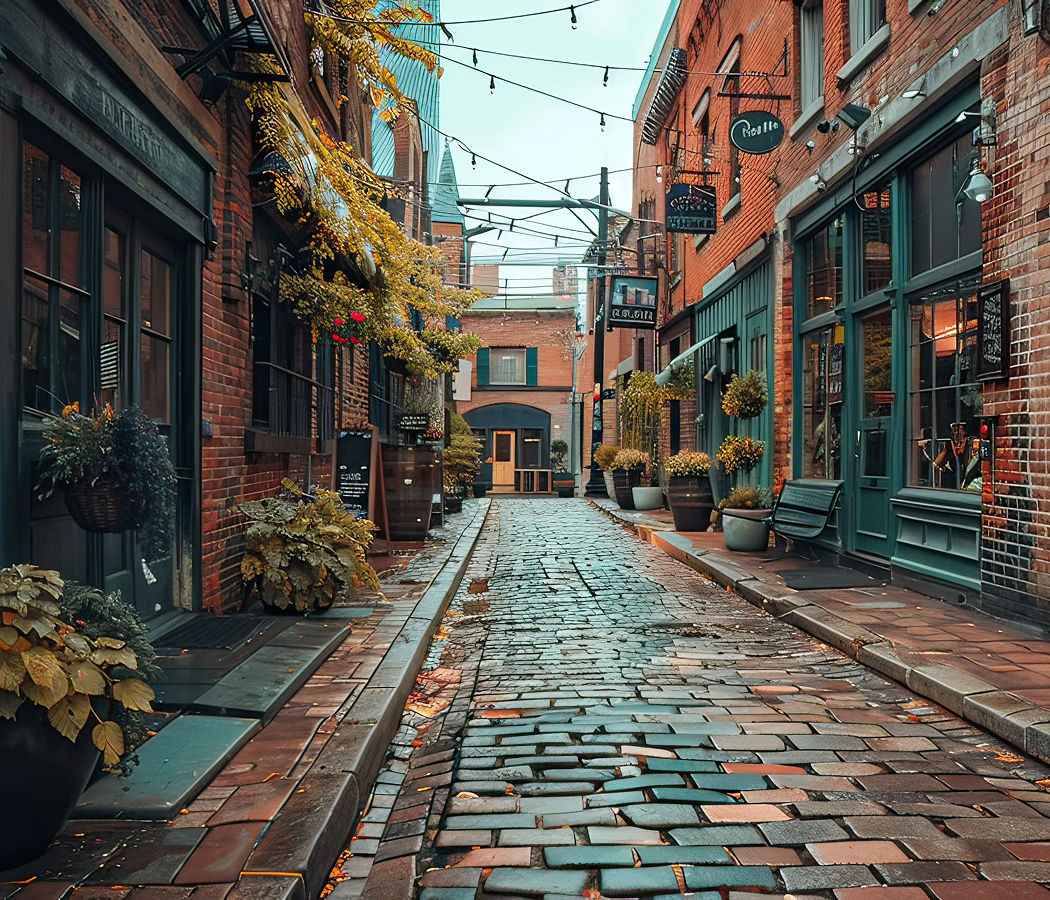
Cecil Street is best known for developing during the 1870s, 1880s, and 1890s as residential subdivision expanded west of Toronto's original urban core into what became one of the city's earliest streetcar-served neighbourhoods. Growth accelerated following operation of the Toronto Railway Company streetcar network along College Street, Spadina Avenue, and Dundas Street West, strengthening connections between emerging residential districts, commercial streets, and Toronto's expanding institutional centre. Construction introduced cohesive collections of Victorian, Bay-and-Gable, Edwardian Classical, and Second Empire buildings distinguished by red brick masonry, decorative corbelled brickwork, segmental arches, limestone lintels, stained-glass transoms, and ornate wooden verandas that continue defining the corridor's architectural identity. The avenue also developed alongside successive settlement by Jewish, Chinese, Portuguese, and other immigrant communities whose businesses, places of worship, and social organizations established Kensington Market as one of Canada's most culturally significant urban districts. Together, these subdivision patterns, transportation investments, architectural traditions, immigration histories, and commercial evolution established Cecil Street as one of Kensington Market's defining corridors.
Opening of Kensington Community School in 1954 reinforced the surrounding neighbourhood through public education while serving generations of families representing dozens of cultural and linguistic backgrounds. Designation of the Kensington Market National Historic Site of Canada in 2024 formally recognized the district's exceptional importance for preserving successive immigrant settlement patterns, fine-grained commercial development, and remarkably intact nineteenth-century streetscapes. Continuing stewardship by the City of Toronto Heritage Preservation Services, supported through heritage conservation policies and neighbourhood planning initiatives, protects original masonry, historic façades, decorative architectural details, and the intimate urban form that distinguishes Cecil Street from later redevelopment. Collectively, these educational investments, national recognition, municipal preservation initiatives, and community stewardship efforts demonstrate how Cecil Street continues expressing the layered cultural character that has defined Kensington Market for generations.
How to fold Cecil Street into your trip.
Cecil Street works as an exploration of Kensington Market's cultural heritage, neighbourhood character, and independent spirit.
Begin at Kensington Market Pedestrian Sundays, where car-free streets, local vendors, musicians, and neighbourhood artists provide an immersive introduction to the district's creative atmosphere while revealing the community energy that defines the surrounding streets. Continue to Bellevue Square Park, where mature trees, public art, and one of the neighbourhood's oldest gathering spaces offer a quieter pause that naturally complements the market's activity before leading deeper into the district's cultural landscape. Conclude at Chinatown Toronto, where longstanding family businesses, traditional bakeries, regional restaurants, and energetic commercial streets provide the resonant payoff, illustrating how adjoining immigrant communities collectively shaped one of Canada's richest urban cultural experiences. Together, the sequence moves from community celebration to neighbourhood reflection before culminating in Toronto's enduring multicultural heritage, creating an outing that fully expresses the character of Cecil Street.
Where your story begins.
Foresyte Travel reveals places that feel extraordinary long before you arrive.
Experience premium editorial crafted for luxury travelers.