Why you should experience Chester Avenue in Toronto, Ontario.
Chester Avenue is a graceful corridor where Riverdale's residential heritage, civic traditions, architectural craftsmanship, and enduring neighborhood character define one of Toronto's most distinguished east-end streets.
Running through Riverdale between Danforth Avenue and Gerrard Street East, the corridor connects late nineteenth-century residential subdivisions, established civic institutions, mature tree-lined blocks, and neighborhood commercial streets that collectively reflect Toronto's transformation from expanding streetcar suburb to enduring urban community. Successive blocks reveal how residential development, electric transit, skilled builders, and thoughtful municipal planning produced a cohesive streetscape that continues expressing the character of Riverdale. Throughout the corridor, preserved brick houses, generous boulevard trees, and finely proportioned residential blocks reinforce an atmosphere shaped by continuity and craftsmanship. The result is an experience defined by refinement, permanence, and one of Toronto's most appealing residential corridors.
What you should know about Chester Avenue.
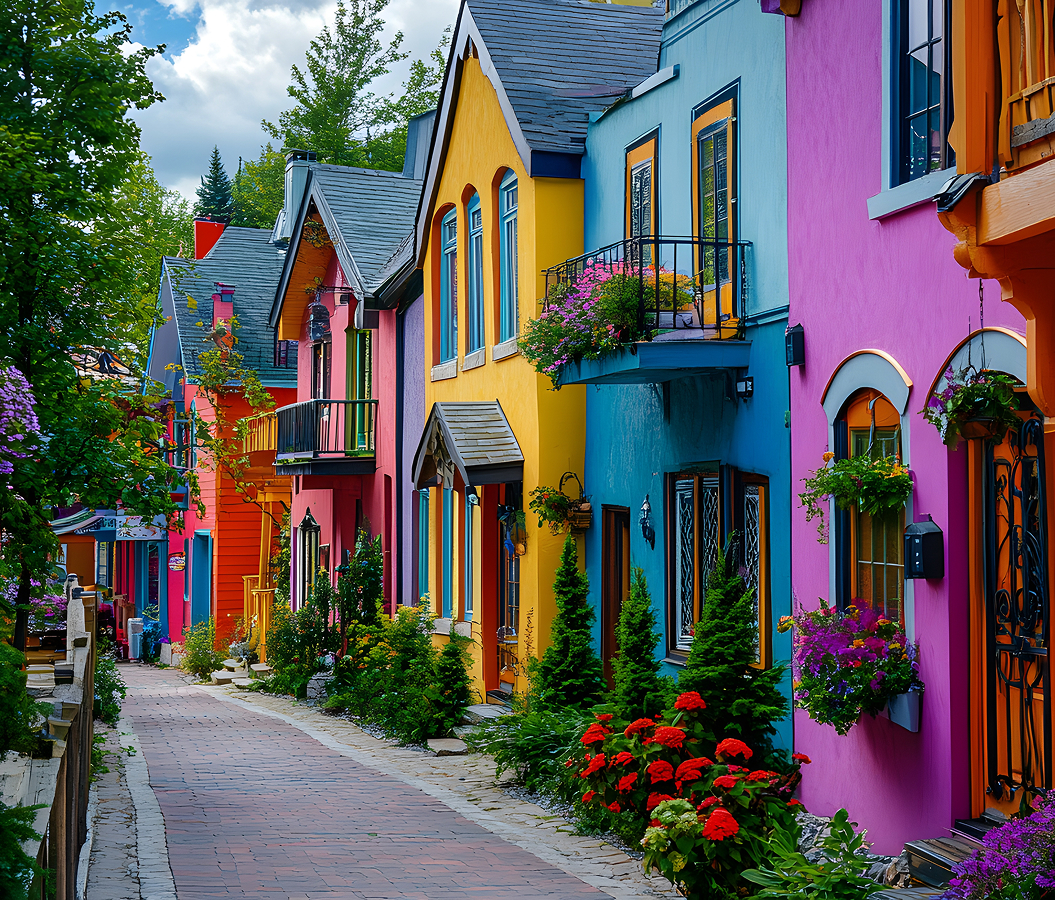
Chester Avenue is best known for developing during the 1880s, 1890s, and early 1900s as the former Village of Riverdale expanded through subdivision of agricultural holdings east of the Don River. Residential growth accelerated following extension of the Toronto Railway Company streetcar network along Danforth Avenue, Parliament Street, and Gerrard Street East, allowing workers, merchants, and professionals to settle beyond Toronto's historic core while maintaining reliable access to downtown employment. Builders introduced cohesive collections of Victorian, Edwardian Classical, Bay-and-Gable, and Arts and Crafts residences distinguished by red brick masonry, sandstone lintels, decorative brick corbelling, stained-glass transoms, projecting bays, ornate wood verandas, and steep gabled rooflines that continue defining the avenue's architectural identity. Planned residential lots incorporated landscaped setbacks, rear service laneways, boulevard tree planting, and coordinated block layouts that reflected contemporary subdivision practices while establishing a remarkably consistent streetscape. Together, these subdivision patterns, transportation investments, architectural traditions, and planning principles established Chester Avenue as one of Riverdale's defining residential corridors.
Incorporation of the Village of Riverdale in 1884 and annexation by the City of Toronto in 1884 accelerated investment in paved streets, sanitary sewers, water distribution infrastructure, gas lighting, and municipal services that supported continued neighborhood growth. Construction of Frankland Community School in the early twentieth century reinforced the surrounding district's educational character while serving generations of Riverdale families within the expanding residential community. Ongoing stewardship by City of Toronto Heritage Preservation Services continues protecting original masonry, decorative woodwork, period rooflines, stained-glass details, and cohesive residential streetscapes that distinguish Chester Avenue from later redevelopment. Collectively, these municipal milestones, civic infrastructure improvements, educational investments, and heritage conservation initiatives demonstrate how Chester Avenue has preserved the historic fabric of Riverdale for well over a century.
How to fold Chester Avenue into your trip.
Chester Avenue works as an exploration of Riverdale's residential heritage, neighborhood culture, and east-end history.
Begin at Withrow Park, where broad lawns, mature maples, recreation facilities, and winding pathways introduce the relaxed residential atmosphere that defines Riverdale while establishing a natural starting point for exploring the surrounding streets. Continue to Riverdale Farm, where heritage farm buildings, working agricultural landscapes, and rare livestock preserve a vivid connection to Ontario's rural past while deepening appreciation for the neighborhood's historical roots before continuing east. Conclude at The Danforth Music Hall, where one of Toronto's oldest surviving performance venues provides the cultural and historical payoff through its beautifully restored interior and century-long contribution to the city's entertainment heritage. Together, the sequence moves from neighborhood greenspace to living history before culminating in a celebrated cultural institution, creating an outing that fully expresses the enduring character of Chester Avenue.
Where your story begins.
Foresyte Travel reveals places that feel extraordinary long before you arrive.
Experience premium editorial crafted for luxury travelers.