Why Dadar matters.
Dadar is among the city's most important cultural and transportation crossroads, where Marathi heritage, thriving markets, and civic life converge within a neighborhood that sits at the geographic and resonant center of Mumbai.
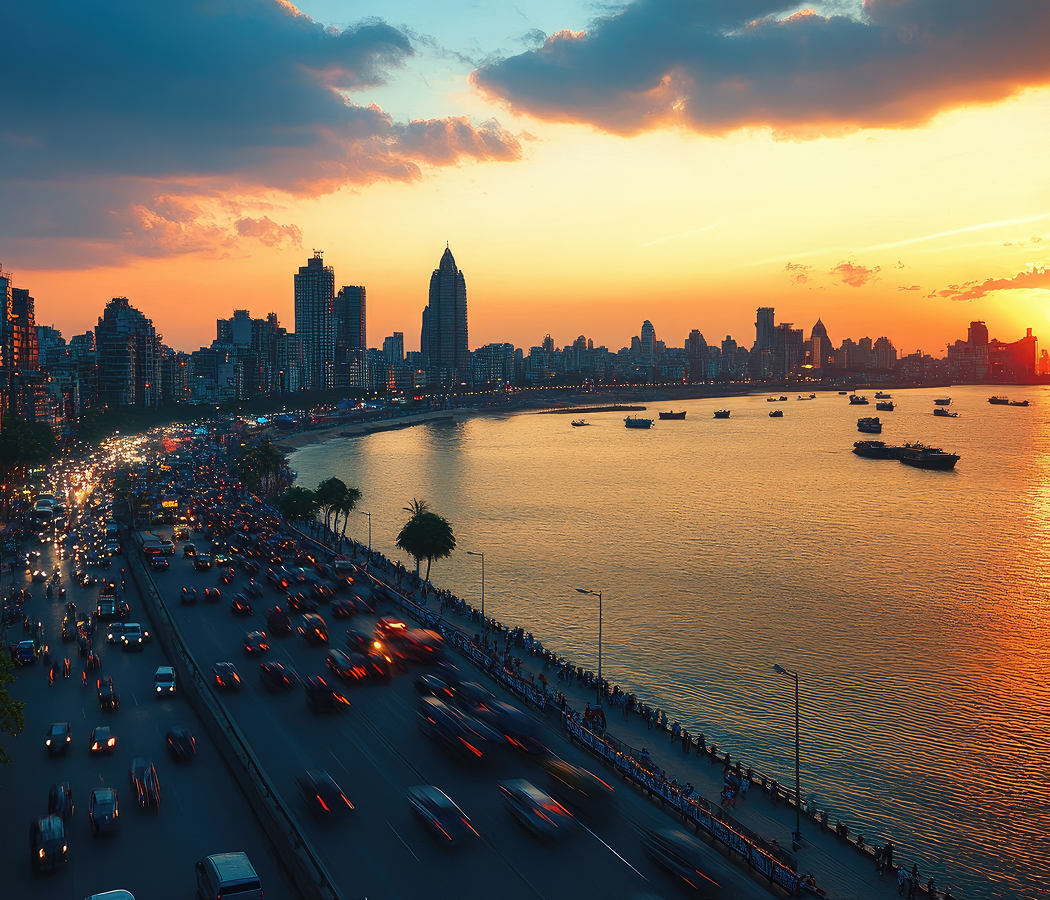
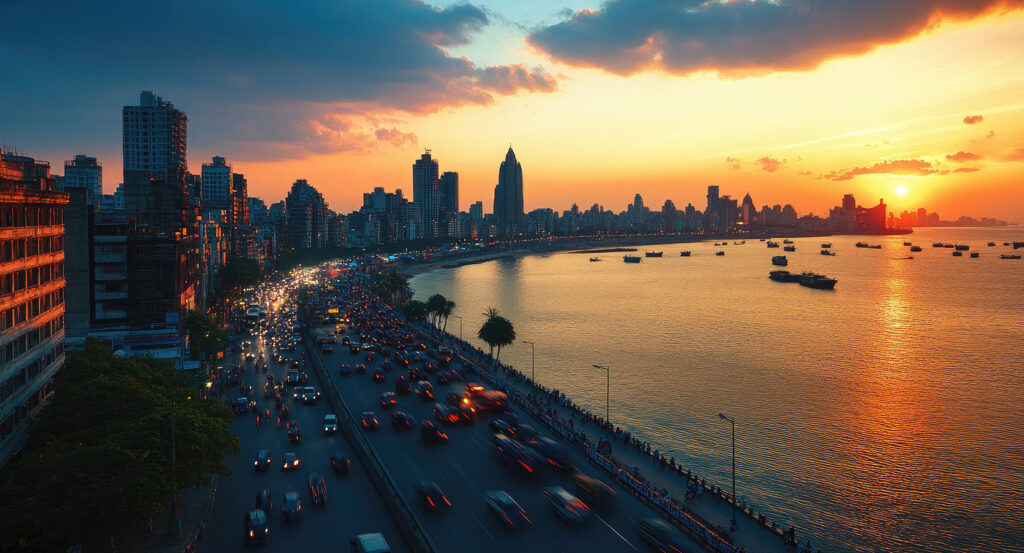
Flower markets, historic residential districts, religious landmarks, local eateries, public parks, commercial corridors, and major transit connections create a neighborhood that balances tradition with constant movement. Developed during the early twentieth century as part of Bombay's first planned suburban expansion, Dadar emerged as a key residential and commercial hub linking the island city with the growing northern suburbs. Its strategic location attracted families, merchants, educators, and professionals who helped shape a neighborhood deeply connected to Mumbai's civic and cultural identity. Over time, Dadar became synonymous with Marathi culture, political activity, and community life. Today, visitors encounter a district that feels energetic, authentic, and unmistakably local. To the south, Worli's waterfront skyline and modern developments highlight the contrast between Mumbai's contemporary ambitions and the community-centered character that continues to define Dadar. Every market stall, railway platform, and neighborhood street reflects a district shaped by connection, culture, and continuity.
What defines Dadar.
Dadar is best known for being Mumbai's most important transportation interchange and a historic center of Marathi culture.
The neighborhood occupies a uniquely influential position within the city, serving as one of the busiest railway junctions in Mumbai while also acting as a focal point for Marathi social, cultural, and political life. Generations of residents helped establish institutions, theaters, educational organizations, and community spaces that reinforced Dadar's importance within Maharashtra's cultural landscape. Its accessibility made it a gathering place for people from across the city, strengthening its role as a center of commerce and public life. Over time, the district became deeply woven into Mumbai's identity, connecting neighborhoods, communities, and traditions through both infrastructure and culture. Few places in the city possess such a powerful combination of mobility, heritage, and civic significance.
How Dadar fits.
Dadar works as an exploration of local culture, historic institutions, and the community spaces that reveal the everyday heartbeat of the city.
Begin at Dadar Flower Market, where the neighborhood's defining relationship with commerce, tradition, and daily life immediately comes into focus. Continue toward Shivaji Park, whose vast open grounds and historic significance reveal the civic and cultural foundations that helped shape generations of Mumbai residents. From there, make your way to Portuguese Church, where architectural heritage and longstanding community traditions provide a broader perspective on the neighborhood's layered history. Along the route, you'll encounter thriving markets, local eateries, residential streets, religious landmarks, community institutions, public gathering spaces, and cultural sites that showcase Dadar's remarkable character. Together, these destinations reveal how Dadar evolved into one of Mumbai's most influential and beloved neighborhoods.
Where your story begins.
Foresyte Travel reveals places that feel extraordinary long before you arrive.
Enjoy editorial crafted for luxury travelers.
Foresyte may earn a commission when you book.