Why Delgany Street matters.
Delgany Street is an enterprising corridor where Ballpark's railroad heritage, industrial craftsmanship, urban reinvention, and contemporary innovation converge within one of Downtown's fastest-evolving districts.
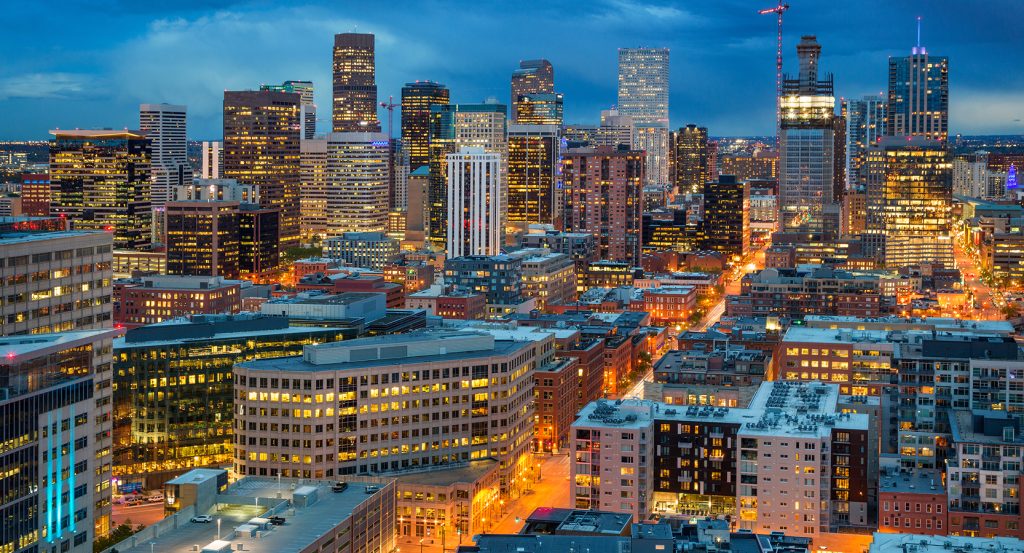
Running through Ballpark between Five Points and LoDo, Delgany Street links former warehouse blocks, rail infrastructure, modern office campuses, residential development, and public gathering spaces that collectively demonstrate the district's transition from freight distribution to one of Denver's foremost employment and entertainment centers. Restored brick warehouses, contemporary glass architecture, broad sidewalks, public art, and remnants of the neighborhood's industrial fabric create a streetscape where historic infrastructure continues shaping a distinctly modern urban environment. The corridor reaches its defining character where adaptive preservation, economic investment, and architectural ambition reinforce one another throughout the district. The result is an experience defined by continual reinvention, industrial authenticity, and Ballpark's enduring contribution to Downtown.
What defines Delgany Street.
Delgany Street is best known for developing beside Denver's historic Union Pacific Railroad and Union Station freight network, where extensive rail yards and warehouse districts established the city's principal wholesale and distribution center during the late nineteenth and early twentieth centuries. Construction of brick warehouses, freight depots, manufacturing buildings, and produce distribution facilities transformed the surrounding district into a critical commercial hub serving Colorado and the broader Rocky Mountain region. Completion of Coors Field in 1995 accelerated investment throughout nearby Ballpark, encouraging rehabilitation of historic industrial buildings while attracting new residential, commercial, and hospitality development across formerly underutilized warehouse blocks. Continued adaptive reuse, preservation of industrial masonry architecture, and substantial private investment have established Delgany Street as a corridor that reflects both Denver's railroad heritage and its contemporary urban renaissance.
Redevelopment introduced major employment campuses, hospitality projects, residential construction, and pedestrian-oriented public spaces that expanded the district beyond its historic freight-handling role while retaining much of its industrial character. Preservation of heavy timber framing, exposed brick masonry, steel warehouse construction, and historic loading docks allows numerous buildings along and near Delgany Street to communicate the craftsmanship and engineering practices associated with Denver's early commercial architecture. Organizations including Historic Denver and History Colorado have documented the neighborhood's railroad-era development and promoted preservation of significant industrial structures that continue defining the corridor's identity. Together, railroad history, adaptive reuse, architectural preservation, and sustained economic reinvestment explain why Delgany Street remains one of Downtown's most compelling historic corridors.
How Delgany Street fits.
Delgany Street works as an exploration of Downtown's railroad heritage, public gathering spaces, and contemporary urban energy.
Begin at Union Station, where the restored 1914 Beaux-Arts terminal introduces the transportation history that shaped the surrounding warehouse district before naturally leading east toward Delgany Street. Continue to McGregor Square, whose active public plaza, restaurants, and year-round programming demonstrate how former industrial blocks have evolved into energetic civic destinations while maintaining strong connections to the neighborhood's historic fabric. Conclude at Coors Field, where the celebrated baseball park provides a fitting finale that demonstrates the investment and renewed civic confidence responsible for Ballpark's remarkable transformation during the past three decades. The progression moves naturally from railroad heritage through contemporary public life before culminating at the catalyst that helped redefine one of Downtown's most historic districts.
Where your story begins.
Foresyte Travel reveals places that feel extraordinary long before you arrive.
Enjoy editorial crafted for luxury travelers.
Foresyte may earn a commission when you book.