Why Eglinton Avenue matters.
Eglinton Avenue is an enterprising corridor where Midtown Toronto's commercial ambition, transportation heritage, architectural diversity, and continuous urban growth define one of the city's most influential east-west avenues.
Running through Midtown Toronto between Forest Hill and Leaside, the corridor connects historic village centres, major civic institutions, established commercial districts, rapid transit infrastructure, and generations of residential neighborhoods that collectively demonstrate Toronto's expansion from scattered rural settlements into a modern metropolitan centre. Successive blocks reveal how concession roads, electric street railways, suburban development, higher education, healthcare, and rapid transit transformed a rural roadway into one of Canada's busiest urban corridors. Throughout the avenue, historic commercial blocks, institutional campuses, evolving skylines, and enduring neighborhood streets preserve more than two centuries of Toronto's urban development. The result is an experience defined by enterprise, continuity, and one of Toronto's most historically significant corridors.
What defines Eglinton Avenue.
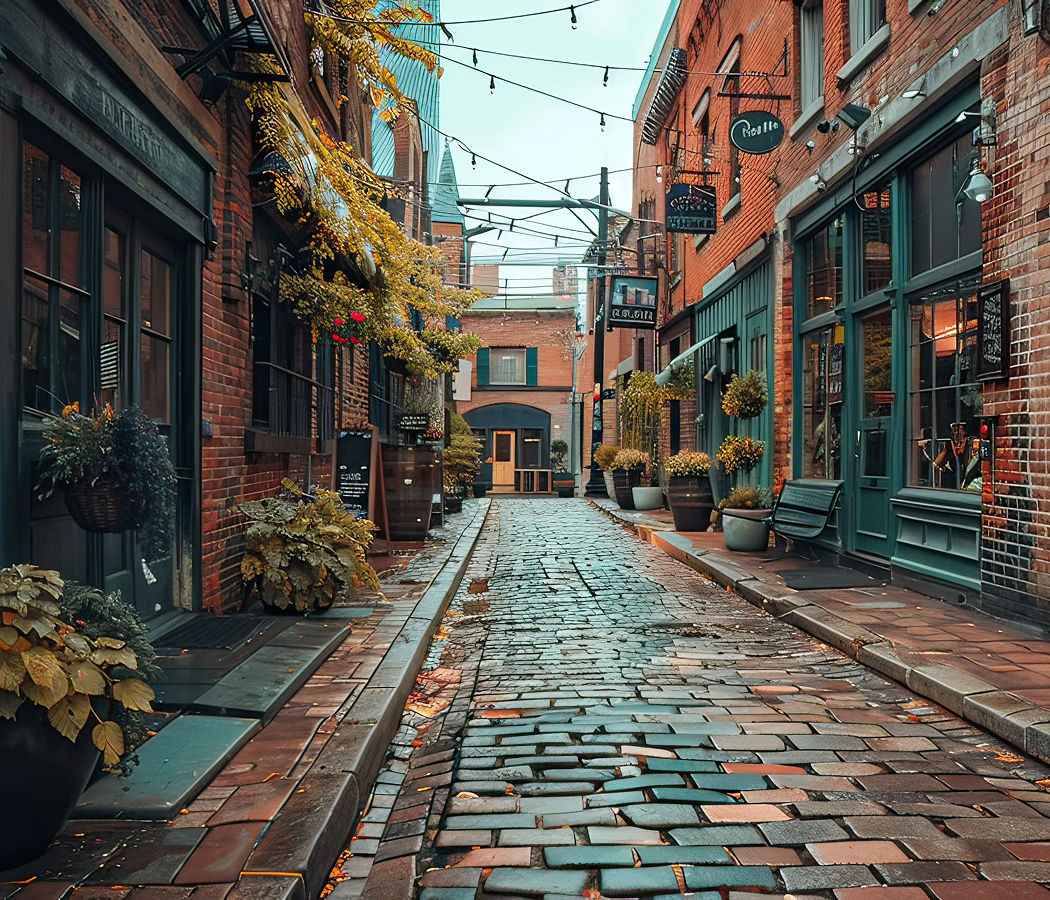
Eglinton Avenue is best known for following Concession Road 2, among the earliest surveyed east-west concession roads established after the founding of the Town of York in 1793, providing an essential transportation route across what remained agricultural townships for much of the nineteenth century. The avenue derives its name from Eglinton Castle in Ayrshire, Scotland, the ancestral home associated with the Montgomery family, whose extensive landholdings around Montgomery's Inn influenced settlement throughout Toronto's western townships. Urban development accelerated after the extension of the Toronto Civic Railways and later the Toronto Transportation Commission streetcar network, while incorporation of nearby villages including North Toronto and subsequent annexation by the City of Toronto in 1912 stimulated substantial commercial and residential construction. Buildings erected throughout the 1910s, 1920s, and 1930s introduced distinguished collections of Edwardian Classical, Art Deco, Classical Revival, and Modernist architecture featuring red brick masonry, Indiana limestone, decorative terra cotta, pressed metal cornices, steel-framed storefronts, and richly ornamented institutional façades. Together, these transportation corridors, municipal expansion, architectural traditions, commercial investment, and civic infrastructure established Eglinton Avenue as one of Toronto's defining urban thoroughfares.
Completion of the Eglinton Theatre in 1936, designed by celebrated architect Murray Brown, introduced one of Canada's finest surviving Art Moderne cinemas, distinguished by streamlined geometry, stainless steel detailing, and dramatic interior craftsmanship. Establishment of Sunnybrook Hospital in 1948, funded through the estate of Joseph Kilgour, created one of Canada's foremost teaching hospitals while strengthening Eglinton Avenue's importance in medical research, trauma care, and healthcare innovation. Construction of the Eglinton Crosstown LRT, among the largest public transportation projects in Canadian history, fundamentally renewed underground infrastructure, utilities, streetscapes, and transit capacity along the corridor during the twenty-first century. Collectively, these architectural commissions, healthcare investments, engineering achievements, philanthropic contributions, and infrastructure improvements demonstrate how Eglinton Avenue has continually adapted to Toronto's changing transportation, institutional, and commercial needs across more than two centuries.
How Eglinton Avenue fits.
Eglinton Avenue works as an exploration of Toronto's transportation history, architectural heritage, and evolving urban landscape.
Begin at Eglinton Park, where expansive recreational grounds introduce the residential growth that accompanied Midtown Toronto's emergence during the streetcar era. Continue to Eglinton Theatre, whose celebrated Art Moderne architecture reflects the commercial confidence and architectural ambition that reshaped the avenue during the 1930s. Conclude at Montgomery's Inn, where one of Toronto's oldest surviving inns provides the historical culmination by illustrating the rural concession-road landscape that preceded the urban development of Eglinton Avenue. Together, the sequence progresses from residential expansion to architectural achievement before culminating in Toronto's earliest settlement history, revealing why Eglinton Avenue remains one of the city's defining historic corridors.
Where your story begins.
Foresyte Travel reveals places that feel extraordinary long before you arrive.
Enjoy editorial crafted for luxury travelers.
Foresyte may earn a commission when you book.