Why Fairmont Banff Springs matters.
Fairmont Banff Springs is a railway château where Banff's mountain setting meets Canadian Pacific ambition, layered architectural expansion and a long culture of Alpine hospitality.
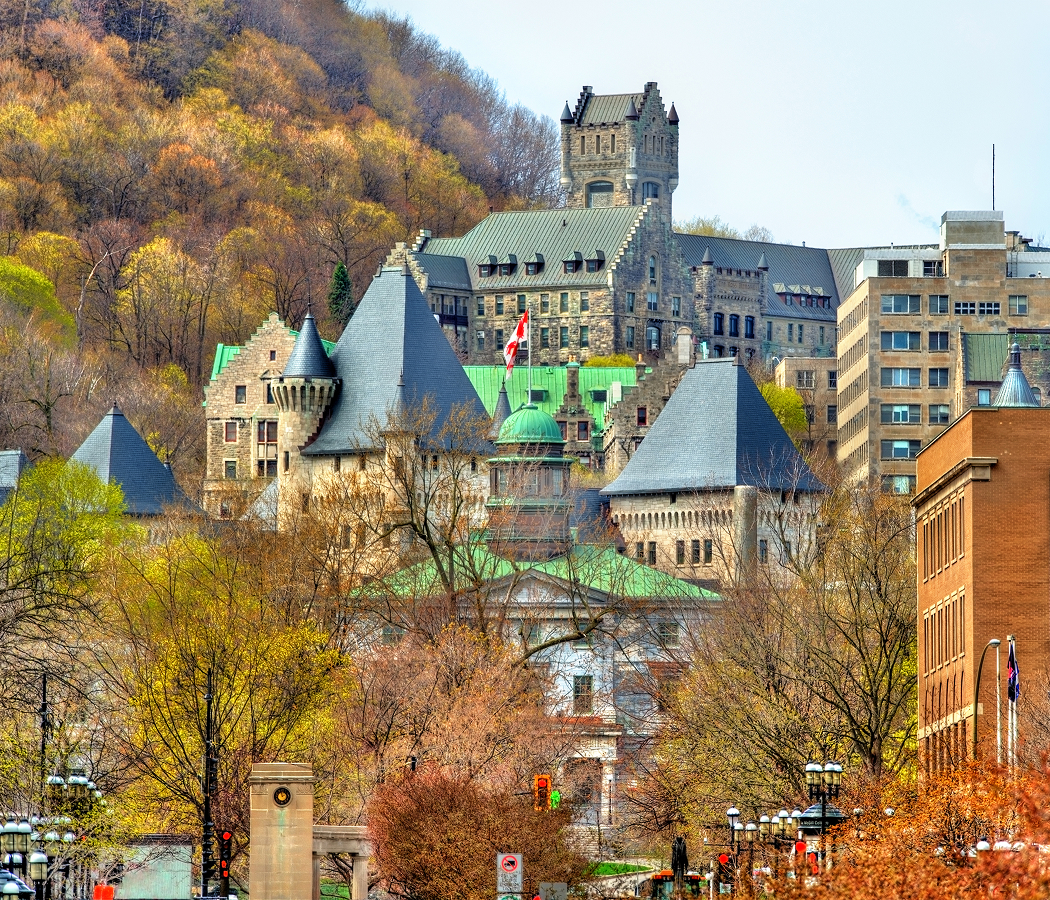
Set along Spray Avenue near Mountain Avenue and just steps from the Fairmont Banff Springs Golf Course, the hotel occupies the wooded southeast edge of Banff between Sulphur Mountain, Tunnel Mountain, the Spray River valley and the town's compact commercial centre. Its stone towers, steep roofs and projecting gables rise above a forested slope with the Fairholme Range beyond the valley. Arrival moves from a narrow mountain road into a sequence of courtyards, halls and elevated rooms shaped for looking outward across the Rockies. Restaurants, lounges and afternoon tea keep the building's social life attached to its architecture rather than separating dining from the larger setting. The result is a hotel whose scale turns a railway destination into a permanent mountain institution.
What you did not know about Fairmont Banff Springs.
Fairmont Banff Springs is best known for converting Canadian Pacific Railway expansion into a grand resort architecture for the Rocky Mountains. William Cornelius Van Horne promoted a chain of hotels that would draw long-distance travellers toward landscapes the railway made accessible. The first Banff Springs Hotel opened in 1888 after American architect Bruce Price designed a four-storey wooden building with turrets, dormers, bay windows and deep viewing galleries. Price combined French Loire Valley Renaissance references with Scottish Baronial forms, giving the railway hotel a castle profile suited to a mountain resort. Fire destroyed the original structure in 1926, leaving the Canadian Pacific Railway to replace it with a more durable building in stone and reinforced concrete. Walter S. Painter designed the eleven-storey tower added between 1911 and 1914, while John W. Orrock designed the main block completed between 1927 and 1928. Rough masonry, rounded gables, Arts-and-Crafts finishes and steep roofs gave the expanded hotel a more restrained Châteauesque character than the first wooden building. The completed complex became one of the largest railway hotels in Canada and a visual emblem of tourism in the Canadian Rockies. Canada designated the property a National Historic Site in 1988 for its role in railway development, resort architecture and mountain tourism. Later additions remained sympathetic to Painter's tower and Orrock's main block, preserving the relationship between heavy stone construction and the surrounding forest. The Fairmont name eventually joined a building whose earlier identities had already accumulated a century of architectural authority.
Rundle Bar carries the hotel's mountain setting into a room organized around timber, stone, leather and expansive views. The bar's name refers to Mount Rundle, the long ridge that frames the Bow Valley east of Banff. Afternoon tea uses tiered stands, scones, preserves, pastries and finger sandwiches to adapt a British railway-hotel ritual to a Rocky Mountain dining room. 1888 Chop House directs its menu toward Alberta beef, local farmers and regional purveyors, placing ranching and supply relationships inside a formal hotel restaurant. Waldhaus draws on alpine restaurant traditions through chalet architecture, European dishes and a setting beside the golf course. Grapes developed a more informal register around pizza, antipasti and desserts, extending the property's food program beyond ceremonial dining rooms. Ramsay Bar occupies the Gatehouse Foyer and ties cocktails to the hotel's ski, hiking and après-sport culture. The Fairmont Spa adds mineral treatments, hydrotherapy and body rituals to the resort's established relationship with mountain water. Golf architecture contributes another layer through the Stanley Thompson course, whose fairways follow the Bow Valley below the hotel. These rooms, menus, treatments and landscapes make the resort's hospitality legible as a sequence of mountain traditions given permanent architectural form.
How Fairmont Banff Springs fits.
Fairmont Banff Springs works as a starting point for tracing how Banff's cultural life moved from private collecting to Indigenous history and then to professional arts education.
Begin at Whyte Museum of the Canadian Rockies, where Peter and Catharine Robb Whyte's paintings, photographs, manuscripts and collected objects preserve the Canadian Rockies through artistic and community knowledge. The museum opened in 1968 after Catharine continued the project established through the Peter and Catharine Whyte Foundation. Its holdings include landscape paintings, mountaineering materials, archival photographs and material connected to the Stoney Nakoda and other communities of the region. Heritage homes and log cabins preserve Banff's earlier domestic architecture beside the gallery and archive. Continue to Buffalo Nations Luxton Museum, created by Norman Luxton and Eric Harvie as the Luxton Museum of the Plains Indian in 1953. The original log fort-like building holds Indigenous artifacts, clothing, tools and cultural objects assembled through Luxton's relationships with the Iyârhe Nakoda and other First Nations communities. Norman's marriage to Georgina McDougall connected his Banff life to the McDougall family's Methodist mission and trading post at Morley. The museum's collections place Indigenous material culture within Banff's commercial and settlement history. Conclude at Banff Centre for Arts and Creativity, which began in 1933 as the Banff School of Drama under the University of Alberta's Department of Extension and a Carnegie Foundation grant. Ned Corbett organized the first two-week course, and 190 students enrolled in the opening session. Painting joined drama in 1935, music followed in 1936, and Donald Cameron later guided the institution through its expansion into fine arts, conferences and management. Donald Cameron Hall opened in 1953, while the Eric Harvie Theatre followed in 1967. The centre became an autonomous Alberta institution in 1978 and adopted its present name in 2016. The progression moves from collected mountain memory, through Indigenous cultural preservation, to a national centre for artistic training and production.
Where your story begins.
Foresyte Travel reveals places that feel extraordinary long before you arrive.
Enjoy editorial crafted for luxury travelers.
Foresyte may earn a commission when you book.