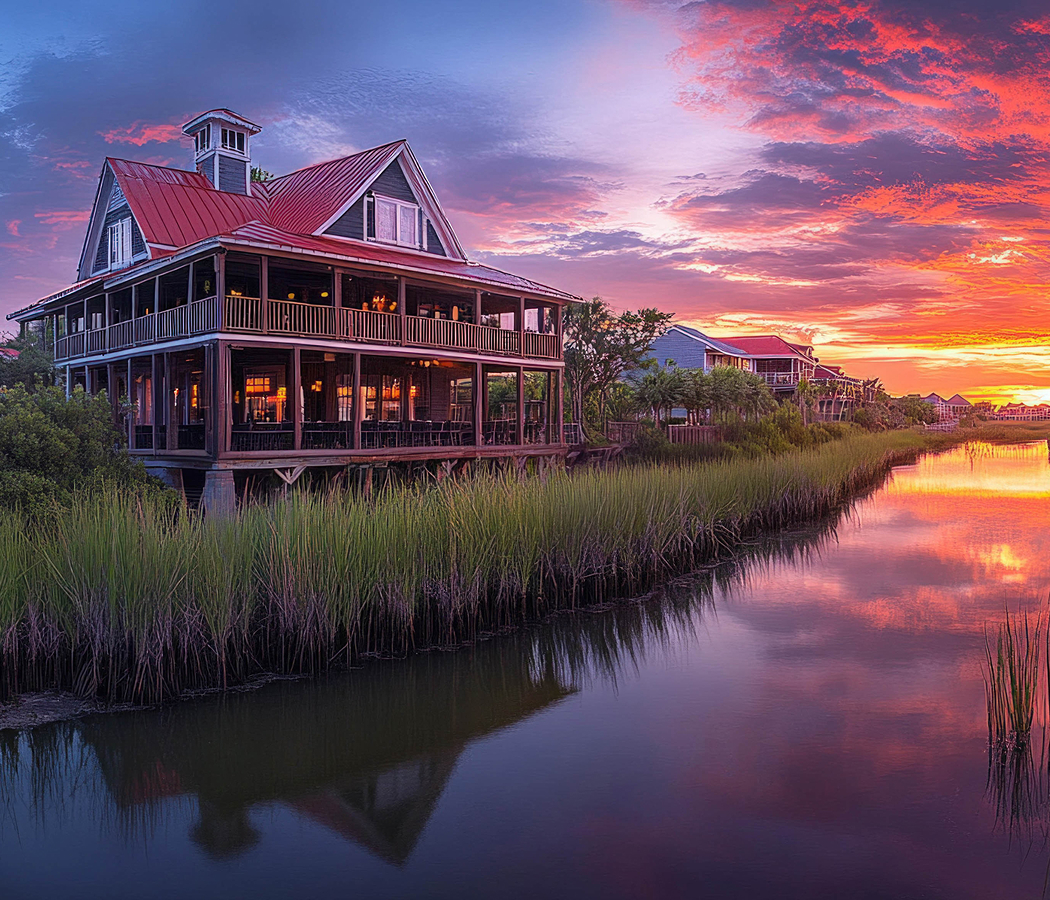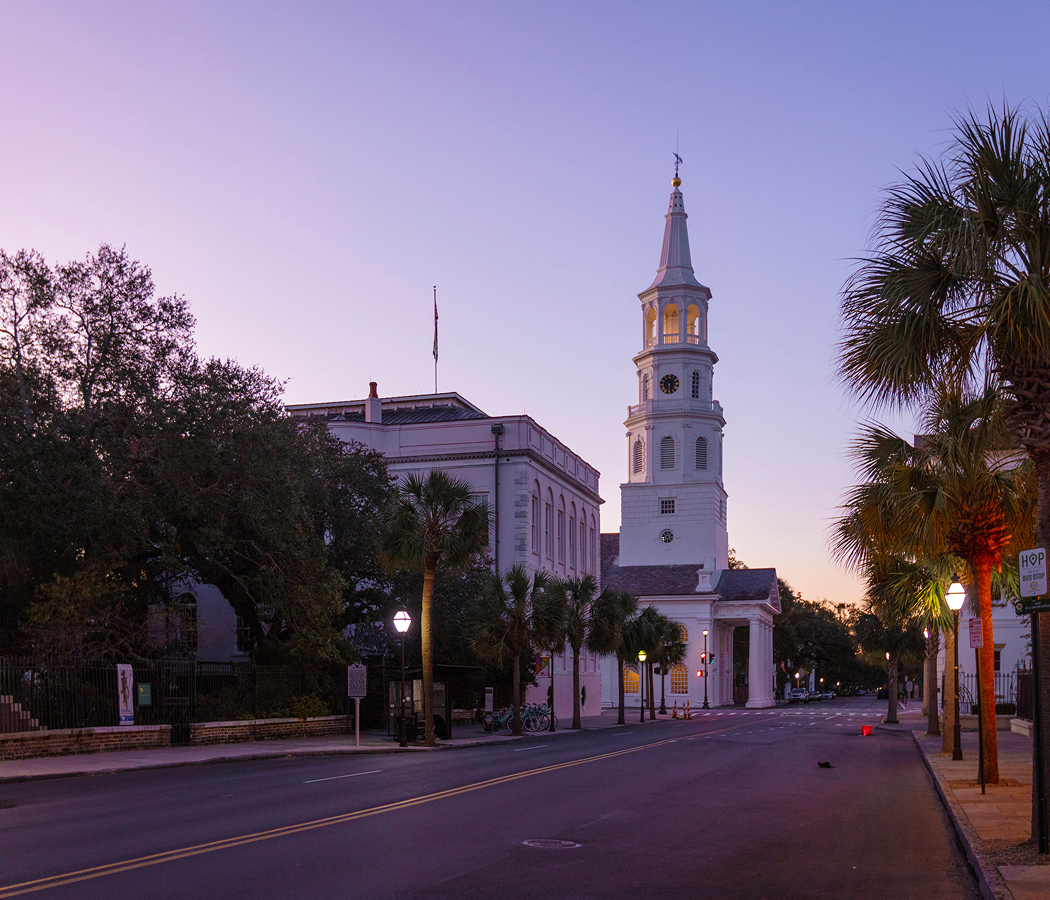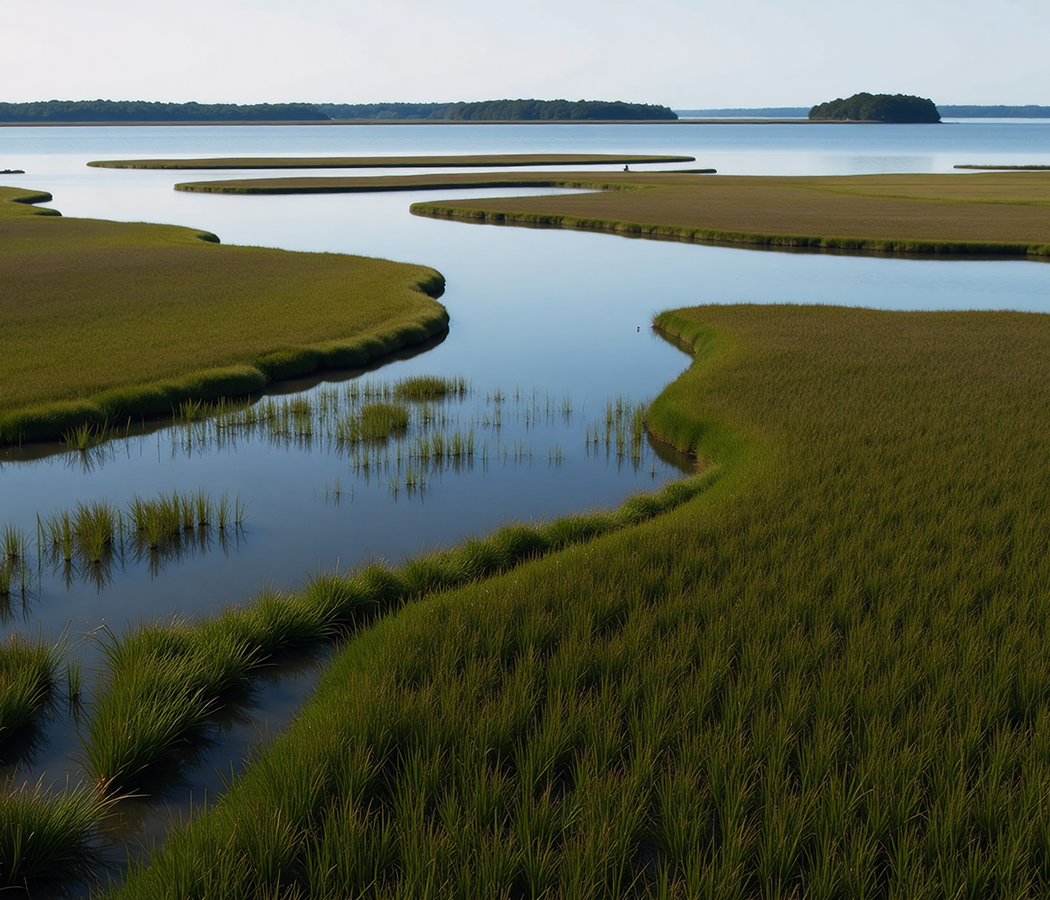
Why you should experience George Fazio Golf Course in South Carolina.
George Fazio Golf Course is a demanding championship layout where Palmetto Dunes' engineered Lowcountry landscape meets George Fazio's tournament-tested architecture, long par fours and an unusually concentrated examination of approach play.
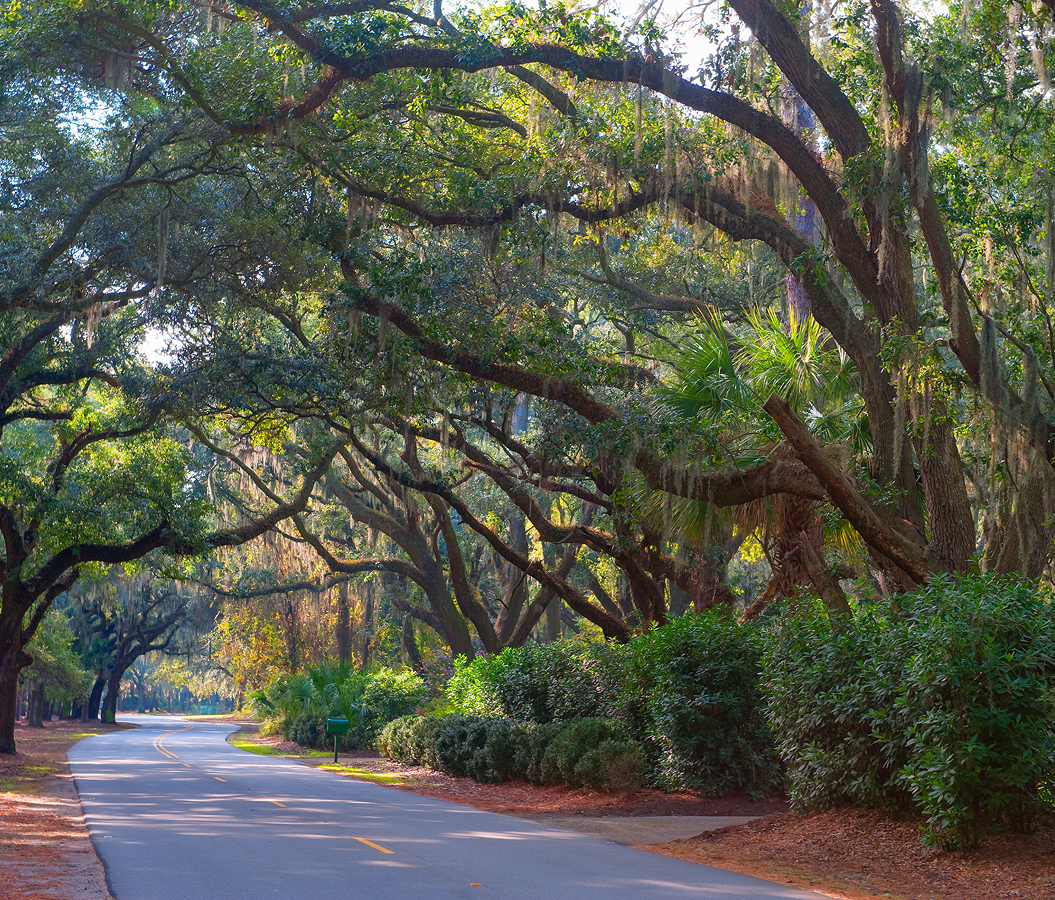
Set along Carnoustie Road near Queens Folly Road and just steps from Palmetto Dunes' lagoon network, the course occupies an oceanfront resort landscape shaped through pine stands, palmettos, water and reconstructed dunes. Fairways alternate between more open corridors on the front nine and tighter passages deeper into the round, changing the amount of ground available from the tee without abandoning the course's emphasis on length. Small elevated greens and extensive bunkering place much of the difficulty at the end of each hole, where missed approaches leave demanding recoveries around compact targets. Water enters the strategic equation across the layout, then coastal wind changes effective yardages and club selection on holes already stretched beyond conventional resort dimensions. The result is a Palmetto Dunes course that rewards disciplined positioning from the opening drive through a closing sequence designed to keep long-iron and fairway-wood play consequential until the final green.
What you should know about George Fazio Golf Course.
George Fazio Golf Course is best known for translating the competitive instincts of former touring professional George Fazio into Hilton Head's only public par-70 layout, created during the architect's most consequential period of work with his nephew Tom Fazio. George had won the 1946 Canadian Open and 1947 Bing Crosby Pro-Am before reaching an 18-hole playoff against Ben Hogan and Lloyd Mangrum at the 1950 U.S. Open at Merion, then accumulated three top-five U.S. Open finishes between 1950 and 1953 and seven Masters appearances from 1947 through 1954. His architectural career eventually produced Jupiter Hills and Butler National, and in 1962 he brought Tom into the profession as his protégé; the pair were still working together when Palmetto Dunes joined their portfolio in the early 1970s. Construction began in 1973 and the course opened in 1974, six years after the resort had completed its original Robert Trent Jones layout. National recognition followed rapidly, with the young Fazio course entering Golf Digest's America's 100 Best and later receiving South Carolina Golf Course of the Year honors from the South Carolina Golf Course Owners Association. Its par structure remains exceptional on Hilton Head: only two holes are par fives, concentrating scoring pressure into an extended collection of par fours that begins with a 432-yard first and culminates in a 462-yard eighteenth from the gold tees. Modern Diamond Zoysia putting surfaces preserve that architecture under a contemporary turf system, leaving Fazio's unusual par distribution and long-hole strategy at the center of the round.
The 432-yard first establishes the examination immediately through a long, narrow green with out-of-bounds running along its left side, forcing the opening approach to carry both distance and directional control. The second changes the calculation through a 562-yard par five where water protects the front-right approach, sand occupies the opposite side and a tall tree interferes with the direct route, making the final wedge distance an important strategic choice. Hole three returns to par four at 412 yards and uses fairway bunkers to frame the preferred drive before two deep greenside bunkers defend an elevated target whose rear position adds multiple clubs to the approach. Long par fours continue to accumulate through the round, placing repeated pressure on second shots and preventing the scorecard from offering the frequency of short two-shot holes found on many resort layouts. The eighteenth supplies the final test at 462 yards, where trees punish an attempted shortcut on the right and three large bunkers surround an elevated green with out-of-bounds behind and left. Opening and closing with substantial par fours gives the course its clearest competitive rhythm: position the drive, calculate wind and elevation, then produce another full approach into a defended target.
How to fold George Fazio Golf Course into your trip.
George Fazio Golf Course works as the sporting anchor for a Palmetto Dunes outing that reveals how the surrounding barrier-island terrain evolved through coastal engineering, nineteenth-century maritime navigation and the later excavation of Broad Creek's waterfront.
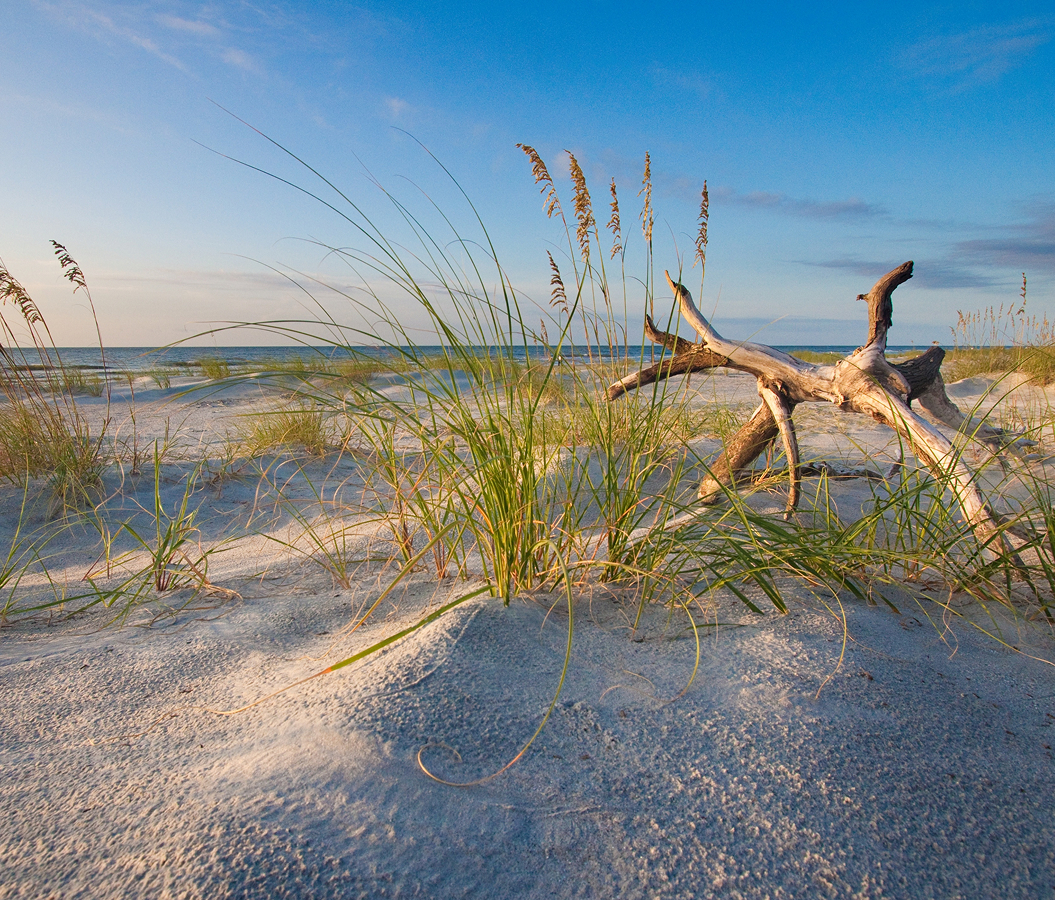
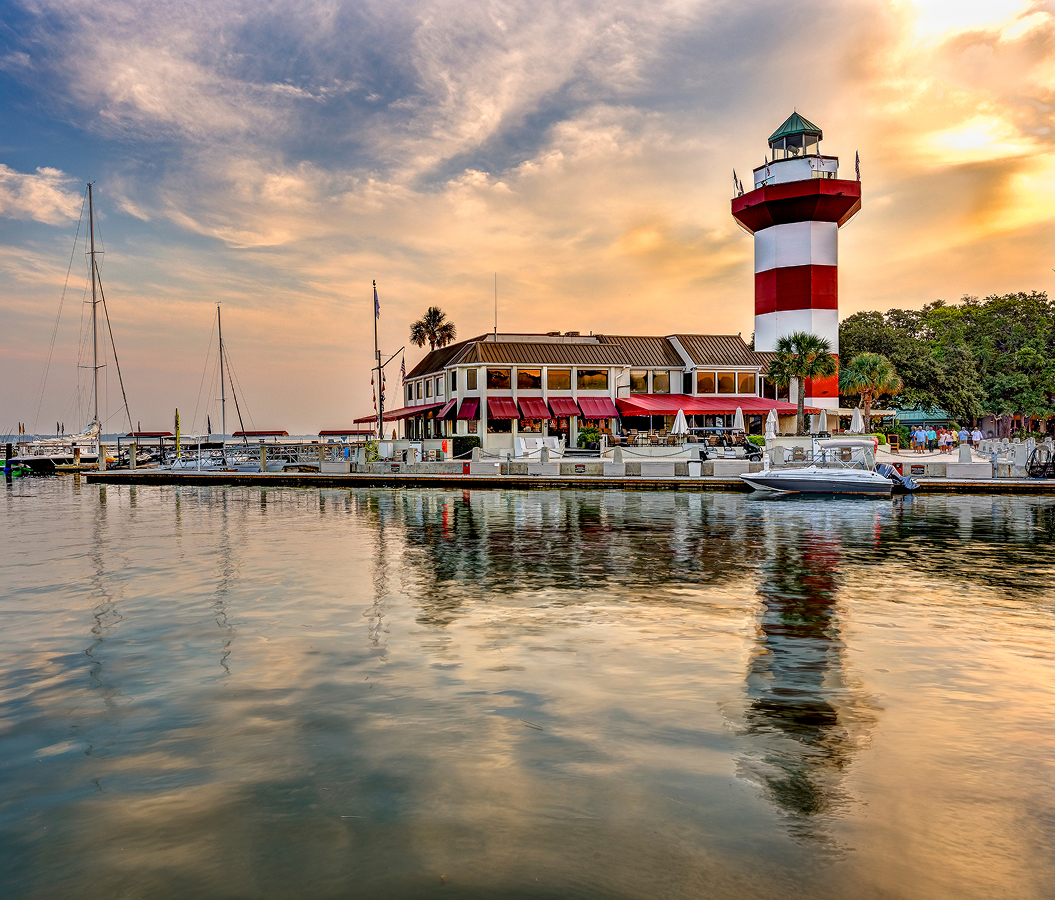
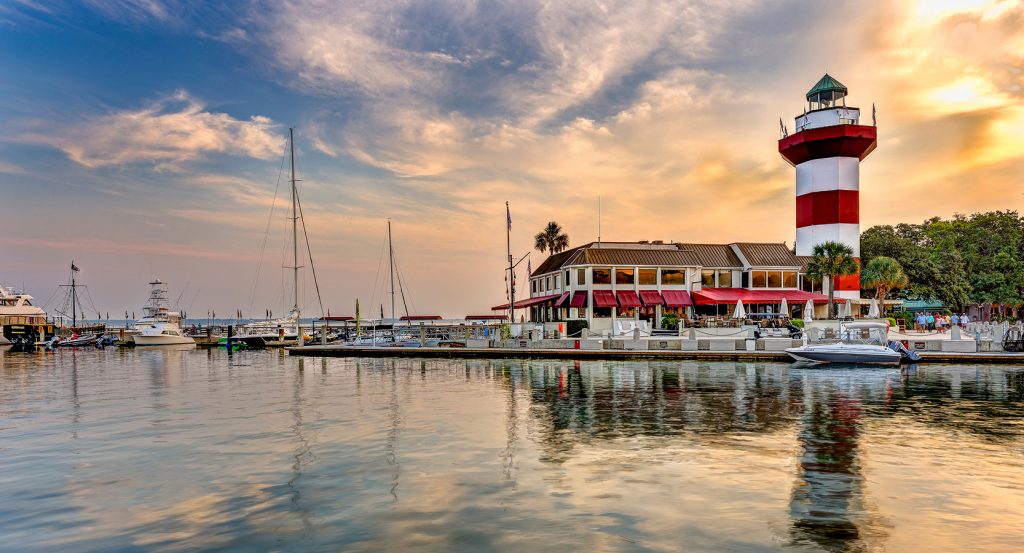
Begin at Palmetto Dunes Lagoon System, completed during the resort's first development phase in 1968 and subsequently expanded into 11 miles of navigable waterways. When severe beach erosion threatened the property, coastal engineer Per Bruun led an immense intervention beginning in 1970 that dredged nearly two million cubic yards of sand from the lagoon network to construct dunes 11 feet high, with tidal gates regulating water exchange and turning excavation, drainage and beach stabilization into a single coastal system. Continue to Hilton Head Rear Range Lighthouse, constructed by the United States Lighthouse Board in 1879-1880 after Congress authorized $40,000 for range lights guiding vessels toward Port Royal Sound. Its cast-iron skeleton rises from six concrete piers around a cylindrical stair tower; the original light stood 92 feet above sea level, reached 15 miles offshore and worked with a movable forward beacon before deactivation during the twentieth century and National Register designation in 1985. Conclude at Shelter Cove Harbour & Marina, whose creation began after Greenwood acquired Palmetto Dunes in 1979 and shifted development across Highway 278 toward Broad Creek. A major 1980 dredging operation excavated the harbor and simultaneously supplied 600,000 cubic yards of additional sand for the resort's beaches; the Shelter Cove Harbour Company followed in 1982 and the first docks opened in 1983, tying waterfront development directly back to the island's continuing manipulation of sand and water. The progression moves from Bruun's lagoon-and-dune engineering through a federal navigation system built for Port Royal Sound into Shelter Cove's dredged harbor, revealing how water management repeatedly determined the physical development of Palmetto Dunes.
Where your story begins.
Foresyte Travel reveals places that feel extraordinary long before you arrive.
Experience premium editorial crafted for luxury travelers.