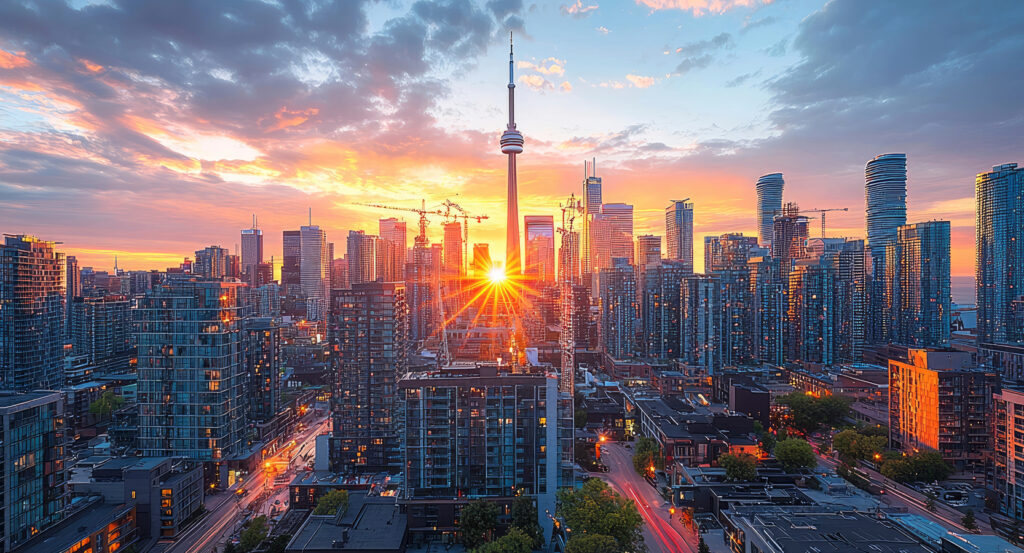
Why you should experience Gerrard Street in Toronto, Ontario.
Gerrard Street is a spirited corridor where East Chinatown's immigrant traditions, commercial heritage, institutional legacy, and architectural diversity express one of Toronto's most culturally influential urban avenues.
Running through East Chinatown between Cabbagetown and Leslieville, the corridor connects nineteenth-century residential districts, established commercial streets, major healthcare institutions, and generations of immigrant enterprise that collectively demonstrate Toronto's continuous urban evolution. Successive blocks reveal how estate subdivision, electric street railways, healthcare expansion, and multicultural settlement shaped an avenue whose character has continually adapted while retaining deep historical roots. Throughout the corridor, historic storefronts, institutional campuses, streetcar infrastructure, and enduring neighborhood businesses preserve a remarkably layered record of Toronto's development. The result is an experience defined by cultural continuity, entrepreneurship, and one of the city's most historically significant corridors.
What you should know about Gerrard Street.
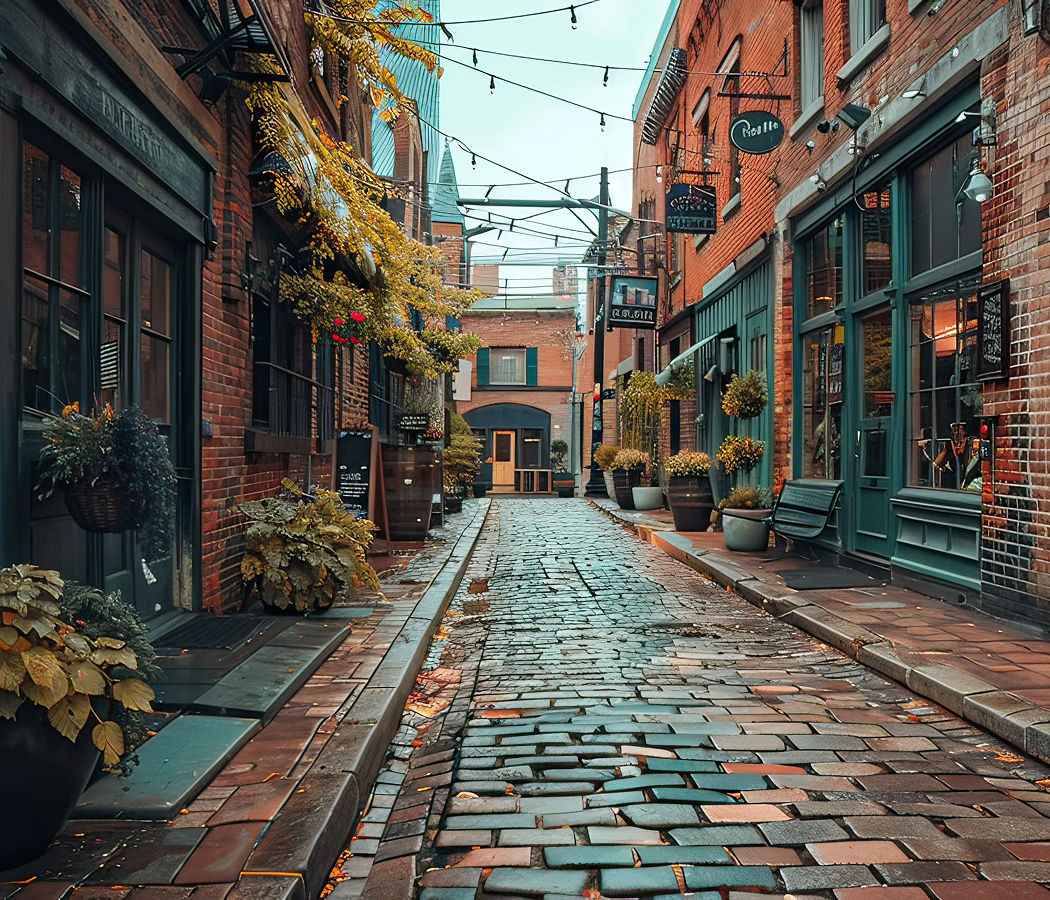
Gerrard Street is best known for developing across former Park Lot estates during the nineteenth century as Toronto expanded eastward beyond its original townsite, creating one of the city's earliest continuous east-west thoroughfares. The corridor was named after Samuel Gerrard, an Irish-born merchant, banker, and political figure whose commercial influence extended throughout Upper Canada during the late eighteenth and early nineteenth centuries. Expansion accelerated after electrification of the Toronto Railway Company streetcar network beginning in 1892, establishing Gerrard Street as a principal transit corridor while encouraging dense commercial and residential construction characterized by Victorian, Edwardian, Romanesque Revival, and Classical Revival architecture featuring red brick masonry, carved stone lintels, pressed metal cornices, decorative brick corbelling, stained-glass transoms, and projecting bay windows. Institutional prominence grew through the continued expansion of The Hospital for Sick Children, founded in 1875, and Toronto General Hospital, whose historic Gerrard Street facilities reinforced the avenue's importance within Toronto's medical community before later relocation and redevelopment. Together, these transportation investments, architectural traditions, institutional expansions, commercial development, and civic improvements established Gerrard Street as one of Toronto's defining urban corridors.
The establishment of East Chinatown during the 1970s and 1980s introduced Chinese supermarkets, bakeries, herbal medicine shops, restaurants, professional offices, Buddhist organizations, and family-owned businesses that reshaped the corridor following the relocation of many Chinese entrepreneurs from the city's original Downtown Chinatown. Construction of Ryerson Polytechnic Institute, now Toronto Metropolitan University, expanded nearby educational activity while strengthening the avenue's relationship with research, innovation, and student life across Downtown. Heritage recognition by the City of Toronto Heritage Register continues protecting numerous commercial blocks, institutional buildings, and nineteenth-century façades that preserve decorative masonry, carved stone detailing, historic storefront proportions, stained glass, and original architectural ornament. Collectively, these immigration patterns, educational investments, institutional developments, preservation initiatives, and enduring commercial traditions demonstrate how Gerrard Street evolved into a corridor where Toronto's architectural, educational, medical, and multicultural histories intersect.
How to fold Gerrard Street into your trip.
Gerrard Street works as an exploration of Toronto's multicultural heritage, institutional history, and architectural evolution.
Begin at Allan Gardens Conservatory, where one of Toronto's oldest public gardens introduces the Victorian city that shaped Gerrard Street's earliest development. Continue to East Chinatown, where generations of family-owned businesses, cultural institutions, and neighborhood traditions reflect one of Canada's most enduring Chinese commercial communities. Conclude at Riverdale Farm, where one of Toronto's oldest public educational farms provides the historical culmination by recalling the agricultural landscape that preceded the city's eastward urban expansion. Together, the sequence progresses from Victorian Toronto to immigrant entrepreneurship before culminating in the landscape that existed before urbanization, revealing why Gerrard Street occupies such an important place in Toronto's historical development.
Where your story begins.
Foresyte Travel reveals places that feel extraordinary long before you arrive.
Experience premium editorial crafted for luxury travelers.