
Why Palace of Holyroodhouse matters.
Palace of Holyroodhouse is a regal royal residence where Holyrood's monarchical heritage, Renaissance grandeur, constitutional tradition, and centuries of Scottish statecraft continue defining the ceremonial heart of the nation.
Set along Canongate near Abbey Strand and just steps from the Scottish Parliament Building, this distinguished palace unfolds through elegant State Apartments, historic royal chambers, landscaped gardens, vaulted abbey ruins, and richly furnished galleries where Scotland's monarchs, queens, diplomats, and political leaders shaped the course of British history. Ornate ceilings, Flemish tapestries, Renaissance stonework, and centuries of royal collections reveal an enduring seat of monarchy framed by the dramatic landscape of Holyrood Park. Ceremony, architecture, and national character remain inseparable throughout every courtyard and chamber.
What defines Palace of Holyroodhouse.
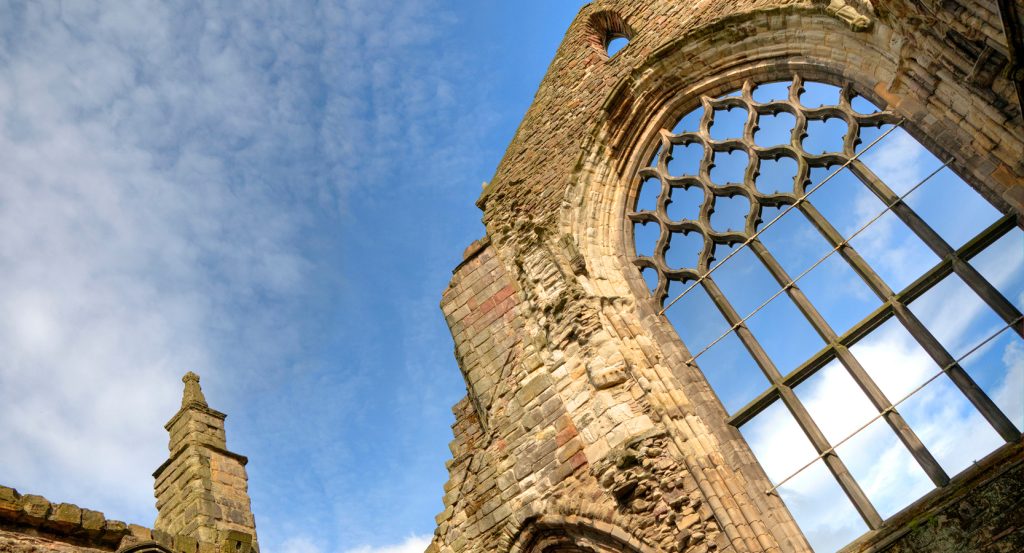
Palace of Holyroodhouse is best known as the official residence of the British monarch in Scotland, evolving from the Augustinian Abbey of Holyrood founded by King David I in 1128 into a royal palace principally constructed for James IV between 1498 and 1501 before undergoing a comprehensive Baroque transformation commissioned by Charles II following the Restoration and executed between 1671 and 1678 by Sir William Bruce, whose symmetrical quadrangular design established one of Britain's finest seventeenth-century royal residences. The palace occupies the site where Scottish monarchs progressively expanded monastic accommodation into a permanent royal residence, with James V adding the northwestern tower between 1528 and 1532, the surviving structure that later housed Mary, Queen of Scots during her dramatic reign from 1561 to 1567. Her private apartments preserve the setting of one of Scotland's defining political episodes, the 1566 murder of her secretary David Rizzio by noble conspirators led by Lord Darnley, an event that profoundly altered the kingdom's dynastic future. Sir William Bruce's reconstruction introduced formal classical façades, grand ceremonial staircases, richly decorated State Apartments, and the Great Gallery measuring 46 meters in length, displaying eighty-nine largely Jacob de Wet portraits depicting Scotland's renowned and historical monarchs. The palace also preserves the atmospheric ruins of Holyrood Abbey, where royal weddings, coronations, parliamentary gatherings, and burials unfolded across centuries before the medieval church partially collapsed during the eighteenth century. Today Holyroodhouse remains an active working royal residence administered by the Royal Collection Trust, hosting State ceremonies, investitures, diplomatic receptions, and official engagements while safeguarding exceptional collections of fine art, furniture, sculpture, silver, manuscripts, and decorative arts alongside internationally significant architectural and archaeological heritage.
Architectural evolution spanning medieval monastic foundations, Renaissance royal expansion, and Baroque reconstruction reveals how successive monarchs reshaped Holyroodhouse to reflect changing expressions of royal authority. Historic apartments associated with Mary, Queen of Scots, ceremonially furnished reception rooms, the Great Gallery's dynastic portrait cycle, surviving abbey remains, and carefully restored royal gardens illuminate nearly nine centuries of Scottish political, religious, and cultural history. Continuing conservation, archaeological investigation, collection stewardship, and royal ceremonial use preserve the palace as both a living residence and one of Britain's most important historic buildings. Monarchy, architecture, and national history combine to create one of Scotland's most distinguished royal residences.
How Palace of Holyroodhouse fits.
Palace of Holyroodhouse works as the centerpiece of an exploration through Holyrood's royal, political, and natural landmarks.
Begin at Scottish Parliament Building, where contemporary civic architecture introduces Scotland's modern constitutional character before exploring Palace of Holyroodhouse and its royal legacy. Continue to Holyrood Abbey, whose evocative medieval ruins deepen appreciation for the site's nearly nine centuries of religious and royal history. Conclude at Arthur's Seat, where panoramic views across Edinburgh provide a memorable finale overlooking the landscape that has framed Scotland's monarchy for generations. The progression moves naturally from modern governance to royal tradition before concluding atop Edinburgh's ancient volcanic summit, revealing why Holyrood remains one of Scotland's defining historic precincts.
Where your story begins.
Foresyte Travel reveals places that feel extraordinary long before you arrive.
Enjoy editorial crafted for luxury travelers.
Foresyte may earn a commission when you book.














































































































