Why InterContinental Toronto Centre matters.
InterContinental Toronto Centre is a central city hotel where Toronto's railway and convention districts meet the financial power of downtown, the sporting culture of the waterfront and the city's transformation into a major Canadian metropolis.
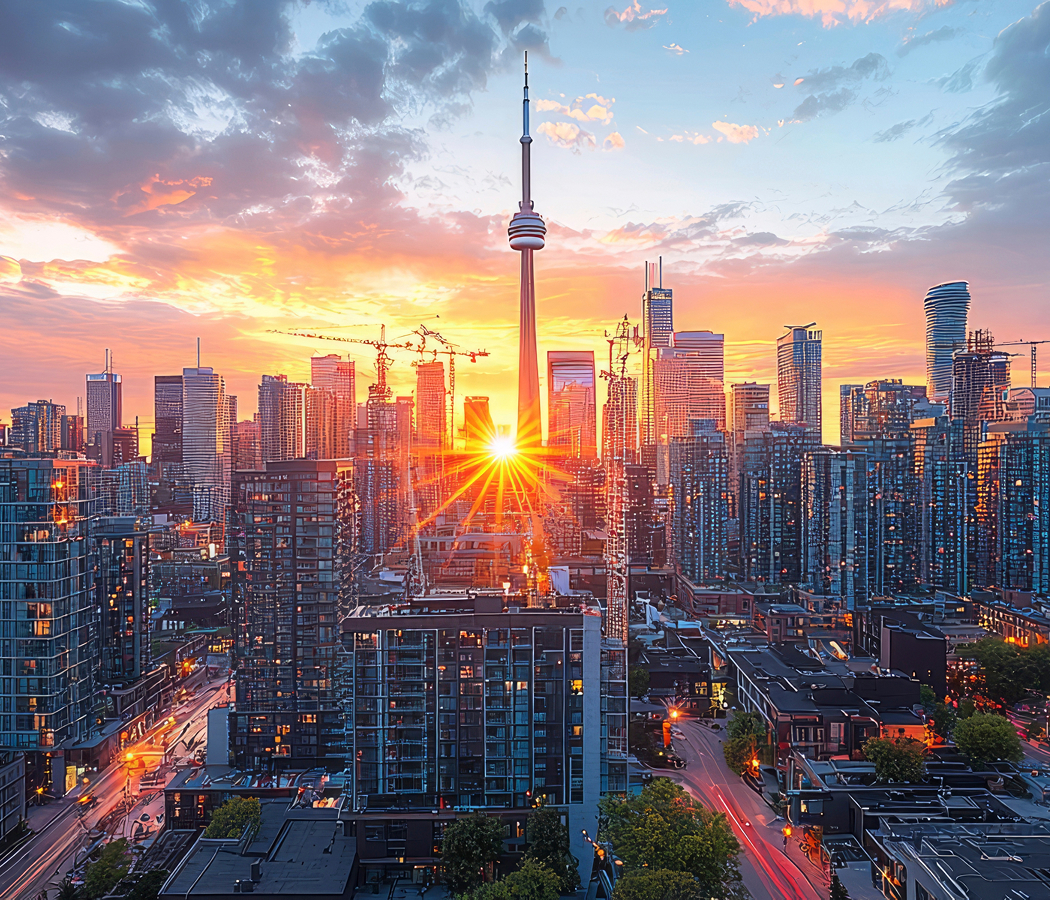
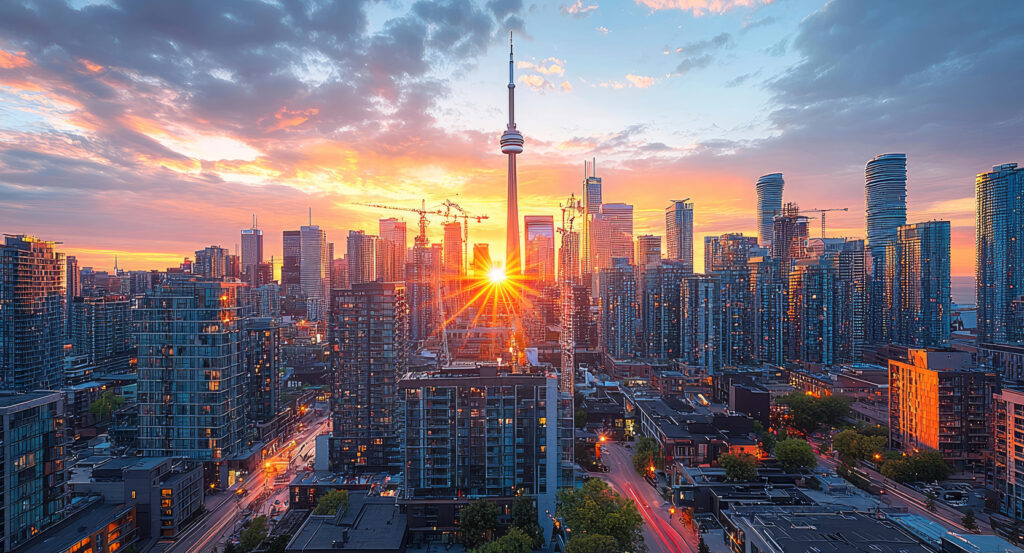
Set along Front Street West beside the Metro Toronto Convention Centre, InterContinental Toronto Centre occupies a prominent position between Union Station, the Financial District and the Entertainment District, with the CN Tower rising nearby and Lake Ontario extending south beyond the railway corridor. Its modern urban façade rises above a formal entrance, combining glass, stone, broad windows and balconies shaped by the scale of Downtown. Guest rooms and suites face the city, railway lines or surrounding towers, with upper floors providing views toward the lake, stadiums and the expanding skyline. The hotel's public interiors create a transition from the active streets to restaurants, lounges, spa facilities and meeting rooms organized within the building. Front Street carries visitors between convention halls, offices, theaters, restaurants and historic transportation buildings, while nearby streets lead toward the waterfront and the city's central cultural institutions. Union Station and the railway corridor remain important geographic elements, connecting the hotel to regional transit, intercity travel and the commercial movement of the city. Its location places guests within walking distance of professional sports venues, museums, galleries, markets and the public spaces surrounding the harbor. The result is a substantial urban hotel whose architecture and position connect Toronto's commercial center with its railway, cultural and waterfront identities.
What defines InterContinental Toronto Centre.
InterContinental Toronto Centre is best known for its origins in the redevelopment of Toronto's former Railway Lands, where Canadian National Railway helped transform a vast industrial transportation district into a new center for international conventions, commerce and hospitality. The hotel emerged from the ambitious Metro Centre redevelopment proposals of the 1960s and 1970s, which envisioned a comprehensive transformation of railway property south of Front Street into a major commercial and cultural district. Although the original master plan never reached completion, its ambitions influenced the subsequent development of the CN Tower and the Metro Toronto Convention Centre, establishing the foundations of a new downtown destination. Canadian National Railway advanced the convention complex through its real estate division, integrating a purpose-built hotel into a development intended to attract international conferences and business investment. Toronto architectural firm Crang & Boake designed the hotel and adjoining convention facilities, bringing a coordinated architectural approach to a project that represented a substantial departure from the area's industrial past. Construction involved EllisDon Corporation and general contractor Milne & Nicholls, translating the railway company's commercial ambitions into a major new hospitality complex. The hotel opened in 1984 as L'Hôtel CN, becoming the final property developed for Canadian National Hotels before the railway company withdrew from direct hotel operations. Queen Elizabeth II formally inaugurated the adjoining Metro Toronto Convention Centre on October 2, 1984, marking a consequential milestone in Toronto's emergence as an international meetings destination. Canadian National Hotels merged into Canadian Pacific Hotels in 1988, transferring the property's management into one of Canada's most established hospitality organizations. Another institutional transition followed in 1993 when InterContinental Hotels Group assumed management and the establishment adopted the Crowne Plaza Toronto Centre identity. A C$21 million renovation prepared the hotel for its elevation to the InterContinental brand in September 2003, strengthening its position within Toronto's international luxury hospitality market. The surrounding convention complex had already undergone a major expansion in 1997, reinforcing the commercial importance of the hotel within the city's growing exhibition and events economy. Oxford Properties acquired the hotel from Canada Lands Company in September 2011 as part of a substantial downtown real estate transaction, bringing the property into the portfolio of one of Canada's leading institutional real estate investors. InterContinental Toronto Centre represents a distinctive chapter in Toronto's urban transformation, connecting the decline of its central railway infrastructure with the development of an internationally significant convention and hospitality district.
Crang & Boake's architectural conception established the hotel's defining relationship with Toronto's convention economy through a twenty-five-storey tower integrated into the Metro Toronto Convention Centre's northern complex. The building's concrete-clad exterior reflects the commercial architectural language of the early 1980s, when Toronto was developing a new generation of high-rise hotels and corporate facilities around its expanding downtown business district. Its position above the former railway corridor created a direct relationship between the city's historic transportation infrastructure and its emerging international convention industry. The architectural arrangement connected hotel accommodations with exhibition halls, meeting facilities and the wider pedestrian circulation network, establishing a coordinated environment for large-scale conferences and corporate gatherings. The development also incorporated connections to Toronto's PATH network and the enclosed SkyWalk system, integrating the property into the pedestrian infrastructure linking downtown commercial destinations. This relationship between hospitality and urban circulation became particularly important as the surrounding district evolved into a concentration of cultural institutions, entertainment venues and corporate offices. The hotel's elevation to the InterContinental brand brought a complementary transformation of its interior identity, introducing contemporary international hospitality standards within the original architectural structure. Azure Restaurant & Bar developed the property's principal culinary setting around a dramatic glass-enclosed dining room, whose expansive glazing introduces natural light and views of the surrounding downtown buildings. Its culinary program draws upon Canadian ingredients and international cooking traditions, reflecting Toronto's multicultural dining culture through a restaurant designed for business entertaining and formal social gatherings. The restaurant's afternoon tea service extends the ceremonial traditions of international grand hotels into the contemporary commercial environment of Downtown. The property's spa and wellness facilities introduce another dimension of urban hospitality through therapeutic treatments and restorative spaces conceived for travelers attending conferences and extended business engagements. Its meeting facilities support the adjoining convention center's broader commercial purpose, accommodating private executive functions, professional gatherings and formal celebrations within the hotel itself. Together, the building's integration with Toronto's pedestrian infrastructure, its convention-oriented architectural organization and its contemporary hospitality program preserve the original development's ambition to connect international business travel with the transformation of the city's former Railway Lands.
How InterContinental Toronto Centre fits.
InterContinental Toronto Centre works as the starting point for an exploration connecting Toronto's railway history, its public market traditions and the city's development as a major center for art, architecture and urban culture.
Begin at Toronto Railway Museum, the waterfront institution within Roundhouse Park where locomotives, railcars, artifacts and industrial structures preserve the history of Toronto's railway development. The museum occupies the former railway lands beside the downtown stadium district, connecting the city's modern entertainment economy with the transportation infrastructure that built its commercial power. Its collection reveals how trains, stations, warehouses and rail corridors shaped Toronto's growth from regional port to national metropolis. The museum's position near the waterfront demonstrates the continuing relationship between rail, industry and the city's central urban landscape. Continue to St. Lawrence Market, the historic public market where produce, meat, seafood, prepared foods and specialty goods gather within one of Toronto's oldest commercial districts. The market reflects the city's multicultural food traditions and the everyday commerce that developed around the port, warehouses and early downtown streets. Its buildings, vendors and surrounding neighborhood preserve a direct connection with Toronto's nineteenth-century civic and commercial life. The market provides a living counterpart to the convention hotels, office towers and stadiums of the modern city. Conclude at the Art Gallery of Ontario, the major art institution on Dundas Street West where Canadian, Indigenous, European and contemporary works occupy galleries within a building shaped by architecture, sculpture and natural light. Its collections connect Toronto to international art history while preserving a strong emphasis on Canadian artists and Indigenous cultural expression. The gallery's urban setting places art beside restaurants, residences, universities and historic streets, revealing the city's broader cultural network. Its architecture demonstrates how Toronto's public institutions have expanded beyond conventional museum forms to become part of the daily life of the city. The progression moves from Toronto Railway Museum's transportation history through St. Lawrence Market's living commercial traditions and concludes at the Art Gallery of Ontario, where Toronto's local and international cultural identities meet.
Where your story begins.
Foresyte Travel reveals places that feel extraordinary long before you arrive.
Enjoy editorial crafted for luxury travelers.
Foresyte may earn a commission when you book.