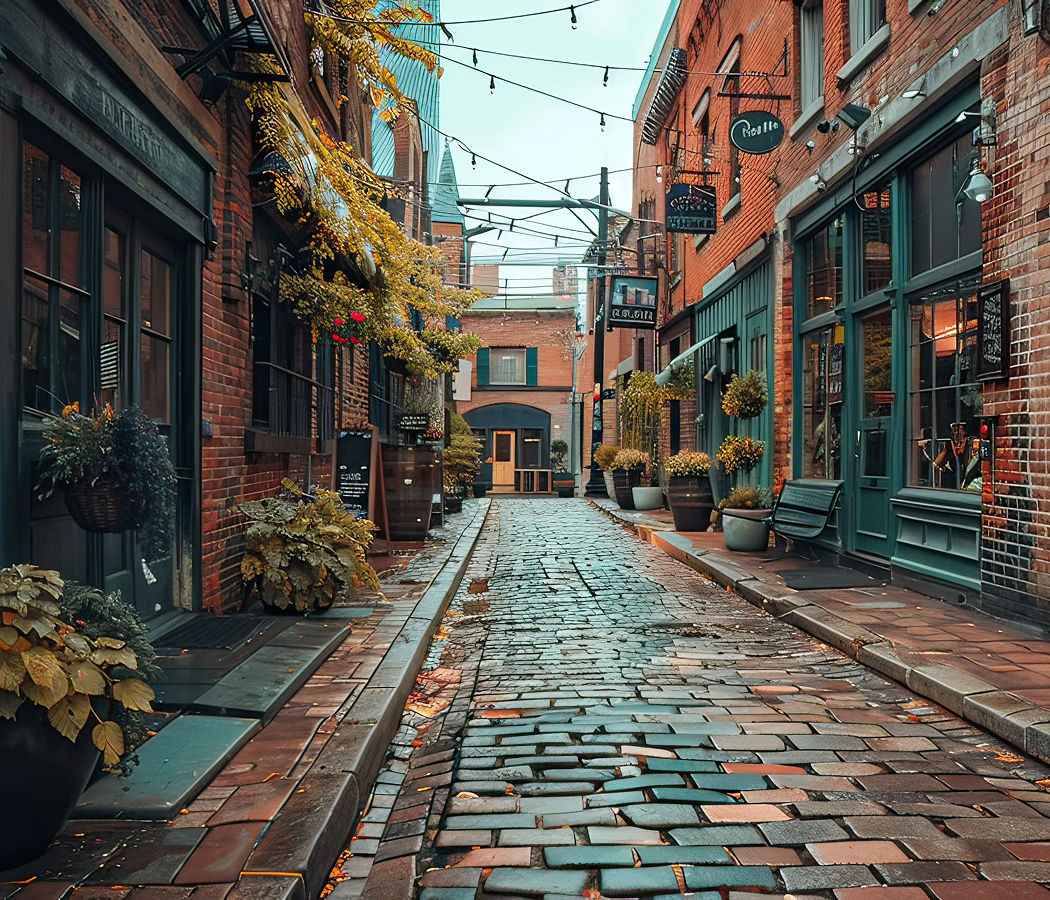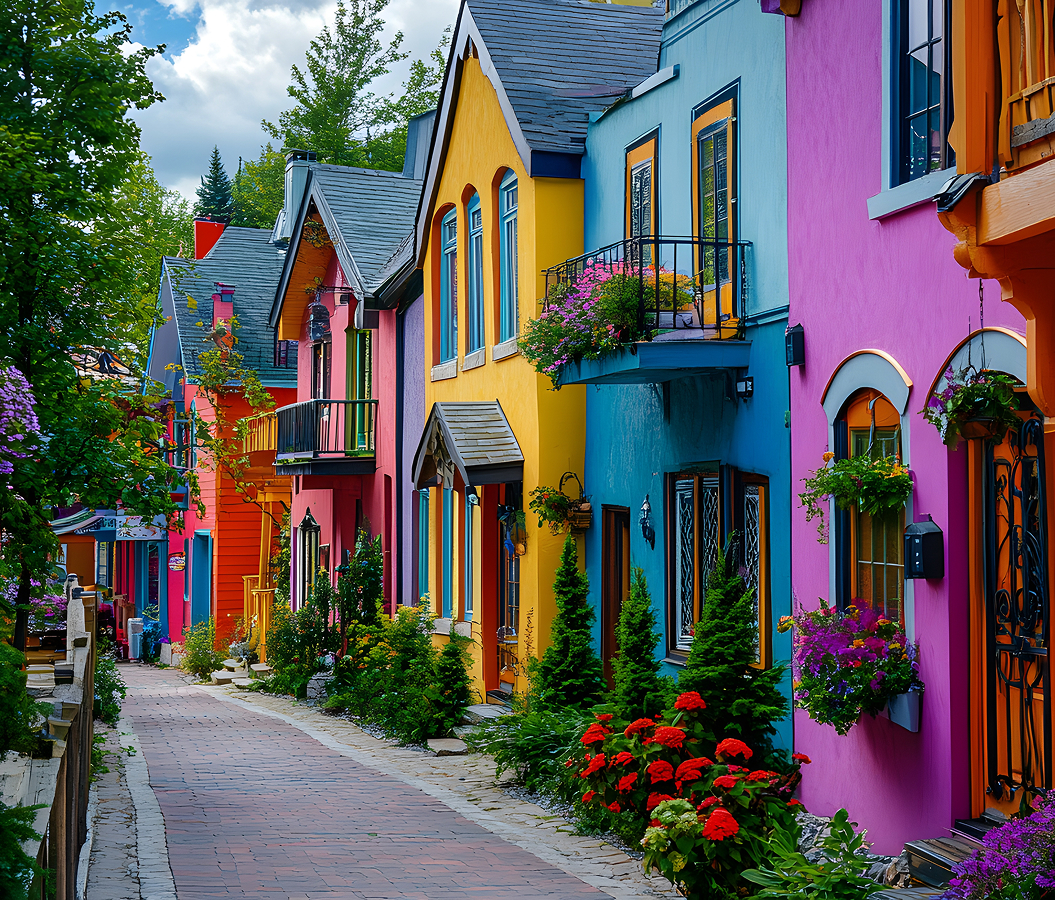
Why you should experience Jane Street in Toronto, Ontario.
Jane Street is an enterprising corridor where Lambton Baby Point's transportation heritage, Indigenous history, suburban expansion, and cultural diversity converge along one of Toronto's most significant north-south routes.
Running through Lambton Baby Point between Bloor West Village and The Junction, the corridor connects ancient river crossings, nineteenth-century concession roads, postwar suburban districts, and major civic institutions that collectively demonstrate Toronto's transformation from colonial township to metropolitan region. Successive sections reveal how Indigenous travel routes, agricultural settlement, street railway expansion, and modern immigration shaped an avenue whose role has continually evolved while preserving deep historical foundations. Throughout its length, Jane Street links historic neighborhoods with contemporary communities, creating a corridor that reflects more than two centuries of Toronto's physical and cultural development. The result is an experience defined by continuity, diversity, and one of the city's most historically consequential corridors.
What you should know about Jane Street.
Jane Street is best known for following the surveyed alignment of Concession Road 5, established after the creation of York Township in 1793, while preserving a route that closely paralleled far older Indigenous travel corridors associated with the Humber River watershed. The avenue takes its name from Jane Barr, wife of York solicitor James Baby, whose family occupied the nearby Baby Point estate overlooking the Humber Valley during the early nineteenth century. Construction of the Jane Street Bridge across the Humber River during the 1920s eliminated one of western Toronto's principal transportation barriers, allowing uninterrupted north-south travel as suburban development accelerated beyond the city's historic limits. Completion of Highway 401 in the 1950s, together with rapid postwar subdivision across North York, York, and Etobicoke, transformed Jane Street into a principal metropolitan arterial linking residential communities, industrial districts, and commercial centres across 25 kilometres. Opening of Line 2 Bloor-Danforth's Jane Station in 1968 further reinforced the corridor's transportation significance while integrating long-established neighborhoods into Toronto's expanding rapid transit network. Together, these surveying, transportation, engineering, suburban, and transit milestones established Jane Street among Toronto's defining historic corridors.
Expansion north of the Humber River introduced planned communities including Jane-Finch, developed principally during the 1960s by the Ontario Housing Corporation and private developers as one of Metropolitan Toronto's largest suburban housing initiatives. Completion of Black Creek Pioneer Village in 1960 preserved more than 40 relocated and reconstructed heritage buildings that interpret nineteenth-century life immediately west of the corridor, reinforcing Jane Street's connection to the agricultural landscape from which it emerged. Construction of York University beginning in 1964, followed by its opening on the Keele campus in 1965, established one of Canada's largest universities immediately adjacent to the avenue and permanently reshaped travel patterns, employment, and institutional investment throughout the surrounding district. Collectively, these planned communities, heritage institutions, and educational investments demonstrate how Jane Street evolved beyond its origins as a concession road into a corridor where colonial history, metropolitan growth, and contemporary civic life intersect.
How to fold Jane Street into your trip.
Jane Street works as an exploration of Toronto's transportation history, Indigenous landscape, and metropolitan evolution.
Begin at Étienne Brûlé Park, where the Humber River valley introduces the ancient landscape and travel corridor that long predated Toronto's surveyed concession roads and influenced the alignment of Jane Street itself. Continue to Lambton House, whose restored nineteenth-century inn reveals the era when stagecoaches, settlers, and merchants relied upon river crossings and concession roads to move through western York Township. Conclude at Black Creek Pioneer Village, where restored homes, workshops, mills, and demonstrations provide the historical culmination by illustrating the rural communities and agricultural economy that once defined the landscape surrounding Jane Street. Together, the sequence progresses from Indigenous geography to colonial transportation before culminating in nineteenth-century settlement, revealing why Jane Street remains one of Toronto's most historically significant north-south corridors.
Where your story begins.
Foresyte Travel reveals places that feel extraordinary long before you arrive.
Experience premium editorial crafted for luxury travelers.