Why you should experience Jones Avenue in Toronto, Ontario.
Jones Avenue is a resilient corridor where Leslieville's industrial heritage, immigrant traditions, manufacturing legacy, and neighborhood renewal reveal one of Toronto's most historically distinctive east-end streets.
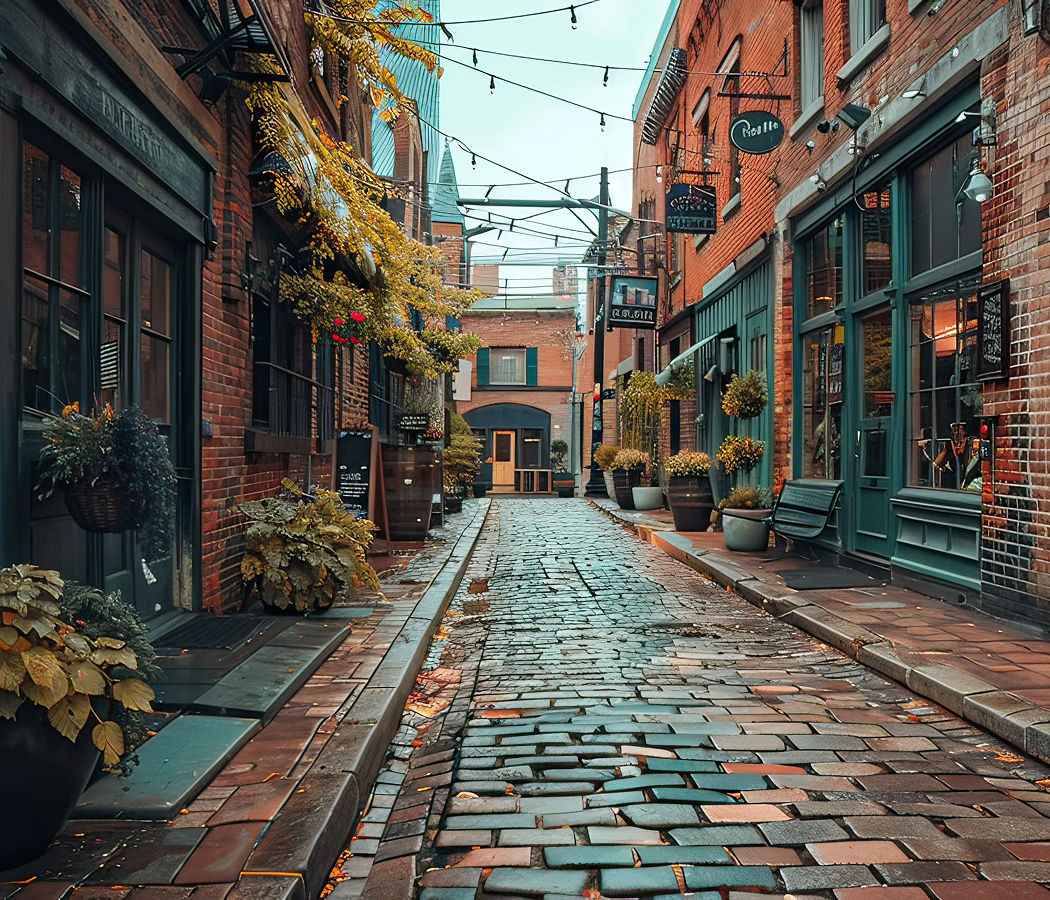
Running through Leslieville between Riverdale and East York, the corridor connects former factory districts, century-old residential neighborhoods, community institutions, and evolving commercial corridors that collectively demonstrate Toronto's transformation from an industrial city into a diverse urban community. Successive blocks reveal how manufacturing, railway expansion, immigration, and reinvestment shaped an avenue whose character has continually evolved while preserving visible connections to its working-class origins. Throughout the corridor, historic brick buildings, neighborhood businesses, and community landmarks remain closely intertwined, creating a streetscape that reflects more than a century of economic and social change. The result is an experience defined by perseverance, authenticity, and one of Toronto's most historically layered corridors.
What you should know about Jones Avenue.
Jones Avenue is best known for emerging during Toronto's eastward expansion following subdivision of the Ashbridge Estate in the late nineteenth century, when former farmland east of the Don River was opened for residential and industrial development. Growth accelerated after construction of the nearby Grand Trunk Railway and Canadian Pacific Railway corridors, whose freight infrastructure attracted manufacturers including Wm. Wrigley Jr. Company, Toronto Steel Company, Consumers' Gas Company, and numerous brickworks, foundries, and food-processing businesses that established thousands of industrial jobs throughout Leslieville and South Riverdale. Residential construction between the 1890s and the 1920s introduced dense rows of Victorian and Edwardian brick houses that accommodated factory workers employed throughout Toronto's eastern manufacturing district, while the opening of the Prince Edward Viaduct in 1918 strengthened transportation connections between the east end and Downtown. Together, these estate subdivisions, railway investments, industrial enterprises, residential developments, and transportation improvements established Jones Avenue as one of Toronto's defining working-class corridors.
Expansion of manufacturing encouraged the establishment of workers' churches, union halls, neighborhood schools, and mutual aid organizations that reinforced the corridor's strong community character throughout the twentieth century as successive waves of Eastern European, Greek, Portuguese, Chinese, and South Asian families settled nearby. Construction of the Jones Avenue Bridge over the Canadian Pacific Railway corridor eliminated a major transportation barrier while preserving an uninterrupted north-south connection through one of Toronto's busiest freight districts. Continued designation of nearby heritage properties by the City of Toronto Heritage Register, together with adaptive reuse of former industrial buildings into studios, food producers, and creative workplaces, has preserved the avenue's manufacturing legacy while supporting a new generation of neighborhood enterprise. Collectively, these civic institutions, engineering works, immigration patterns, and preservation initiatives demonstrate how Jones Avenue has continually adapted to changing economic conditions while retaining the industrial character that first defined the corridor.
How to fold Jones Avenue into your trip.
Jones Avenue works as an exploration of Toronto's industrial heritage, neighborhood evolution, and east-end culture.
Begin at Riverdale Park East, where panoramic views across the Don Valley introduce the landscape that originally separated Toronto from the agricultural lands that later became Leslieville and South Riverdale. Continue to Gerrard India Bazaar, whose concentration of South Asian businesses, restaurants, and cultural organizations demonstrates how successive immigrant communities reshaped the neighborhoods surrounding Jones Avenue while preserving their entrepreneurial traditions. Conclude at The Opera House, where the restored 1909 vaudeville theatre provides the historical culmination by illustrating how entertainment, commerce, and community life flourished alongside the manufacturing economy that defined Toronto's east end. Together, the sequence progresses from landscape to cultural character before culminating in historic entertainment, revealing why Jones Avenue remains inseparable from the evolution of Toronto's working waterfront and industrial neighborhoods.
Where your story begins.
Foresyte Travel reveals places that feel extraordinary long before you arrive.
Experience premium editorial crafted for luxury travelers.