Why Lac Tremblant matters.
Lac Tremblant is a glacial mountain lake where Mont-Tremblant's Laurentian landscape meets Quebec's early recreational tourism, the development of alpine skiing and the lakeside settlement traditions of the Upper Rivière du Diable watershed.
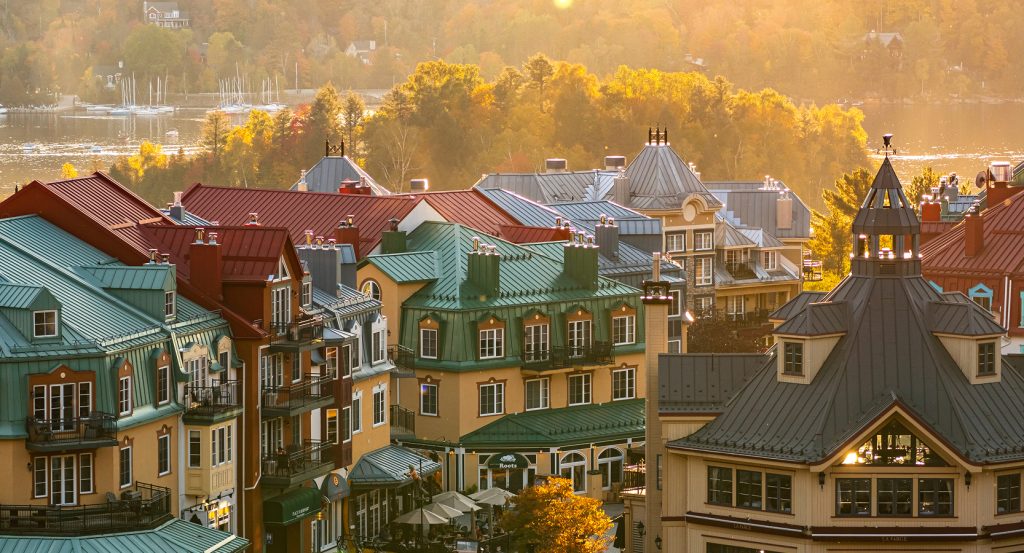
Extending southwest from the foot of Mont Tremblant toward the forested hills of the Laurentians, the lake occupies an elongated basin bordered by the resort's southern mountainside, the wooded slopes of Mont Plaisant and the residential shoreline extending toward the lake's western end. Its irregular shoreline contains sheltered coves, rocky points and wooded residential properties. The northeastern shore accommodates recreational facilities associated with the mountain resort, including a public beach and marina. Steep forested slopes descend toward the water, creating a narrow valley enclosed by successive mountain ridges. The result is a Laurentian lake whose physical setting connects glacial landforms, recreational settlement and the development of Mont-Tremblant as a mountain destination.
What defines Lac Tremblant.
Lac Tremblant is best known for its elongated mountain setting, its association with the development of Mont-Tremblant's ski resort and its place within the recreational history of Quebec's Laurentian Mountains. The lake occupies a basin formed through geological and glacial processes that shaped the region's valleys and drainage systems. The Laurentian Mountains belong to the Canadian Shield, whose ancient crystalline rocks underwent extensive deformation during the Grenville mountain-building period. Subsequent erosion reduced the ancient mountain system, leaving resistant bedrock formations that influenced the region's modern relief. Continental glaciers later reshaped the landscape, deepening valleys and depositing sediment across lower elevations. Indigenous peoples occupied and traveled through the Laurentian region long before European settlement, using its waterways and forests for transportation and subsistence. During the nineteenth century, settlement expanded northward from the St. Lawrence Valley as colonization, forestry and agricultural development reached the Upper Laurentians. Railway construction strengthened connections between the region and Montreal, encouraging seasonal travel into the mountains. Lakeside recreation developed through fishing, boating and the construction of summer cottages along accessible shorelines. The lake became closely associated with the growth of alpine skiing during the early twentieth century. American entrepreneur Joseph Bondurant Ryan established the Mont Tremblant ski resort in 1939 after recognizing the mountain's potential for organized winter recreation. The resort's development increased demand for accommodation and recreational facilities around the lake and neighboring mountain slopes. Successive phases of investment expanded the surrounding tourism economy, including the construction of the pedestrian resort village during the 1990s. The lake retained its role as a principal geographical feature of the resort area, supporting summer recreation alongside the region's winter sports industry. Its shoreline development preserves the relationship between Laurentian settlement history, recreational tourism and the mountain's transformation into a four-season destination.
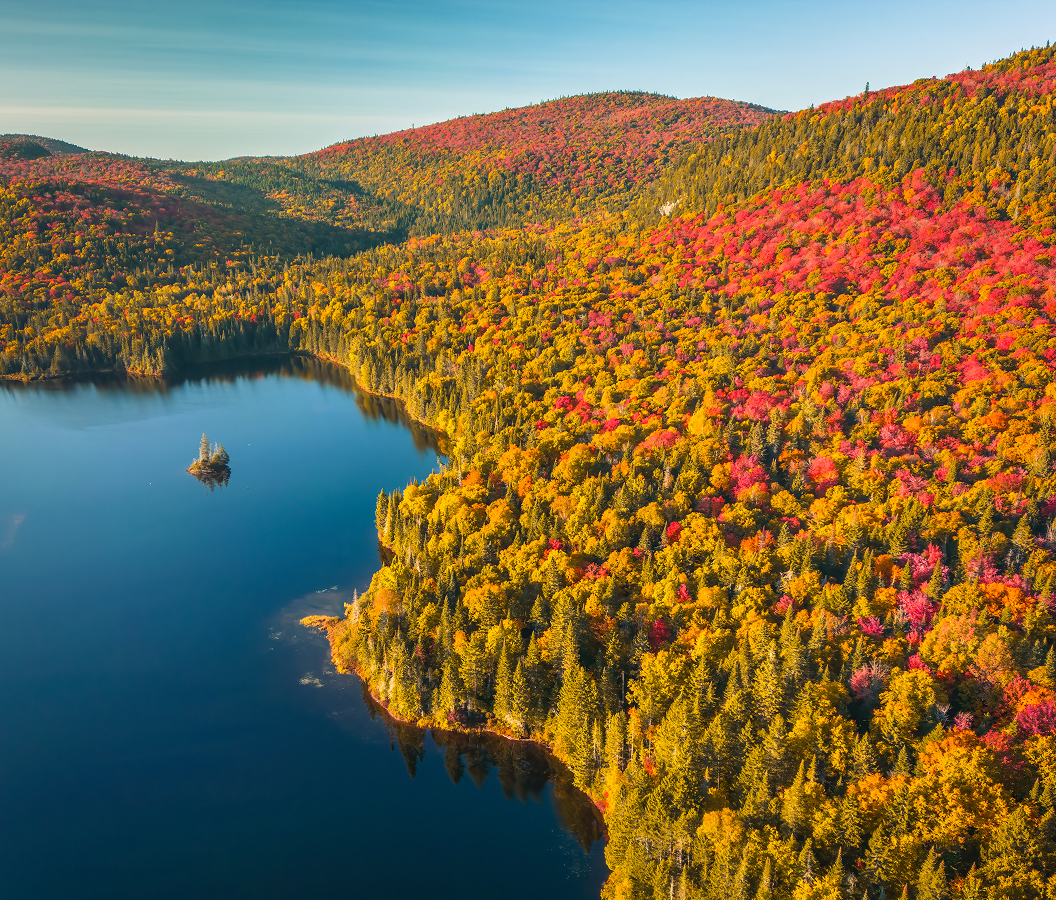
Mont Tremblant rises above the lake's northeastern shore, creating the principal topographical feature of the surrounding landscape. Its summit reaches 875 meters above sea level, overlooking a sequence of forested ridges and valleys extending across the Laurentians. The lake's elongated form follows the underlying geological structure of the region, with its shoreline shaped by bedrock exposures and glacial deposits. Water enters through smaller streams and drainage channels descending from the surrounding hills. The lake forms part of the broader watershed associated with the Rivière du Diable and the Ottawa River drainage system. Forests surrounding the water contain sugar maple, yellow birch, balsam fir and other species characteristic of the Laurentian environment. Seasonal changes produce substantial variations in the landscape, including spring runoff, summer vegetation and autumn foliage. Winter temperatures create ice cover across the lake during colder periods, changing its relationship with surrounding recreational activities. The northeastern waterfront contains Plage du Lac Tremblant, a sandy recreational area associated with the mountain resort. The beach provides access to swimming and other seasonal activities along the lake's sheltered shoreline. Nearby marina facilities support boating and access to the water during warmer months. Residential properties occupy portions of the surrounding shoreline, with wooded lots extending toward the slopes above the lake. The mountain's ski runs remain visible from sections of the water, connecting the lake's summer recreational setting with the winter infrastructure of the resort. The surrounding terrain limits the extent of continuous shoreline development, preserving substantial wooded sections between residential areas. The lake's geographical arrangement maintains a close relationship between mountain recreation, forested watersheds and the residential history of the Laurentians.
How Lac Tremblant fits.
Lac Tremblant works as the lakeside centerpiece for a Mont-Tremblant itinerary connecting the region's historic village settlement, alpine recreation and the protected landscapes of Quebec's Laurentian Mountains.
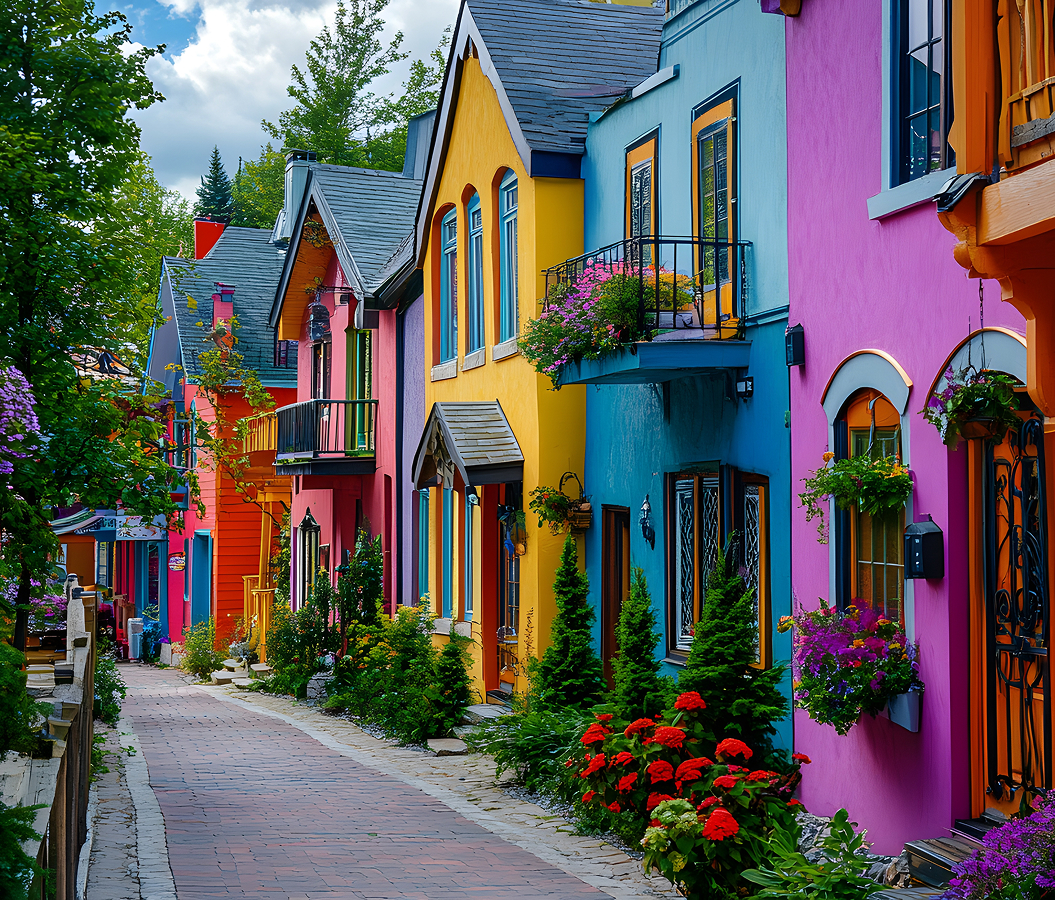
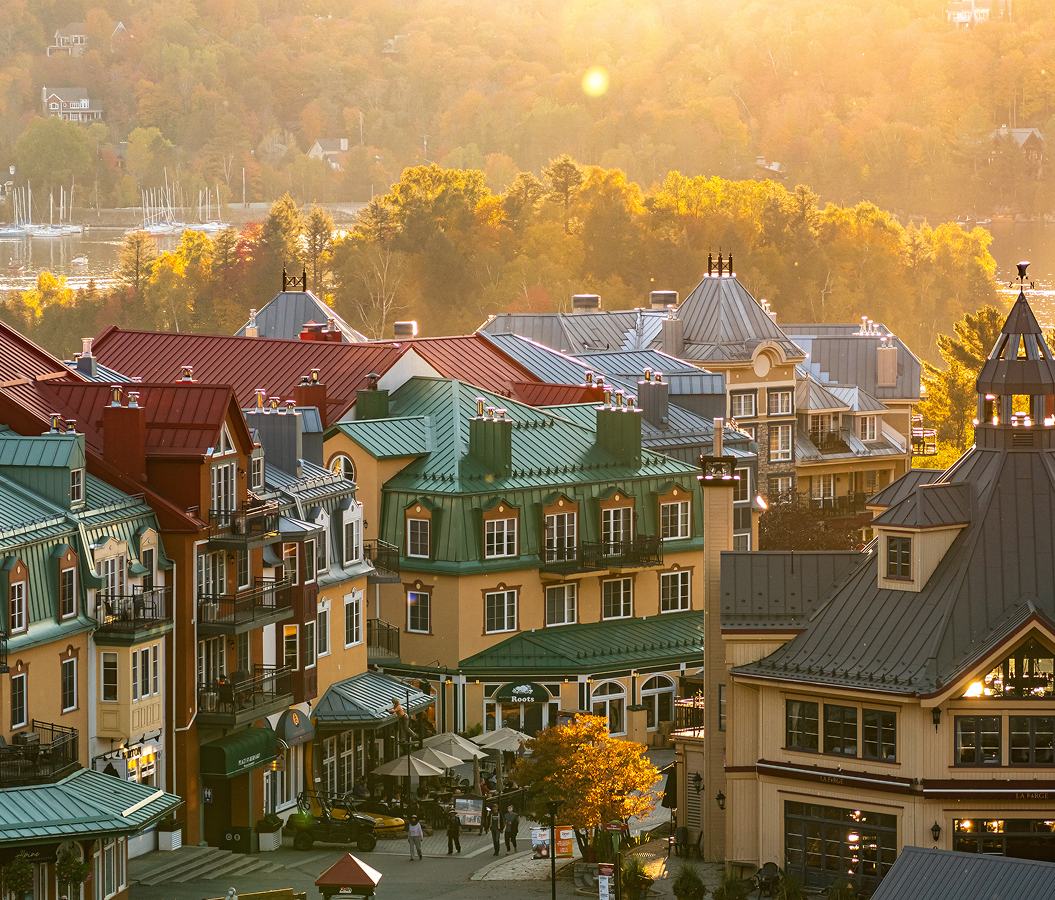
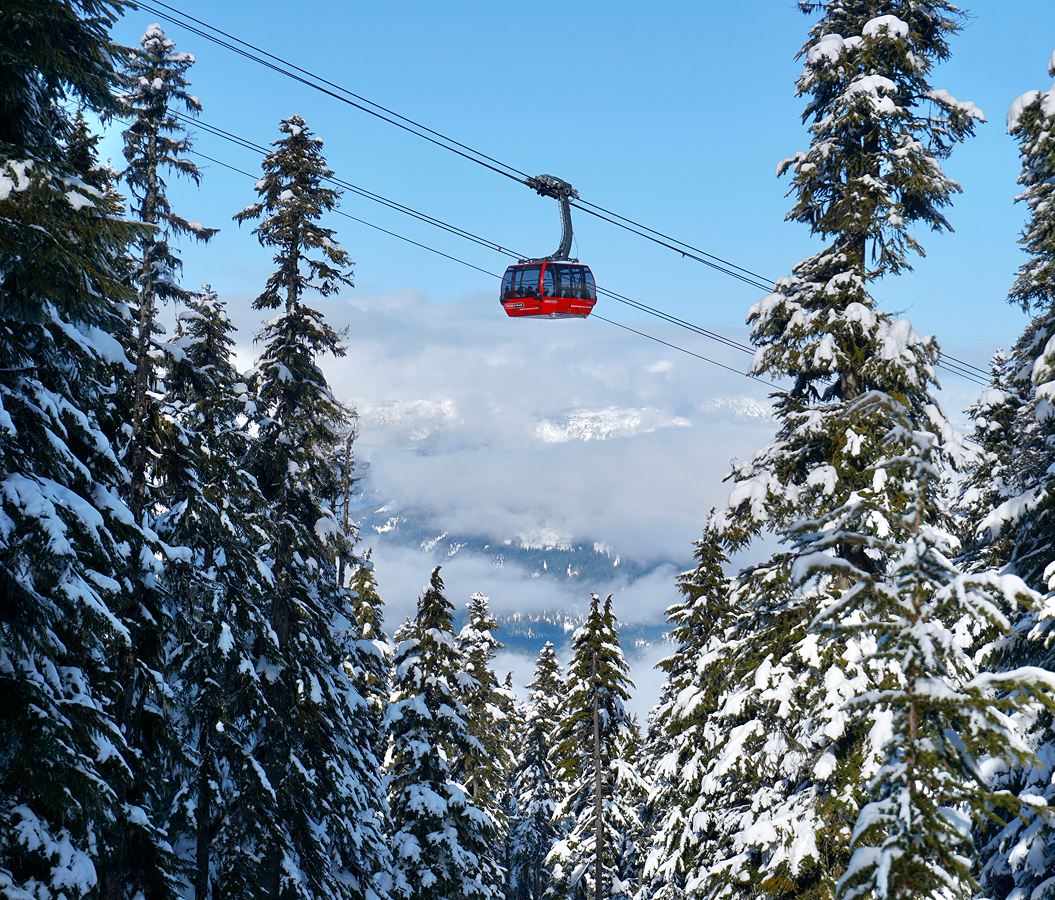
Begin at Mont-Tremblant Old Village, the historic settlement situated near Lac Mercier southwest of the principal mountain resort. The village developed through nineteenth-century colonization and the expansion of railway transportation into the Laurentians. Its residential streets contain timber houses, cottages and former commercial properties associated with the region's early recreational economy. The former railway corridor became part of P'tit Train du Nord, a recreational trail connecting communities across the Laurentians. Parc Plage provides public access to Lac Mercier through a sandy beach and landscaped waterfront grounds. The settlement preserves the architectural character of a mountain community established before the construction of the modern resort village. Continue to Mont Tremblant Resort, the alpine recreation complex developed around the ski area founded by Joseph Bondurant Ryan. The resort opened in 1939 and expanded through successive decades as skiing infrastructure and accommodation facilities developed. Its pedestrian village incorporates Quebec-inspired architecture, including pitched roofs, painted façades and compact streets arranged around public squares. The mountain contains an extensive network of ski runs, recreational trails and aerial lifts. The Panoramic Gondola connects the village with the summit, providing elevated views across the surrounding Laurentian landscape. The resort's development demonstrates the transformation of Mont-Tremblant into a major center for winter sports and year-round recreation. Conclude at Mont-Tremblant National Park, the protected landscape established in 1895 and recognized as Quebec's oldest provincial national park. The park encompasses extensive forests, lakes, rivers and mountain terrain within the Laurentian region. Its establishment originated in efforts to protect natural resources and regulate land use across a substantial area of the province. The park's ecosystems support moose, black bears and numerous bird species. Recreational routes provide access to forested valleys, lakes and river corridors. The progression moves from historic village settlement through the development of alpine recreation and culminates in a protected mountain landscape, connecting Lac Tremblant with the settlement, tourism and environmental history of the Laurentians.
Where your story begins.
Foresyte Travel reveals places that feel extraordinary long before you arrive.
Enjoy editorial crafted for luxury travelers.
Foresyte may earn a commission when you book.