
Why Les Charlottes Brunch & Café matters.
Les Charlottes Brunch & Café is a family-founded brunch restaurant where Saint-Jovite's historic village character meets the Côté sisters' inventive breakfast cooking, specialty coffee and commitment to local producers inside a restored heritage house in Downtown Mont-Tremblant.
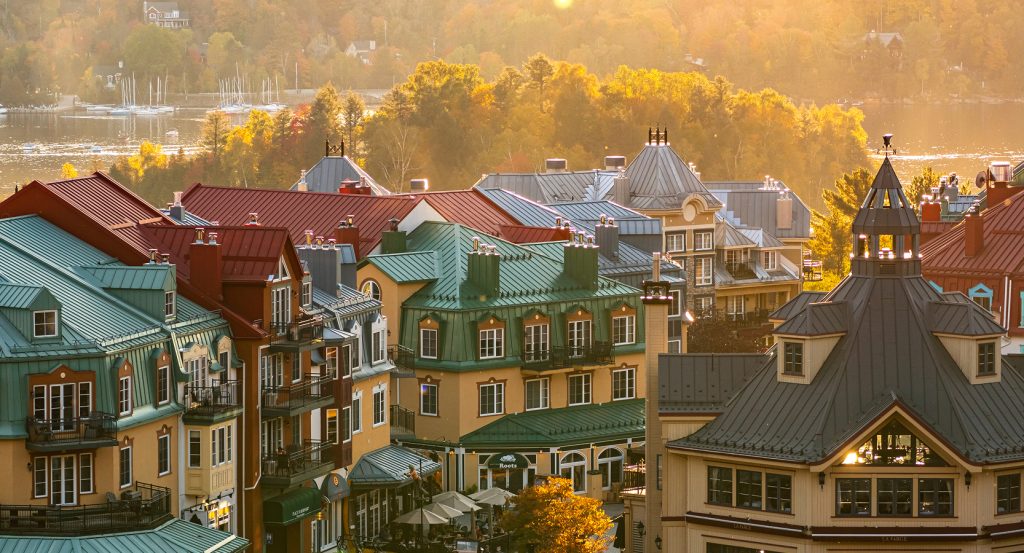
Rue Labelle crosses the northern edge of Saint-Jovite's commercial center near Rue de Saint-Jovite and Rue Coupal, placing the café beside the former railway corridor of Le P'tit Train du Nord, where established residences, independent businesses and tree-lined streets connect the historic village with the surrounding Laurentian countryside. The restaurant occupies a traditional house whose domestic proportions preserve the character of the neighborhood's older residential architecture. Large windows bring daylight into an intimate dining room furnished with wooden tables, decorative accents and a fireplace that anchors the interior during colder months. A landscaped outdoor terrace extends the seating into the surrounding greenery, providing a separate setting for breakfast during warmer weather. The result is a neighborhood café whose heritage architecture, intimate dining room and garden terrace connect contemporary brunch culture with the established character of Downtown Mont-Tremblant.
What defines Les Charlottes Brunch & Café.
Les Charlottes Brunch & Café is best known for sisters Katerine Côté and Kelly-Ann Côté transforming a family ambition into a locally focused breakfast restaurant that opened in March 2017. The sisters established the business with their mother, Lyne Galarneau, creating an independent culinary project rooted in their longstanding connection to the Mont-Tremblant region. Katerine was twenty-one and Kelly-Ann nineteen when the restaurant opened, giving the enterprise an unusually young founding team supported by their mother's involvement. The name originated in a family nickname, as Galarneau had affectionately called her daughters les Charlottes during their childhood. That personal association became the foundation of a restaurant conceived around the family's shared interests in food, hospitality and the surrounding community. The sisters originally sought premises in the center of Saint-Jovite, hoping to establish a business within the district where they had grown up. Their search eventually led to a property on Rue Labelle that was available for purchase, providing the opportunity to develop a restaurant in a building with an established residential character. The initial concept centered on a small café emphasizing healthier food, organic ingredients and products from local businesses. Demand for more substantial meals prompted the founders to expand their plans into a full breakfast and brunch operation. The three women developed the original recipes collaboratively, drawing inspiration from restaurants they admired and adapting familiar breakfast preparations to their own preferences. Katerine took particular responsibility for the interior's decorative direction, incorporating ideas gathered during visits to Montreal restaurants and cafés. The original dining room accommodated forty-five people, supported by a thirty-five-seat outdoor terrace that became an important part of the restaurant's warmer-season operation. Its opening introduced a family-operated alternative within a regional dining market strongly influenced by the international ski resort farther west. The business developed its reputation through substantial breakfasts, personalized service and a menu incorporating both traditional Quebec preparations and contemporary brunch combinations. Independent restaurant coverage subsequently highlighted the founders' young ages, family collaboration and interest in supporting regional producers, bringing broader attention to the café's origins. The restaurant's operation developed around daytime service, concentrating its kitchen and dining-room activity into breakfast and lunch hours. Its established location beside a major recreational cycling corridor connected the business with another important component of Mont-Tremblant's economy, bringing cyclists and walkers into the same dining room as local residents. The café subsequently adopted the Les Charlottes name more prominently, preserving the family nickname that had inspired its foundation. Its official hospitality program expanded to include private gatherings accommodating forty people, with customized menus available for professional meetings, celebrations and other organized occasions. The restaurant also developed an exclusive coffee roast, extending the original café concept into a dedicated beverage program. Les Charlottes' development connects the ambitions of two young sisters and their mother with the growth of independent food businesses in Saint-Jovite, establishing a distinctive family-operated brunch destination within Mont-Tremblant's historic commercial district.
How Les Charlottes Brunch & Café fits.
Les Charlottes Brunch & Café works as the concluding destination for a Saint-Jovite itinerary connecting the religious institutions of Laurentian settlement, the railway infrastructure that accelerated regional development and the recreational corridor created from the former transportation network.
Begin at Église de Saint-Jovite, the substantial stone church occupying a prominent position along Rue de Saint-Jovite. The parish developed during the nineteenth-century settlement of the Laurentians, when Catholic institutions played an important role in establishing agricultural communities across the region. Its registers opened in January 1879, marking the formal development of a religious community that subsequently required a permanent church building. Construction of the surviving stone church took place between 1887 and 1889, introducing a substantial religious structure into the growing settlement. The building incorporates a rectangular nave, a square bell tower and a prominent entrance composition, with later architectural additions expanding its original proportions. A transept was introduced in 1930, followed by an extension of the nave and additional facilities in 1950. These successive construction phases preserve the physical development of a parish whose congregation expanded alongside the surrounding village. Continue to Gare de Saint-Jovite, the former railway station associated with the transportation network that connected the Laurentians with Montreal and communities farther north. Completed in 1893, the station incorporated Gothic Revival architectural details, including a decorative finial positioned along the roofline. Its facilities expanded during the early twentieth century, adding separate waiting rooms and a covered platform as passenger traffic increased. The station also served the movement of commercial goods, supporting the region's agricultural and forestry industries through rail connections. Passenger service eventually ceased, and George Kelegher acquired the building in 1988, relocating it into Downtown Saint-Jovite for conversion into a restaurant. The surviving structure preserves a direct architectural connection with the transportation system that shaped the district's economic development. Conclude at Parc linéaire Le P'tit Train du Nord, the extensive recreational route occupying the former railway alignment through the Laurentians. The railway developed between 1888 and 1909, supporting settlement and the movement of timber, agricultural products and passengers across a substantial northern territory. Its conversion into a public recreational corridor preserved the historical route through a new network of cycling and walking paths. The park extends 201 kilometers between Saint-Jérôme and Mont-Laurier, passing former stations, forested landscapes and established communities. Its Saint-Jovite section follows the historic transportation corridor through Downtown Mont-Tremblant, connecting the commercial district with the wider Laurentian recreational network. The progression moves from the parish institutions that supported nineteenth-century settlement through the railway station that accelerated regional commerce and culminates in the former rail corridor that connects Saint-Jovite's historical geography with contemporary outdoor recreation.
Where your story begins.
Foresyte Travel reveals places that feel extraordinary long before you arrive.
Enjoy editorial crafted for luxury travelers.























































































































