Why Louis Armstrong Park matters.
Louis Armstrong Park is a tribute to the soul of New Orleans itself.
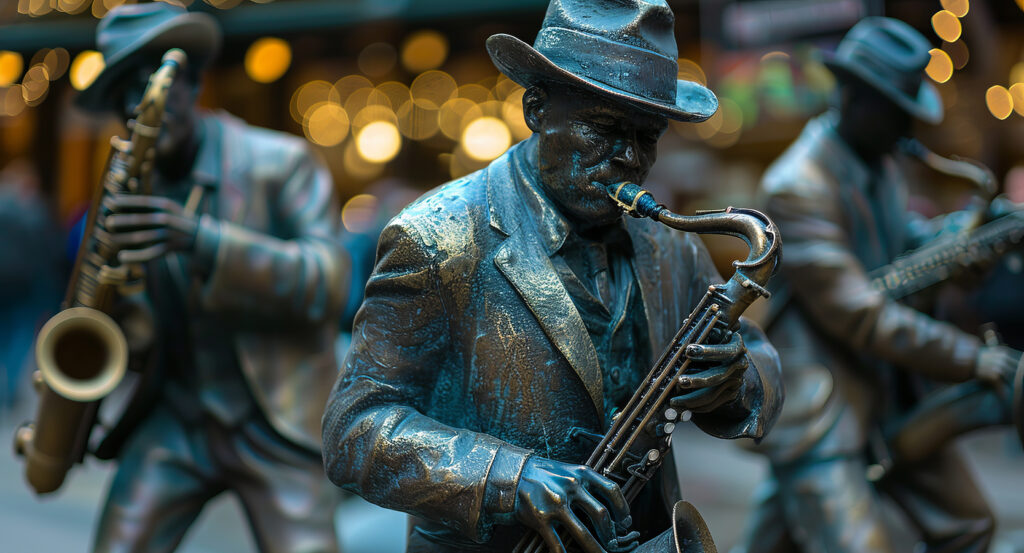
Located just steps from the French Quarter, this 32-acre cultural landmark pulses with the rhythm of jazz, history, and human spirit. Walking through its grand archway, you feel an immediate shift, the city's buzz fades into the soft sound of fountains, rustling palms, and the faint echo of brass in the distance. This is sacred ground for music lovers: within its borders lies Congo Square, where enslaved Africans once gathered on Sundays to dance, drum, and preserve the rhythms that would one day give birth to jazz. Sculptures of musicians and murals of brass bands dot the landscape, celebrating the art form that made New Orleans immortal. The park's tranquil lagoons and wide walkways invite reflection, while its open-air amphitheater hosts concerts, festivals, and celebrations that carry on the legacy of Louis Armstrong, the man whose horn changed the sound of the world. To stand here is to feel the heartbeat of the Crescent City, where music still rises from the soil.
What defines Louis Armstrong Park.
Behind its serene beauty lies a story of resilience, rebirth, and cultural preservation.
The park was created in the late 1960s and early 1970s during an ambitious urban renewal project meant to honor New Orleans' musical heritage. But its creation was not without controversy, the Tremé neighborhood, among America's oldest Black communities and the cradle of jazz, lost many historic homes in the process. Yet out of that complicated past emerged a monument of profound importance: a space dedicated to remembering, healing, and celebrating the city's cultural genius. The centerpiece, Congo Square, remains one of the most historically significant places in the United States, a site where the earliest roots of jazz, blues, and spirituals took form. The park's sculptures, including works by notable local artists, pay homage to figures like Louis Armstrong, Mahalia Jackson, and other pioneers who transformed suffering into song. In recent years, restoration efforts and community-led events have brought new life into the park, reclaiming it not just as a memorial, but as a living stage for the city's ongoing story.
How Louis Armstrong Park fits.
To experience Armstrong Park fully, come with time to listen, to the silence, the sound, and the soul.
Enter through the grand iron arch on Rampart Street, its Art Deco lettering gleaming in the sunlight, and follow the curved pathways that wind around lagoons shaded by oaks and magnolias. Visit Congo Square first, pause by the commemorative plaques, feel the drumbeat of history underfoot, and if you're lucky, catch a live performance by local musicians keeping that ancestral rhythm alive. Continue through the gardens to admire the statues of Armstrong and other jazz legends, then linger by the fountains near the Mahalia Jackson Theater, where the sounds of the city drift softly across the water. If you visit on a weekend, time it for a festival, drum circle, or concert, the park often fills with music and dancing that feel as natural as breathing. Come in the morning for peace, or stay at dusk when the lights shimmer on the lagoons and the spirit of Satchmo seems to hum in the air. Louis Armstrong Park isn't just a destination, it's a pilgrimage, a reminder that New Orleans doesn't just remember its past; it keeps it playing, note by note, forever.
Where your story begins.
Foresyte Travel reveals places that feel extraordinary long before you arrive.
Enjoy editorial crafted for luxury travelers.
Foresyte may earn a commission when you book.