Why Marie Laveau's Tomb matters.
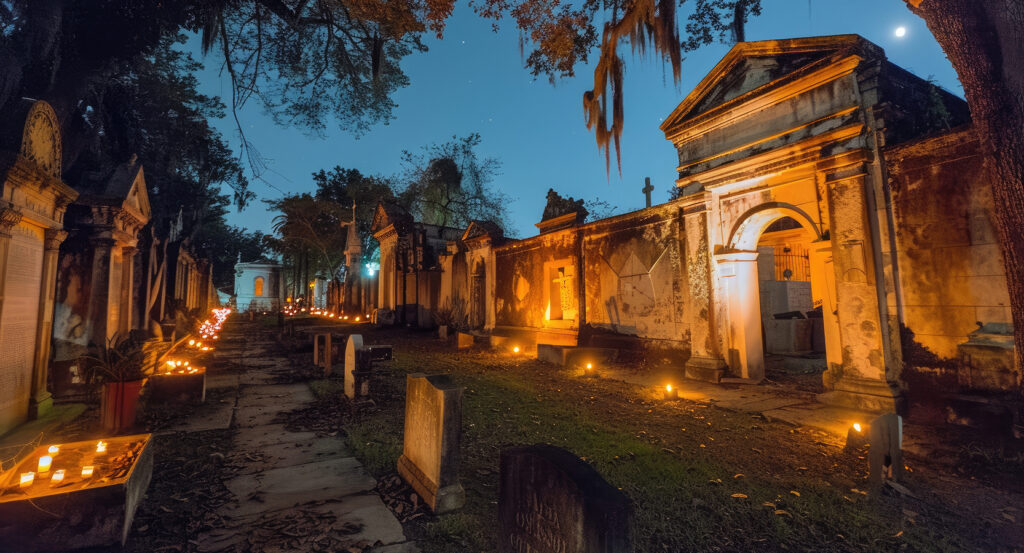
The Tomb of Marie Laveau mystifies dark, a place where myth, magic, and memory intertwine beneath the sultry hush of St. Louis Cemetery No. 1.
Here lies the “Voodoo Queen of New Orleans,” a woman whose legend transcends centuries and faiths alike. Born free in the early 1800s, Marie Laveau was a healer, spiritualist, and community leader whose influence stretched from the French Quarter to Congo Square. Her whitewashed tomb, simple yet commanding, stands among the city's most visited, a focal point for those seeking protection, luck, or communion with the unseen. Visitors once marked triple Xs across its surface, leaving offerings of beads, flowers, or rum in tribute to her power. Even now, the energy lingers, a quiet pulse that hums through the air, equal parts reverence and mystery.
What defines Marie Laveau's Tomb.
Marie Laveau's resting place may be modest, but its story is layered with intrigue.
For years, multiple tombs in St. Louis Cemetery No. 1 were rumored to house her remains, a confusion fueled by folklore, family ties, and secretive burial customs. The accepted site is the Glapion family tomb, an above-ground vault adorned with offerings and symbols left by pilgrims of many faiths. Laveau's legacy endures not only in voodoo practice but in the city's spiritual rhythm: she bridged African and Catholic traditions, turning ritual into community healing. In life, she was known for tending the sick and mediating between worlds, literal and social. In death, she became a symbol of feminine power, racial unity, and resilience against oppression. The tomb's modern restoration preserved its fragile plaster and sacred markings, ensuring her story endures, untamed and unforgotten.
How Marie Laveau's Tomb fits.
To visit Marie Laveau's tomb is to step into the living spirit of New Orleans.
Access is limited to guided tours only, both to protect the fragile site and to deepen the visitor's understanding of its cultural weight. Begin your journey at Basin Street Station, where you'll find exhibits about St. Louis Cemetery No. 1's storied residents before walking through its gates. Bring flowers or prayer ribbons if you wish to leave an offering, but do so with humility and respect. The best time to visit is early morning, when the cemetery is cloaked in quiet mist and the tomb glows softly in the filtered light. Afterward, stop by the nearby Voodoo Museum or Congo Square to explore how Laveau's influence still courses through the city's veins. Standing before her tomb, you feel it, the boundary between worlds bending just enough to remind you that in New Orleans, the past never fully rests.
Where your story begins.
Foresyte Travel reveals places that feel extraordinary long before you arrive.
Enjoy editorial crafted for luxury travelers.
Foresyte may earn a commission when you book.