Why you should experience New Orleans Streetcars in New Orleans, Louisiana.
New Orleans Streetcars aren't just a way to get around, they're rolling time capsules, carrying the rhythm of the city in every creak, clang, and turn.
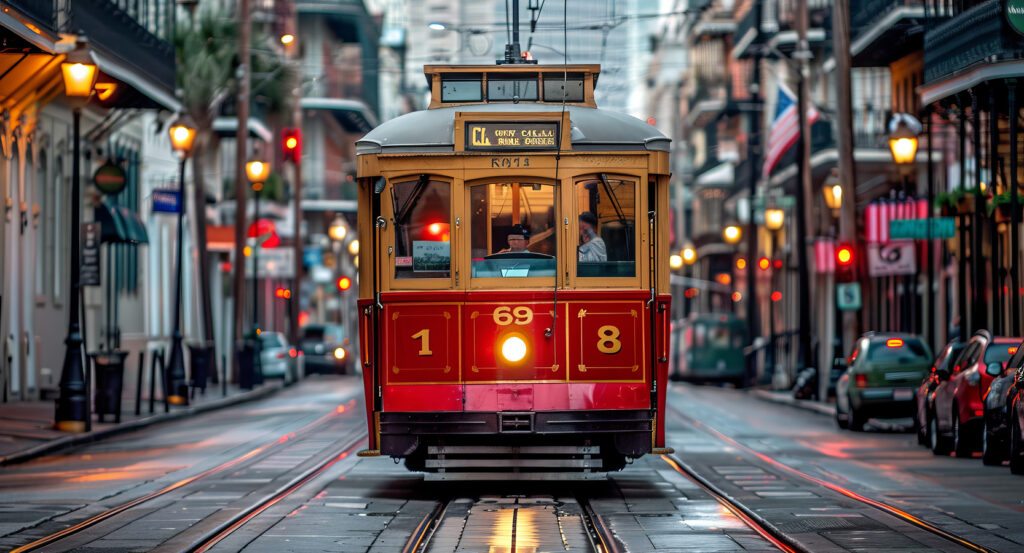
Painted in their signature shades of green and red, these vintage trolleys glide through the city like moving postcards, weaving together its history, neighborhoods, and unmistakable soul. Step aboard, and the hum of the tracks feels almost musical, a blend of nostalgia and motion that belongs entirely to New Orleans. The St. Charles Avenue line, the oldest continuously operating streetcar line in the world, rolls beneath canopies of ancient oaks and past stately mansions, universities, and gardens. The Canal Street line takes you from the edge of the French Quarter to the shimmering waters of City Park, while the Riverfront line skirts the Mississippi, offering glimpses of steamboats and river breeze through open windows. Locals ride alongside visitors, everyone lulled by the hypnotic rhythm of the rails and the clang of the bell echoing through the streets. There's no hurry here, just the soft pace of a city that has learned to move in style.
What you should know about New Orleans Streetcars.
Behind their charm lies a story of resilience, innovation, and civic pride that mirrors the city's own heartbeat.
The first New Orleans streetcars began service in 1835, pulled by horses before electricity revolutionized transit in the late 19th century. By the early 1900s, streetcars crisscrossed every corner of the Crescent City, serving as both commuter lines and cultural arteries. While most American cities abandoned their streetcars in favor of buses, New Orleans held fast, protecting these beloved icons through hurricanes, floods, and modernization. The green Perley Thomas streetcars that still glide down St. Charles Avenue have been in operation since the 1920s, lovingly maintained and restored over the decades. Even as new models have joined the fleet, the city's preservation of its original rolling stock has earned the line National Historic Landmark status. But beyond nostalgia, the streetcars remain vital, connecting neighborhoods, supporting local economies, and offering a daily reminder that progress and preservation can ride the same rails. Each route is more than transit, it's tradition, community, and storytelling on wheels.
How to fold New Orleans Streetcars into your trip.
To experience New Orleans properly, you don't just visit, you ride.
Begin your journey on the St. Charles line, ideally in the morning when the light filters through oak trees and the streets shimmer with dew. Grab a window seat, open it to let in the breeze, and watch as the city unfolds, the Garden District's mansions, Tulane's leafy campus, and the spires of St. Charles Avenue churches sliding past. In the afternoon, switch to the Canal Street line and ride toward City Park for a stroll through the New Orleans Museum of Art or a beignet at Morning Call. As evening falls, take the Riverfront line and feel the wind off the Mississippi as jazz music drifts from nearby bars. Each route costs only a few dollars, but the experience is priceless, a chance to see New Orleans not through the view of a tourist, but from the same wooden benches that have carried generations of dreamers, musicians, and locals home. New Orleans Streetcars aren't just transport, they're the city's pulse on steel tracks, humming eternally through the heart of the Crescent City.
Where your story begins.
Foresyte Travel reveals places that feel extraordinary long before you arrive.
Experience premium editorial crafted for luxury travelers.