Why you should experience Caesars Superdome in New Orleans, Louisiana.
Caesars Superdome is a monument to endurance, legacy, and spectacle.
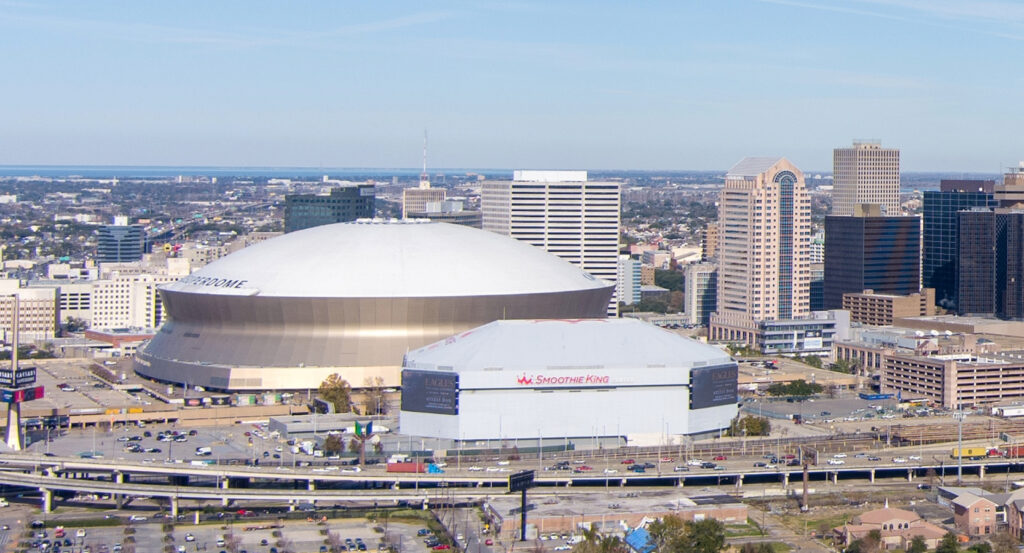
Towering above the skyline of New Orleans, its silver dome gleams like a crown, an icon of both triumph and survival. Since its opening in 1975, the Superdome has hosted everything from Super Bowls and Final Fours to Beyoncé concerts and Mardi Gras galas, making it one of the most storied venues on Earth. Step inside, and the energy hits like a tidal wave, the echo of brass bands, the smell of jambalaya in the concourse, the rhythmic stomp of Saints fans who treat every Sunday like a second line parade. The scale is staggering, over 70,000 seats, 13 acres of playing field and concrete, all enclosed beneath one of the largest fixed domes in the world. Yet for all its grandeur, what makes the Superdome sacred isn't the events it holds, but what it has withstood. Through hurricanes, championships, and rebirths, it has become the emotional epicenter of New Orleans, not just a place of sport, but a temple of resilience.
What you didn’t know about Caesars Superdome.
Behind its iconic silhouette lies a story of innovation, rebirth, and reinvention that mirrors the spirit of New Orleans itself.
Built as the world's largest indoor stadium of its time, the Superdome was an architectural miracle, its roof engineered to handle hurricane-force winds, its interior climate-controlled in an era before that was standard. But its legacy deepened in 2005, when it became a refuge during Hurricane Katrina, a chapter etched into the city's collective soul. In the years that followed, the building was reborn through a $450 million renovation, transforming tragedy into testament. Now, beneath its shining new roof, state-of-the-art lighting, and high-definition screens, the Superdome is more advanced than ever, equipped to host global events like the 2025 Super Bowl and Essence Festival. Renamed Caesars Superdome in 2021, the venue now serves as both a modern entertainment hub and a living memorial to endurance. Every beam and seat carries history, a reminder that architecture, like the city it anchors, can embody both grief and glory.
How to fold Caesars Superdome into your trip.
To experience Caesars Superdome the way locals do, treat it as more than a venue, treat it as a ritual.
If you're lucky enough to catch a Saints game, arrive hours early for the tailgate outside Champion's Square, where the smell of crawfish boils mingles with brass music and the streets feel alive with anticipation. Step inside just as the dome lights dim and the crowd erupts, the noise swelling into something that feels almost spiritual. Even on non-game days, you can join a guided tour that reveals the building's hidden history, from its Katrina-era shelters to the VIP suites that overlook the turf where legends like Drew Brees and U2 have performed. When the event ends, spill out into the heart of New Orleans and let the night continue, maybe at a jazz bar in the French Quarter or a quiet stroll down Poydras Street beneath the glowing dome. To locals, the Superdome isn't just where moments happen, it's where the city's heartbeat becomes audible, echoing through steel, song, and soul.
Hear it from the Foresyte community.
Just enough life around you not to be overwhelming. Right pace.
Where your story begins.
Start your planning journey with Foresyte Travel.
Experience immersive stories crafted for luxury travelers.