
Why you should experience Palazzo Cardinal Cesi in Rome, Italy.
Palazzo Cardinal Cesi is where sacred history, timeless Roman nobility, and serene cloistered beauty blend into a stay that feels dignified, intimate, and profoundly atmospheric.
Set directly on Via della Conciliazione, the grand boulevard leading straight to St. Peter's Basilica, the palazzo occupies a 15th-century noble residence built for Cardinal Francesco Cesi, among the influential figures of the Renaissance Church. From the outside, its façade is understated yet regal: warm stone, symmetrical windows, arched entryways, and the kind of noble architecture that has quietly shaped the Vatican district for centuries. The moment you step through its doors, the world outside softens into calm. Inside, the atmosphere is serene, elegant, and steeped in heritage. Hallways of polished stone, vaulted ceilings, antique accents, carved woodwork, religious art, and soft lighting create the unmistakable sense that you've entered a place touched by centuries of sacred life. The cloistered inner courtyard, a rare landmark in Central Rome, adds another layer of quiet beauty. Surrounded by arches, greenery, and soft Roman light, it becomes a peaceful refuge from the energy of St. Peter's Square just steps away. Rooms at Palazzo Cardinal Cesi are refined, warm, and traditionally elegant. Expect soft bedding, rich wood furnishings, warm color palettes, classic décor, and an atmosphere that feels serene and restful. Many rooms look onto the palazzo's courtyard or the grand boulevard leading to St. Peter's, offering evocative views at dawn and dusk. Higher category rooms and suites provide more expansive layouts, curated décor, and enhanced privacy that elevate the experience for couples and spiritual travelers alike. Bathrooms are clean, bright, and functional, featuring quality fixtures, well-lit mirrors, modern showers or tubs, and amenities chosen for ease and comfort. Breakfast is served in beautiful, historic rooms overlooking the cloister or in elegant spaces shaped by Renaissance proportions. Expect pastries, breads, fresh fruits, cheeses, meats, eggs, yogurt, juices, and Italian coffee prepared with care. The experience feels peaceful, dignified, and deeply connected to the palazzo's contemplative past. Service is thoughtful, convivial, and quietly attentive. Staff members embody the calm hospitality that defines the Vatican district, warm yet discreet, helpful. They offer excellent recommendations for spiritual visits, museums, private tours, local restaurants, hidden gardens, and scenic pathways that bring depth to the Rome experience. The location is extraordinary, among the closest hotels to St. Peter's Basilica, mere steps from the square. Guests can walk to the Vatican Museums, Castel Sant'Angelo, the Tiber River, Trastevere, Borgo Pio's charming streets, and countless churches, historic sites, and cultural landmarks. Couples landmark the romance of the setting. Pilgrims and spiritually minded travelers appreciate the serene, contemplative atmosphere. Families enjoy the safety and walkability. Solo travelers value the tranquility and meaningful immersion. Returning visitors choose the palazzo for the sense of connection it offers, both to history and to Rome's spiritual heart.
What you did not know about Palazzo Cardinal Cesi.
Palazzo Cardinal Cesi stands on land that has been part of Rome's sacred and civic character since antiquity, shaped by early Christian pilgrims, Renaissance Cardinals, and the grand redesign of the Vatican district across the centuries.
Before the palazzo was built, this area lay just outside the ancient Circus of Nero, the site where early Christian martyrdoms are believed to have taken place, including that of St. Peter. The land surrounding St. Peter's tomb slowly developed into a small settlement clustered around the first basilica built by Emperor Constantine in the 4th century. By the Middle Ages, the Borgo district grew into a lively village of artisans, clergy, scholars, pilgrims, and merchants who supported the Vatican's expanding influence. Many of the narrow lanes, courtyards, and building alignments that still exist today derive from this medieval growth. In the Renaissance, powerful families, including the Cesi family, began constructing noble palaces throughout the Borgo to be close to the papal court. Cardinal Francesco Cesi, a well-connected cleric and patron of the arts, commissioned the palazzo in the 1400s. Built with classic Renaissance proportions, it included private chambers, frescoed halls, a chapel, and a cloister meant for quiet contemplation. The Cesi family was deeply influential in ecclesiastical and cultural circles, and the palazzo became a residence for church dignitaries, scholars, and diplomats visiting the papal court. Over the centuries, the building underwent modifications as successive occupants adapted it to changing architectural tastes and clerical needs. The most dramatic shift to its surroundings came in the 20th century, when Via della Conciliazione was constructed between 1936 and 1950. This grand boulevard, designed to celebrate the Lateran Treaty and symbolically unite the Vatican with the city of Rome, required the demolition of much of the medieval Borgo. Palazzo Cardinal Cesi, however, was preserved and incorporated into the new urban plan, becoming one of the few Renaissance structures to remain intact along the new avenue. Today, the palazzo stands as a rare survivor of centuries of Vatican history, among the few Renaissance noble residences still overlooking Via della Conciliazione, intimately tied to the evolution of St. Peter's Basilica and the life of the Church.
How to fold Palazzo Cardinal Cesi into your trip.
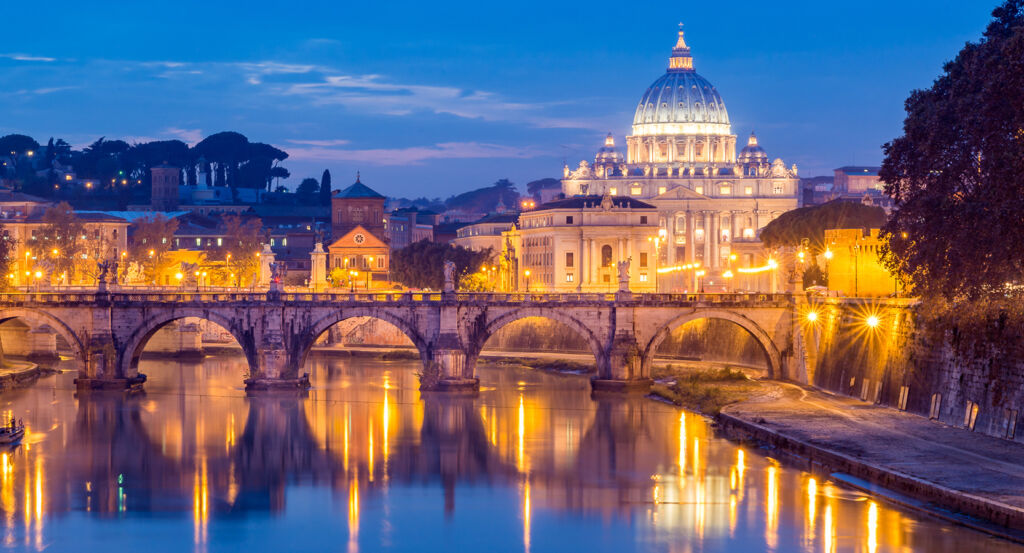
Palazzo Cardinal Cesi becomes the serene, noble, spiritually rich anchor of your Roman journey, where mornings begin with soft light over St. Peter's, days unfold into sacred discovery, and evenings settle into contemplative calm beneath the Vatican's glowing dome.
Start the morning with breakfast overlooking the cloister before walking directly to St. Peter's Basilica to experience its quiet early hours. Visit the Vatican Museums, stroll through Castel Sant'Angelo, or wander the charming streets of Borgo Pio. Spend your afternoon exploring Trastevere, the Tiber River paths, or the historic churches and gardens scattered throughout the Vatican district. Return to your room for peaceful rest before heading out for dinner in nearby trattorias. End your evening with a soft-lit walk along Via della Conciliazione as the basilica shines above you. In winter, the Vatican feels calm and reflective. In spring, blossoms fill the courtyards and gardens. In summer, warm evenings carry the sound of bells across the district. In autumn, golden light enhances every stone of the palazzo. Palazzo Cardinal Cesi becomes not just where you stay, but the serene, historic, spiritually grounded heart of your entire Roman experience.
Where your story begins.
Foresyte Travel reveals places that feel extraordinary long before you arrive.
Experience premium editorial crafted for luxury travelers.




















































































































