Why Olympic Basin matters.
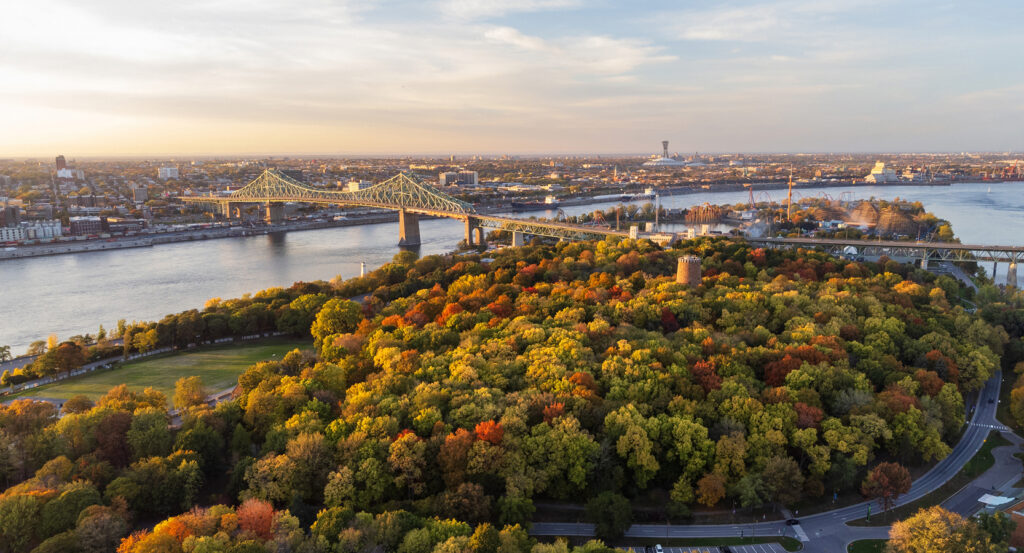
The Olympic Basin at Parc Jean-Drapeau is Montréal's quiet triumph of engineering and grace, a mirror-still expanse of water that once tested the limits of the world's greatest athletes.
Built for the 1976 Summer Olympics, this 2,000-meter-long rowing and canoe-kayak course remains one of the most technically perfect basins on Earth. Today, its glassy surface reflects both athletic precision and natural serenity: early mornings see elite rowers slicing through mist, while afternoons invite cyclists, walkers, and dreamers to pause along its calm shoreline. The setting is cinematic, framed by tree-lined trails, the Montréal skyline, and the distant curve of Mount Royal. You don't need to be an Olympian to feel the energy here; the Basin carries a quiet hum of purpose that lingers long after the crowds are gone. It's where sport, design, and nature coexist, a place that captures Montréal's ability to balance progress with poetry.
What defines Olympic Basin.
Constructed from dredged material of the St. Lawrence River, the Olympic Basin is among the few man-made waterways in the world built to exact Olympic rowing specifications.
At 2,180 meters long, 110 meters wide, and 3 meters deep, it was designed to minimize wind disruption and maintain consistent current flow, ensuring fair competition during the 1976 Games. The site has since evolved into a multi-use venue for both international championships and community recreation, managed by Parc Jean-Drapeau as a year-round training and event space. In summer, it hosts world-class regattas and triathlons; in winter, it transforms into a frost-covered corridor for cross-country skiing and nature walks. Beyond its athletic legacy, the Basin represents a milestone in Montréal's urban development, part of a visionary effort to reuse Île Notre-Dame, an artificial island created entirely from riverbed sediment. The surrounding landscapes now teem with biodiversity, making the Basin a surprising refuge for herons, ducks, and migratory birds alongside human endurance.
How Olympic Basin fits.
Begin your Olympic Basin visit with a walk or bike ride along its full length, the straight, open trail offers one of Montréal's most peaceful perspectives.
Pause at the mid-basin viewpoints to watch local rowers glide by or simply take in the rhythmic sound of oars dipping into water. For panoramic views, head toward the Circuit Gilles-Villeneuve loop, which circles the Basin and connects seamlessly to the rest of Parc Jean-Drapeau's cycling network. If you visit during a competition, grab a spot on the spectator embankment, the cheers echo beautifully across the water. In the warmer months, nearby rentals offer kayaks and paddleboards for those eager to experience the Basin firsthand. Wrap up your visit by continuing to the Jean-Doré Beach or the Biosphere, both within walking distance, to complete a day that captures the park's remarkable range, from Olympic legacy to everyday leisure. Whether for reflection, sport, or simple stillness, the Olympic Basin remains one of Montréal's most inspiring open-air monuments to human and natural harmony.
Where your story begins.
Foresyte Travel reveals places that feel extraordinary long before you arrive.
Enjoy editorial crafted for luxury travelers.
Foresyte may earn a commission when you book.