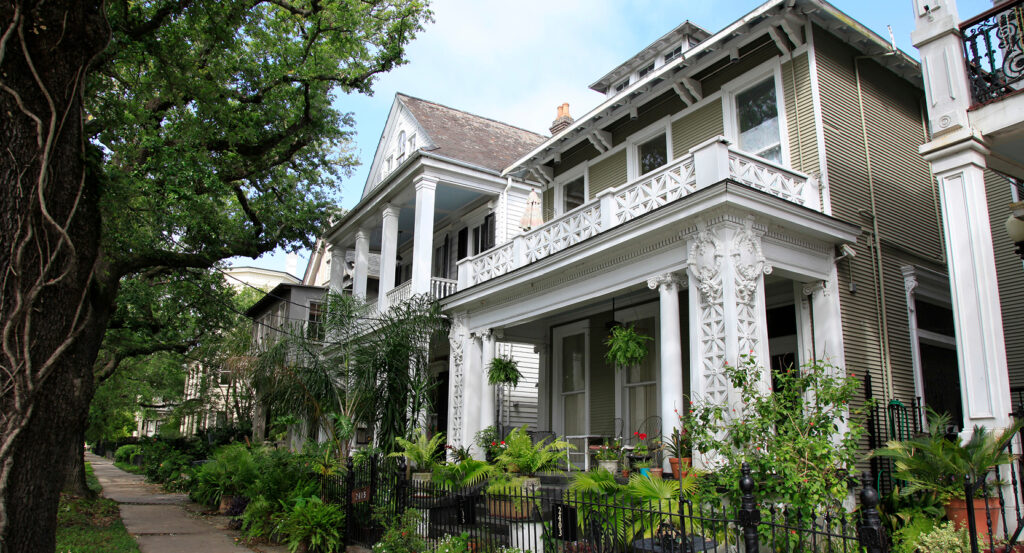
Why you should experience Prytania Street in New Orleans, Louisiana.
Prytania Street is a historic Garden District corridor where the Garden District's architectural grandeur, Greek Revival heritage, residential elegance, and centuries of civic life create one of New Orleans' most distinguished streets.
Running through the Garden District between Canal Street and Audubon Park, this stately corridor unfolds beneath grand live oaks past Greek Revival mansions, Italianate villas, cast-iron galleries, historic schools, churches, theaters, and civic institutions that chronicle the city's extraordinary nineteenth-century expansion. Block after block preserves an exceptional concentration of residential architecture whose craftsmanship, landscaped setbacks, and grand proportions distinguish Prytania as one of Uptown's defining thoroughfares. Every walk reveals a streetscape where daily neighborhood life continues within homes and institutions that have shaped New Orleans for nearly two centuries.
What you should know about Prytania Street.
Prytania Street is best known for developing as one of the principal residential avenues of the former City of Lafayette after the municipality's incorporation in 1833, taking its name from the ancient Greek Prytaneum, the civic hall where governmental affairs were conducted, reflecting the classically inspired street naming plan introduced by surveyor Barthelemy Lafon. As affluent merchants, cotton brokers, sugar planters, financiers, and shipping families established estates throughout the Garden District during the mid nineteenth century, Prytania became lined with some of Louisiana's finest examples of Greek Revival, Italianate, Renaissance Revival, and Beaux-Arts residential architecture designed by influential architects including Henry Howard, James Freret, William Alfred Freret, and others. The corridor encompasses numerous landmark properties including the Bradish Johnson House of 1872, the Gilmour-Parker House of 1853, the Adam-Jones House, the Women's Guild of the New Orleans Opera Association mansion of 1859, Claiborne Cottage of 1857, and the Louise S. McGehee School, while celebrated residents have included Governor John M. Parker, author Anne Rice, actor Nicolas Cage, and generations of New Orleans' civic and cultural leaders. Prytania also became home to the Prytania Streetcar Line, inaugurated as a mule-drawn railway in 1861 before electrification introduced the luxurious “Prytania” streetcars renowned for mahogany interiors, St. Louis rattan seating, Robertson sliding windows, and innovative double-ended operation until service ended in 1932. The corridor's cultural legacy continued through institutions including the Prytania Theatre, originally opened in 1915 and rebuilt at its present location in 1927 as Louisiana's oldest continuously operating single-screen cinema, while neighborhood markets, churches, hospitals, schools, and preserved residences collectively document nearly two centuries of urban, architectural, and social history.
Walking Prytania Street reveals why the Garden District remains one of America's greatest preserved nineteenth-century neighborhoods, where remarkable architecture continues serving its original residential and institutional purposes instead of functioning as an outdoor museum. Every mansion, oak canopy, iron fence, and historic institution contributes to a living streetscape that captures New Orleans' enduring traditions of craftsmanship, preservation, and neighborhood identity.
How to fold Prytania Street into your trip.
Prytania Street works as the architectural centerpiece of an exploration through the Garden District's extraordinary historic landscape.
Begin beneath Prytania Street's towering live oaks, where grand nineteenth-century residences immediately reveal the wealth, ambition, and craftsmanship that transformed the former City of Lafayette into New Orleans' premier residential district. Continue to Lafayette Cemetery No. 1's surroundings and the neighboring St. Charles Avenue corridor, where streetcars, grand churches, and historic institutions expand the story of Uptown's development. Finish at Audubon Park, where Frederick Law Olmsted's landscape vision, ancient live oaks, and sweeping green spaces provide a fitting conclusion to a journey through one of America's most complete expressions of nineteenth-century urban planning, architecture, and civic design.
Where your story begins.
Foresyte Travel reveals places that feel extraordinary long before you arrive.
Experience premium editorial crafted for luxury travelers.