
Why sEb L'Artisan Culinaire matters.
sEb L'Artisan Culinaire is a chef-owned contemporary restaurant where Saint-Jovite's historic Laurentian village character meets Sébastien Houle's internationally developed cooking, connecting Quebec's seasonal ingredients, techniques acquired across five continents and two decades of independent fine dining in Mont-Tremblant.
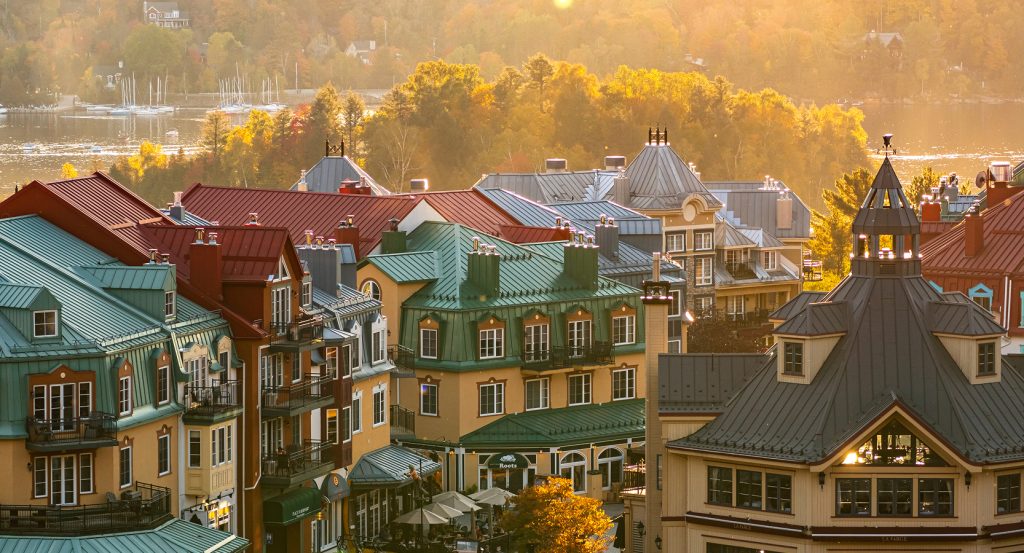
Rue Saint-Georges runs through Downtown Mont-Tremblant near Rue de Saint-Jovite and Rue Labelle, placing the restaurant within the former municipality of Saint-Jovite, where established commercial buildings, historic residences and the streets surrounding the municipal center preserve the district's traditional village character. The restaurant occupies an older house whose modest exterior proportions distinguish it from the larger commercial properties along the principal shopping streets. A rustic interior combines exposed architectural details, intimate seating arrangements and warm lighting within rooms that preserve the domestic scale of the original building. An outdoor terrace extends the dining area beyond the enclosed rooms, creating a separate setting for evening meals during warmer weather. The result is a restaurant whose historic-house setting, intimate dining rooms and established downtown position provide a distinctive architectural counterpart to Houle's internationally influenced cooking.
What defines sEb L'Artisan Culinaire.
sEb L'Artisan Culinaire is best known for Sébastien Houle transforming an international cooking career into an independent Mont-Tremblant restaurant founded in 2005, subsequently expanding the business into catering, private-chef services and mobile dining before entering Quebec's inaugural MICHELIN Guide selection in 2025. Houle began his professional development through an internship in Brittany with chef Serge LeBlanc, establishing an early connection with French culinary techniques. Returning to Quebec in 1998, he completed vocational culinary training at École secondaire Barthélemy-Joliette and began working in the kitchens of Hôtel Estérel in the Laurentians. His career subsequently took him to Alberta's L'Edelweiss restaurant, where he continued developing the technical foundations of professional cooking. International opportunities carried him through Australia, Vancouver and Asia, including assignments preparing meals aboard sailing vessels and luxury yachts. The demands of private maritime cooking exposed him to ingredients and culinary traditions across different countries, developing an approach that combined European training with international flavor combinations. His professional experience also included Montreal's Bocké and a sous-chef position alongside Yann Perreault at Area, adding metropolitan restaurant operations to his background. Houle returned to the Laurentians after years of travel and partnered with his friend, sommelier Guy Bourbonnière, to establish a restaurant in Mont-Tremblant. Their original seventy-seat establishment introduced a chef-directed dining program built around regional products and the international cooking techniques Houle had encountered during his travels. The restaurant subsequently earned multiple CAA/AAA Four Diamond distinctions, establishing recognition for its cuisine and hospitality within Quebec's restaurant industry. Mont-Tremblant's Chamber of Commerce named the business its establishment of the year in 2009, acknowledging its contribution to the local commercial community. Houle expanded beyond the dining room through a catering operation serving private celebrations, corporate functions and major regional events. Beginning in 2012, his team provided catering for Mont-Tremblant's Ironman competition, developing the capacity to serve thousands of athletes and volunteers during the annual event. The business entered mobile food service in 2015 with La Caravane, a food truck that adapted familiar casual preparations through the restaurant's culinary approach. Another expansion followed in 2017 when Houle developed Bistro Saint-Bernard at Domaine Saint-Bernard, extending his restaurant operations into the region's outdoor recreational landscape. His professional work also reached publishing through L'Artisan culinaire, a cookbook issued by Modus Vivendi that brought together recipes, techniques and accounts of his international travels. A renovation program in 2022 refreshed the original restaurant, supported in part by municipal assistance associated with Mont-Tremblant's post-pandemic economic recovery. The restaurant entered the MICHELIN Guide's inaugural Quebec selection in 2025 as a recommended establishment, becoming the only Mont-Tremblant restaurant included in the guide's local listings. Its recognition joined the restaurant's CAA/AAA distinctions and wine-program achievements, extending the professional standing Houle had developed through two decades of independent operation. The business maintains separate restaurant, catering and takeout services, preserving the original downtown dining room as the center of an enterprise shaped by international training, regional agricultural relationships and sustained culinary entrepreneurship.
Sébastien Houle's cooking begins with Quebec's seasonal ingredients and develops their natural flavors through techniques drawn from French kitchens, Asian fermentation traditions and the broader international repertoire of his professional travels. His preparations connect local meats, freshwater fish, cultivated vegetables and regional fruit with sauces whose seasoning introduces influences from different culinary traditions. The kitchen's treatment of game demonstrates this approach through venison accompanied by mushrooms, potatoes and haskap berries, allowing the meat's concentrated flavor to develop against the acidity of a fruit cultivated in Quebec's northern climate. A reduction seasoned with Kampot pepper adds another geographical dimension, bringing the Cambodian spice's aromatic warmth into a preparation grounded in Laurentian ingredients. That combination of regional produce and international seasoning extends into slow-cooked meats, where prolonged braising transforms connective tissue into gelatin and creates a foundation for concentrated sauces. Miso-braised lamb develops this relationship through fermented soybean paste, whose savory depth reinforces the meat's cooking juices. Smoked corn contributes sweetness and roasted aromas, with maitake mushrooms adding a substantial earthy character that supports the richness of the braise. The resulting balance depends on the connection between fermentation, caramelization and the natural flavor of the principal ingredient. Houle applies a different form of precision to seafood, preserving the delicate character of shellfish through preparations that concentrate their cooking liquids. Seafood soffocato brings mussels, clams, calamari, shrimp, scallops and octopus into a shared preparation with tomatoes, potatoes and fresh herbs. Their contrasting textures require careful control of cooking time, allowing tender shellfish and firmer cephalopods to retain their individual character within the same dish. The seafood's natural salinity contributes to the surrounding liquid, creating a concentrated broth that connects the different ingredients. Classical French sauce work provides another foundation through brown butter, reductions and carefully developed meat juices, establishing continuity between the restaurant's international influences and Houle's European training. Fresh pasta carries that relationship into preparations such as tagliolini with braised rabbit, Parmesan and red wine, where the richness of the meat develops through the pasta's delicate texture. Seasonal vegetables contribute additional acidity and freshness, allowing the kitchen to balance substantial savory preparations through herbs, fruit and carefully selected garnishes. The restaurant's four-course and seven-course tasting menus organize these relationships into extended dining sequences, with the longer format occupying three hours. Optional wine pairings follow the changing weight and seasoning of the courses, drawing particularly upon French and Italian producers whose selections complement the kitchen's European foundations. Desserts continue the relationship between Quebec ingredients and international pastry techniques through blueberries, maple syrup, fermented dairy and aromatic herbs. A preparation combining blueberry confit, verbena cream and yogurt ice cream develops sweetness through contrasting acidity and temperature, supported by the crisp texture of Breton shortbread. Houle's distinctive culinary approach emerges through this continuous relationship between Quebec's agricultural products, classical European technique and international seasonings, giving the restaurant a recognizable style grounded in the ingredients of the Laurentians.
How sEb L'Artisan Culinaire fits.
sEb L'Artisan Culinaire works as the concluding destination for a Saint-Jovite itinerary connecting Mont-Tremblant's contemporary public art program, the cultural institutions of its municipal center and the railway settlement that shaped the district's commercial development.
Begin at Espace public, the downtown gathering place occupying the intersection of Rue Labelle and Rue de Saint-Jovite. The municipality developed this central public area as a setting for cultural programming, community activities and seasonal events within the historic commercial district. Its outdoor facilities accommodate performances and public gatherings, including the summer entertainment program known as Boîte à surprises. The surrounding streets preserve the relationship between Saint-Jovite's established businesses and the civic activities that continue to support its downtown center. Continue to Salle Alphonse-Desjardins, the municipal exhibition space located at 1145 Rue de Saint-Jovite. The gallery forms part of Mont-Tremblant's cultural facilities and presents exhibitions devoted to visual art and fine craftsmanship. Its program incorporates artists and artisans from the Laurentians alongside practitioners from other regions, creating a dedicated institutional setting for contemporary artistic production. Exhibitions change throughout the year, connecting the municipality's cultural programming with the work of professional painters, sculptors and craftspeople. The gallery occupies the same municipal complex as the Samuel-Ouimet Library, placing exhibitions and public reading facilities within a shared civic setting. Conclude at Parc du Voyageur, the downtown public park located along Rue Coupal beside the former railway corridor. The surrounding district developed through the arrival of rail transportation during the late nineteenth century, when connections with Montreal accelerated the movement of passengers, agricultural products and timber through the Laurentians. Saint-Jovite-Station became a distinct settlement associated with railway commerce, contributing to the expansion of the commercial district beyond its original parish center. The park preserves access to this historical geography through the recreational corridor and municipal heritage interpretation devoted to the former railway community. A public heritage circuit incorporates historical photographs, archival material and recorded accounts explaining the development of Saint-Jovite-Station. The progression moves from the contemporary cultural activities of Downtown Mont-Tremblant through its municipal exhibition facilities and culminates in the railway settlement that helped establish Saint-Jovite as the commercial center of the surrounding Laurentian region.
Where your story begins.
Foresyte Travel reveals places that feel extraordinary long before you arrive.
Enjoy editorial crafted for luxury travelers.
Foresyte may earn a commission when you book.























































































































