Why Simcoe Street matters.
Simcoe Street is a refined corridor where Entertainment District's cultural ambition, architectural distinction, civic prestige, and urban vitality converge across one of Downtown's most recognizable streets.
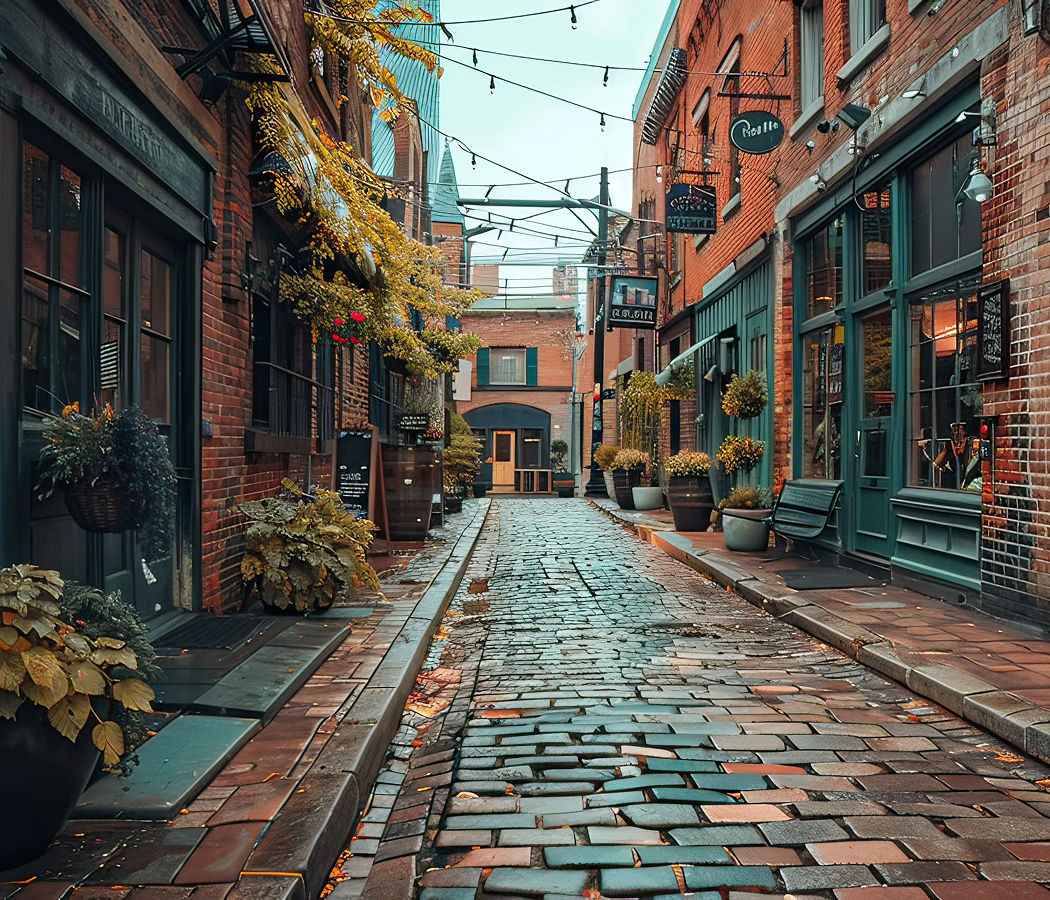
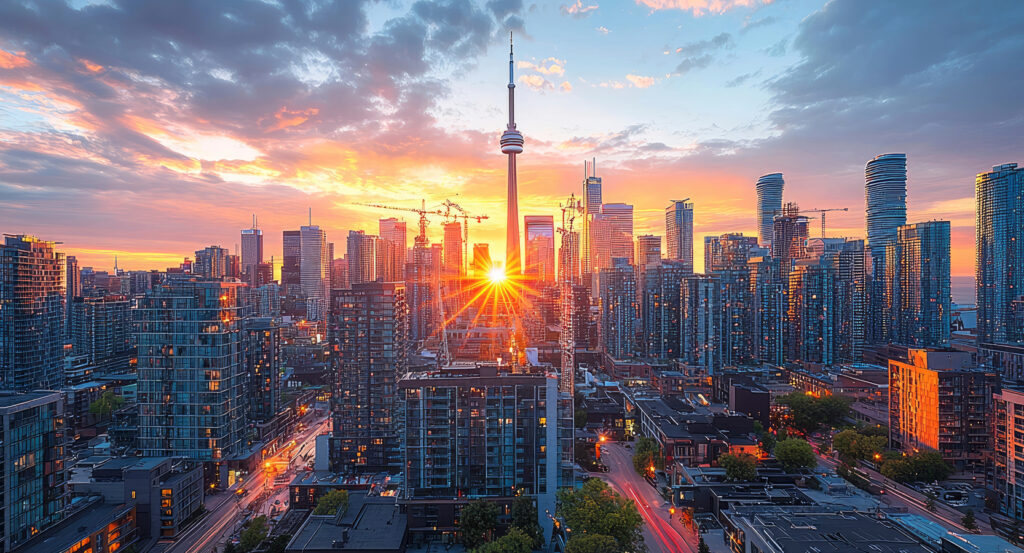
Running through the Entertainment District between the Financial District and Harbourfront, the corridor connects celebrated performance venues, landmark civic institutions, distinguished office towers, and generations of public gathering spaces that collectively showcase Toronto's emergence as an international cultural capital. Successive blocks reveal how nineteenth-century civic development gradually evolved into a spirited district where performing arts, commerce, and public life remain closely interconnected. Throughout the corridor, historic architecture, contemporary development, and cultural institutions reinforce one another, creating a remarkably cohesive expression of Downtown. The result is an experience defined by cultural significance, architectural excellence, and one of the city's most compelling corridors.
What defines Simcoe Street.
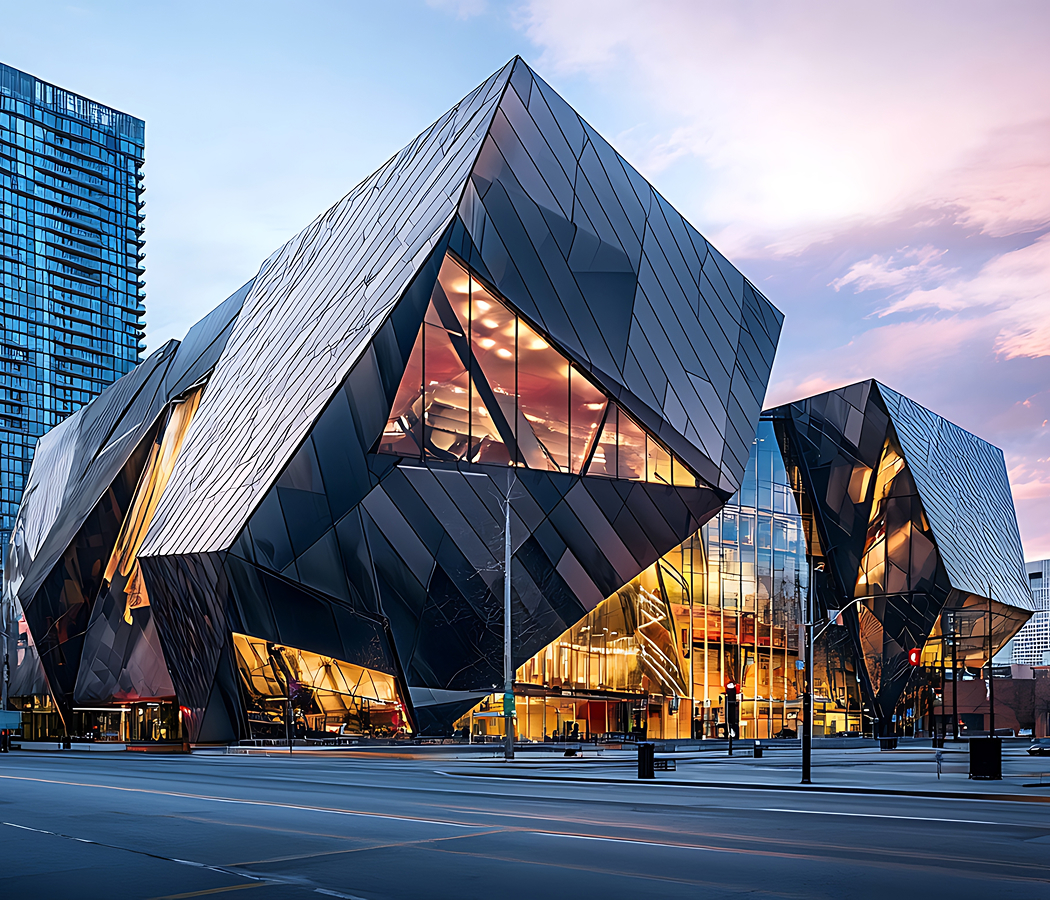
Simcoe Street is best known for commemorating John Graves Simcoe, the first Lieutenant Governor of Upper Canada, whose administration established the Town of York in 1793 and laid the governmental foundations that shaped modern Toronto. During the nineteenth century the corridor developed as an important civic thoroughfare linking the growing commercial core with Toronto's expanding waterfront while substantial institutional and commercial buildings gradually replaced its earliest residential properties. Completion of Roy Thomson Hall in 1982 to designs by Arthur Erickson and Mathers & Haldenby established the avenue as one of Canada's foremost performing arts addresses when the Toronto Symphony Orchestra relocated to its new permanent home beneath the building's distinctive curvilinear glass and concrete form. Continued redevelopment throughout the late twentieth and early twenty-first centuries transformed Simcoe Street into a defining component of Toronto's Entertainment District, where nationally significant cultural institutions, landmark office towers, and major public venues collectively reinforce its prominence within the city's urban core.
Construction of Metro Hall, completed in 1992 to designs by Brisbin Brook Beynon Architects, introduced one of Toronto's largest postmodern civic complexes while serving as the headquarters of the former Municipality of Metropolitan Toronto before municipal amalgamation in 1998. Nearby Canadian Broadcasting Centre, opened by the Canadian Broadcasting Corporation in 1993, consolidated national radio and television operations within a purpose-built broadcasting facility that strengthened Simcoe Street's longstanding association with Canadian media and cultural production. Expansion of the corridor's performing arts economy continued as the Princess of Wales Theatre, developed by David and Ed Mirvish and designed by Peter Smith, opened in 1993, reinforcing the surrounding district's international reputation for live theatre and large-scale cultural investment. Together, these civic institutions, national media facilities, and performing arts venues demonstrate how Simcoe Street evolved into one of Downtown's foremost corridors for public life, cultural leadership, and architectural distinction.
How Simcoe Street fits.
Simcoe Street works as an exploration of Toronto's performing arts, civic architecture, and waterfront skyline.
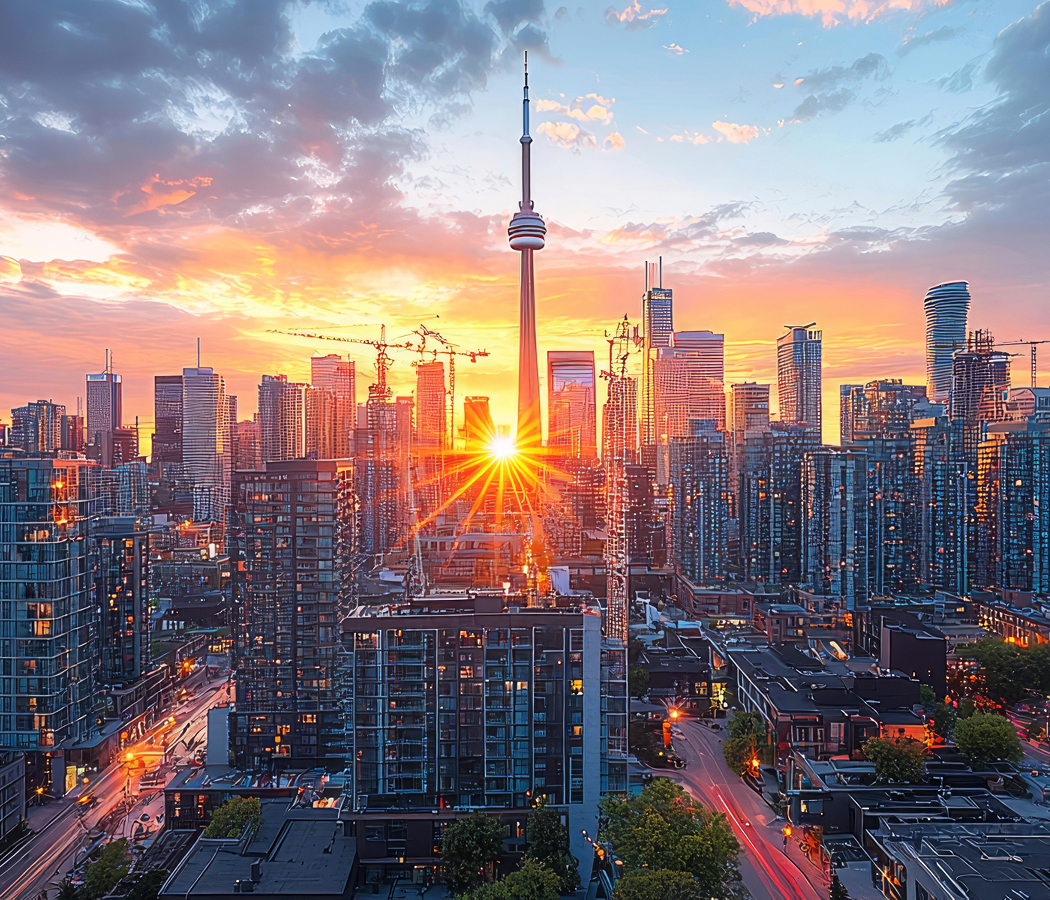
Begin at Roy Thomson Hall, where internationally acclaimed acoustics and Arthur Erickson's striking circular design introduce the cultural character that defines the corridor. Continue to CN Tower, whose observation decks and engineering achievement provide sweeping perspectives across downtown before returning to the surrounding streets. Conclude at Harbourfront Centre, where Lake Ontario, public art, and year-round cultural programming provide a fitting finale celebrating Toronto's enduring relationship with its waterfront. The progression moves naturally from world-class performance to iconic engineering before concluding beside the lake that first gave rise to the city, revealing why Simcoe Street remains one of the defining expressions of the Entertainment District.
Where your story begins.
Foresyte Travel reveals places that feel extraordinary long before you arrive.
Enjoy editorial crafted for luxury travelers.
Foresyte may earn a commission when you book.