Why The Fullerton Hotel Singapore matters.
The Fullerton Hotel Singapore is where marble colonnades echo with the heartbeat of an emerging nation, where neoclassical grandeur rests against the water like a poem carved in stone, and where stepping inside feels less like entering a hotel and more like crossing into the living, breathing architecture of Singapore's past.
Approach its stately façade, towering Doric columns, grand staircases, and the glow of soft golden uplighting, and the atmosphere shifts. The building radiates presence. Built in 1928 as the General Post Office and later home to the Chamber of Commerce and the prestigious Singapore Club, The Fullerton stands as one of the country's most significant national monuments, a masterpiece of Palladian symmetry, historic ambition, and architectural drama. Push through the revolving doors and the lobby expands into a cathedral of light: soaring ceilings, intricate cornices, polished Italian marble, and a hush that feels almost sacred. It is dignified without austerity, opulent without vanity, and suffused with a warmth that comes from thoughtful hospitality rooted in legacy rather than trend. Suites capture this tension between heritage and contemporary refinement. Think high ceilings, classically arched windows, deep carpets that mute each step, warm timber touches, and framed historical photographs that anchor every room in memory. Many suites preserve original architectural details, cornicing, pillars, and window frames restored with museum-level care, while modern comforts slip in seamlessly: generous bathrooms lined in marble, rainfall showers, deep soaking tubs, luxury linens, and lighting designed to illuminate every detail of the room's historic bones. Some overlook the Singapore River, where bumboats drift by like whispers of the past; others face Marina Bay, where the city's futuristic skyline rises like a luminous counterpoint to the Fullerton's stoic neoclassical silhouette. Dining at The Fullerton feels like entering chapters of a beautifully preserved story. The Lighthouse Restaurant, perched atop the building, offers Italian coastal cuisine with panoramic bay views that turn every dinner into a cinematic experience. Jade, the hotel's beloved Chinese restaurant, presents refined Cantonese dishes inside an ethereal jade-green dining room, while Town Restaurant brings global gastronomy to life in a lively, sunlit space that flows out onto a riverside terrace perfect for warm nights and breezy brunches. And then there is The Fullerton Afternoon Tea, a ritual infused with nostalgia. In the grand lobby, surrounded by soaring pillars and the soft notes of a pianist, trays of delicate pastries, heritage-inspired cakes, finger sandwiches, and scones arrive with a grace that transforms tea into an act of storytelling. Step outside and The Fullerton's location becomes a revelation. You're at the threshold of the Civic District, minutes from the National Gallery Singapore, the iconic Anderson Bridge, the Asian Civilisations Museum, and the energetic riverside promenades of Boat Quay and Clarke Quay. But the magic is how quickly the world quiets the moment you return inside. The building envelopes you, its history, its echoes, its grandeur, offering a profound stillness that contrasts beautifully with the energy beyond its walls. The Fullerton Hotel Singapore is monumental, elegant, historically charged, deeply comforting, architecturally rich, and ideal for travelers who want to feel the soul of Singapore through a stay that honors memory, celebrates continuity, and wraps you in the refined dignity of a national landmark.
What defines The Fullerton Hotel Singapore.
The Fullerton Hotel occupies one of the most historically powerful sites in Singapore, a place where the island's political, commercial, and cultural identities were forged long before the building's neoclassical façade became a city landmark.
Long before the Fullerton Building rose in 1928, this strip of land at the mouth of the Singapore River held profound symbolic weight. It formed the nucleus of the nascent British colony after Sir Stamford Raffles' 1819 arrival, serving as both a ceremonial center and a tactical location for trade. Early maps show this area as part of the “European Town,” with the river acting as the artery of Singapore's mercantile life, hundreds of bumboats ferrying goods, merchants shouting across the quay, clerks tallying accounts beneath canvas awnings, and sailors exchanging news, materials, and rumors that shaped the colony's early economy. The Fullerton site evolved through several incarnations: the first Fort Fullerton in the 1820s (constructed to defend the colony), a later customs house, and eventually the grand General Post Office, an essential infrastructure hub that connected Singapore to trade powers across Europe, India, and the Malay Archipelago. When the Fullerton Building was completed in 1928, it was regarded as the “most grand building in the Far East”, a grand statement of British colonial confidence, designed with a T-shaped footprint, 100-meter-long frontage, and intricate stonework that signaled the city's growing prominence. Inside, the General Post Office operated with remarkable scale: letters sorted through massive mechanized systems, telegram lines buzzing with maritime intelligence, and postal rooms running day and night to connect businesses across the region. The Fullerton housed not just the GPO but also the Chamber of Commerce, the Marine Department, and the prestigious Singapore Club, where diplomats, tycoons, and colonial elites convened in wood-paneled rooms overlooking the river. During World War II, The Fullerton played a critical role. In the days before the British surrender, the building served as a makeshift hospital, providing refuge for wounded soldiers, civilian casualties, and displaced families. When the Japanese occupied Singapore, the structure was repurposed for administrative functions, and many of its wartime stories remain whispered rather than documented, hidden in diaries, private letters, and recovered oral accounts. After the war and through the 1970s, the building remained a vital administrative anchor. Yet its transformation into a hotel was not inevitable. When Singapore's urban planners began envisioning a modernized waterfront in the 1990s, preservationists argued fiercely for its conservation. The building was subsequently gazetted as a national monument in 2015, ensuring its heritage would endure. One lesser-known detail: the building's fluted columns, cornices, and façade stones were restored through a multi-year conservation effort involving Italian stonemasons and heritage specialists who analyzed old photographs to faithfully replicate lost or damaged elements. Another secret: the Fullerton's grand staircase, now a beloved architectural centerpiece, was once a restricted-access private entrance used exclusively by senior colonial officials. Even the original postal drop slots remain preserved within the walls, tiny apertures that once channeled letters across oceans, now serving as subtle relics of the building's past. The Fullerton is not just a luxury hotel, it is a meticulously maintained vessel of history, carrying the political, economic, architectural, and human narratives that shaped modern Singapore.
How The Fullerton Hotel Singapore fits.
The Fullerton Hotel becomes the stately, heritage-steeped anchor of your Singapore experience, where each day begins with quiet neoclassical grandeur and each night closes with the river shimmering like an illuminated thread tying past to present.
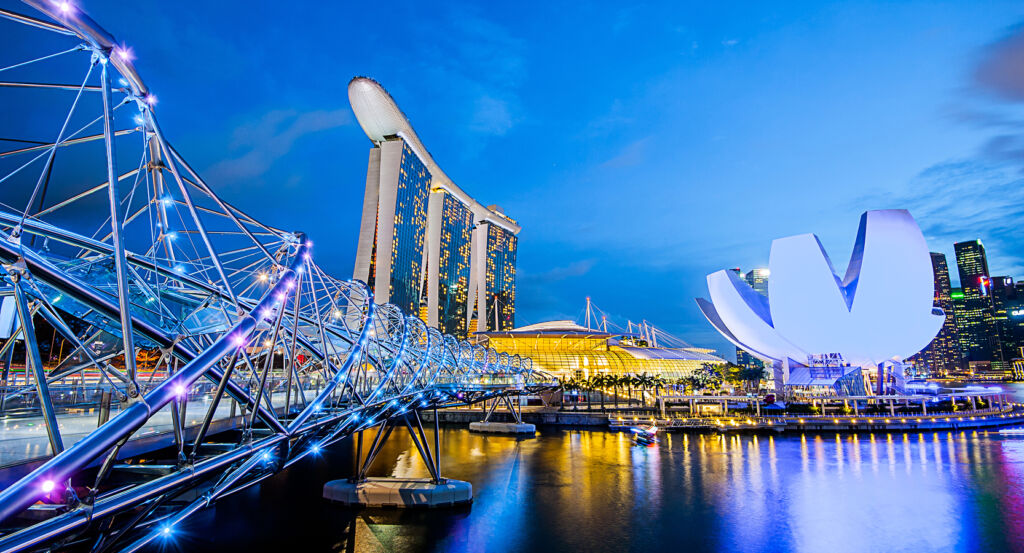
Begin your morning with breakfast at Town Restaurant, sunlight streaming through arched windows as you savor tropical fruit, artisanal pastries, heritage-inspired dishes, and freshly brewed coffee. Step outside onto the riverside promenade and feel history beneath your feet, walk across Anderson Bridge toward the Padang, admiring the grand façade of the National Gallery Singapore, the Victoria Theatre and Concert Hall, and the stately columns of the Asian Civilisations Museum. For a deeper dive into Singapore's colonial and civic beginnings, explore these museums to understand the cultural evolution that surrounds the hotel. As the sun rises higher, wander along the Singapore River, following its gentle bends until you reach Boat Quay, where shophouses reveal the city's early architectural DNA. Stop for a midday coffee at one of the riverside cafés, then continue toward Clarke Quay if you crave color, music, and lively energy. Return to The Fullerton in the afternoon for a moment of serenity: book a treatment at The Fullerton Spa, read on a veranda overlooking the bay, or retreat to your suite to enjoy the stillness of high ceilings and filtered light. When golden hour arrives, make your way to The Lighthouse rooftop terrace. Watch the skyline transition from warm amber to glittering dusk as Marina Bay reflects the shifting colors. Sip a cocktail, feel the breeze sweep off the water, and let the panorama unfold, Gardens by the Bay glowing in the distance, the Helix Bridge forming a luminous ribbon, and Marina Bay Sands rising like a sculptural monument against the sky. For dinner, choose Jade for refined Cantonese fare or The Clifford Pier (just steps away at The Fullerton Bay Hotel) for Singaporean heritage dishes served with narrative richness. If you want a more atmospheric evening, stroll across Cavenagh Bridge-Singapore's oldest suspension bridge, and walk the illuminated waterfront toward Esplanade Park and Marina Bay, where the nightly Spectra water show casts shimmering color across the bay. End your night back at The Fullerton's grand lobby. Sit beneath the soaring dome, listen to the pianist's final notes, and let the atmosphere settle around you like a protective embrace. When you return to your suite, draw the curtains open and fall asleep to the glow of river lights and the whisper of a city that balances heritage and futurism with exquisite precision. By the time you check out, The Fullerton Hotel will feel less like a place you stayed and more like a chapter you lived, a rare gift only a national monument of this magnitude can offer.
Where your story begins.
Foresyte Travel reveals places that feel extraordinary long before you arrive.
Enjoy editorial crafted for luxury travelers.
Foresyte may earn a commission when you book.