Why The Westin Harbour Castle matters.
The Westin Harbour Castle is a waterfront modernist hotel where Harbourfront's postwar reinvention meets Campeau Corporation's Harbour Square redevelopment, William B. Tabler's hospitality architecture and five decades of Toronto hotel history.
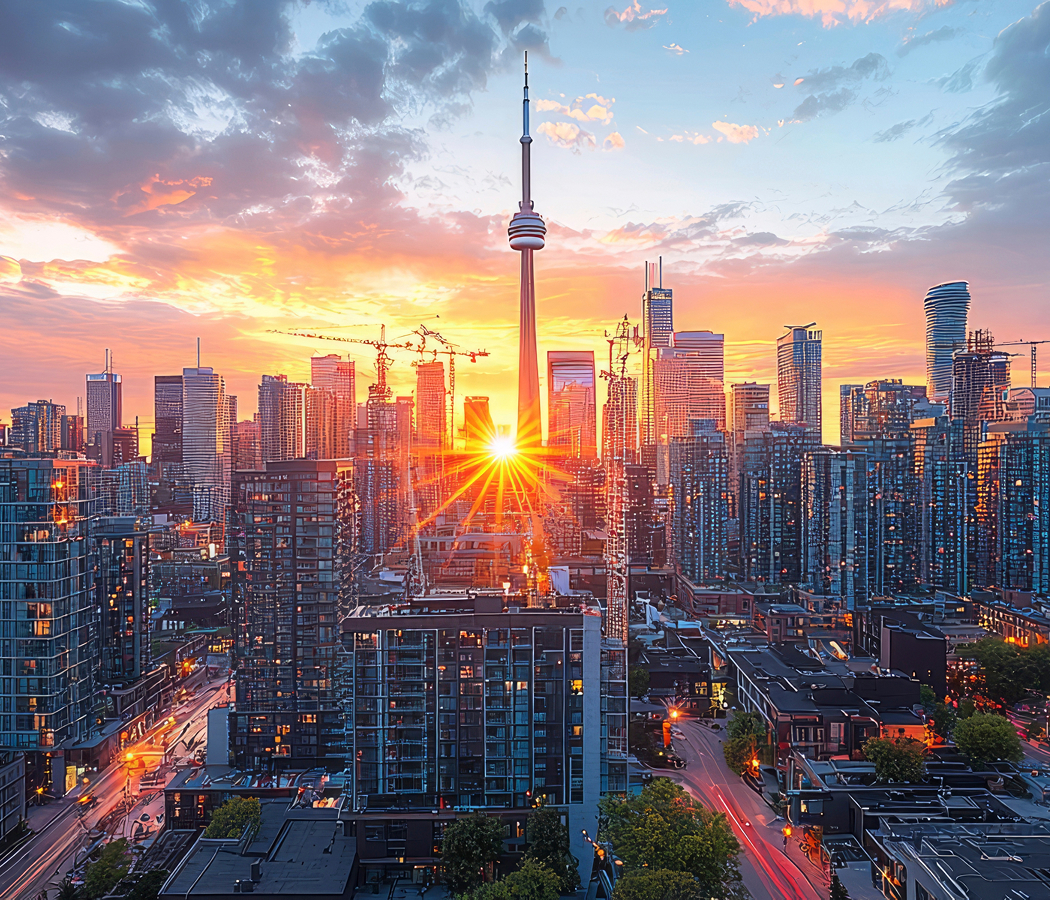
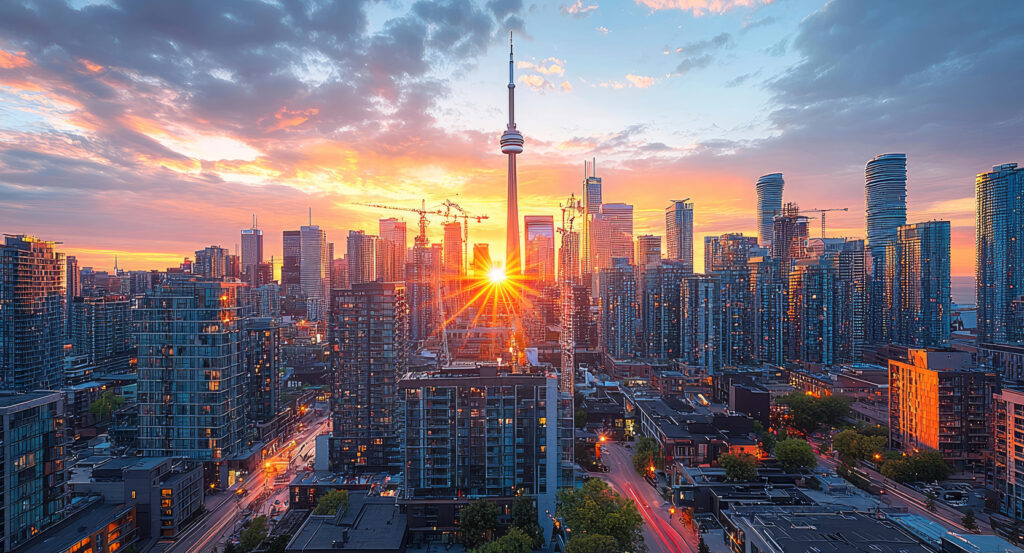
Standing where Bay Street reaches Queens Quay West, the hotel occupies Harbour Square on Lake Ontario, with Scotiabank Arena and Union Station rising beyond the railway corridor and Toronto's downtown towers forming a dense northern backdrop. Twin concrete towers rise from the harbour edge with repetitive window grids, deep openings and broad wall surfaces that preserve the mighty scale of Toronto's large 1970s developments. Movement through the complex repeatedly shifts orientation between open water and the downtown skyline, making the contrast between lake and city the primary way its setting unfolds. Heavy concrete cladding and the separation between the towers create an imposing waterfront composition whose mass becomes especially pronounced against the glass high-rises that subsequently reshaped Central Toronto. The result is a hotel whose architecture, harbour position and redevelopment origins preserve a consequential physical chapter in Toronto's transformation from working port edge to metropolitan lakefront.
What defines The Westin Harbour Castle.
The Westin Harbour Castle is best known for emerging from Harbour Square, the ambitious redevelopment that converted former shipping terrain into one of Toronto's defining 1970s waterfront complexes. Canada Steamship Lines acquired part of the site in 1927, when piers and port functions occupied a shoreline still being reshaped through extensive lakefill. Marvo Construction purchased the company's terminal in 1962 and pursued Harbour Square, but financing difficulties prevented that proposal from reaching completion. Campeau Corporation entered the project during the late 1960s, acquired the development rights in 1969 and substantially recast the scheme around residential towers and a major waterfront hotel. Construction of Harbour Castle Hotel began in March 1973, transforming a long-delayed redevelopment into a major intervention on Toronto Harbour. Campeau worked with William B. Tabler Associates of New York, drawing on Tabler's specialization in purpose-built hotels to produce twin concrete towers organized around the demands of large metropolitan hospitality. Farkas Barron Jablonsky developed the structural solution, and Jutras and Nicholson Associates shaped the original interiors within a complex whose repetitive elevations and exposed concrete joined International Style planning with pronounced Brutalist influence. Harbour Castle opened in April 1975, placing a new vertical marker on waterfront land whose previous significance had depended on shipping and port infrastructure. Hilton International assumed management in 1977, beginning the Toronto Hilton Harbour Castle chapter during the property's formative years. Hong Kong businessman Li Ka-shing acquired the hotel from Campeau in 1981, bringing the building into an international investment portfolio during a period of rapid change in Toronto real estate. A 1987 management exchange transferred Westin to Harbour Castle and moved Hilton to the former Westin property on University Avenue, creating the Westin Harbour Castle name. Westin purchased the property from Li in 1990, converting its management relationship into ownership. A $50 million revitalization carried the building toward its fiftieth anniversary, renewing major interiors after pandemic-era delays without erasing the twin-tower massing that has defined its harbour presence since 1975.
Where your story begins.
Foresyte Travel reveals places that feel extraordinary long before you arrive.
Enjoy editorial crafted for luxury travelers.