Why you should experience Tomb of the Unknown Slave in New Orleans, Louisiana.
Tomb of the Unknown Slave aches true, a solemn memorial that bears the weight of unspoken suffering and the enduring spirit of those who were never named, yet never forgotten.
Set quietly beside St. Augustine Church in the Tremé neighborhood, the tomb is both haunting and healing, a physical reckoning with the history that built New Orleans. It is not a grand marble monument but a raw, human work of remembrance: heavy iron chains, shackles, and crosses bound together in a sculpture that speaks louder than words ever could. Beneath it rest the remains of enslaved people unearthed during the church's 19th-century construction, men, women, and children who labored, lived, and died without record. Standing before it, you feel an invisible presence in the air: sorrow intertwined with resilience, silence threaded with prayer. This is New Orleans at its most honest, confronting pain not to reopen it, but to keep memory alive.
What you didn’t know about Tomb of the Unknown Slave.
The monument was conceived not by city officials or historians, but by the local parishioners of St. Augustine Church, the oldest Black Catholic parish in the United States.
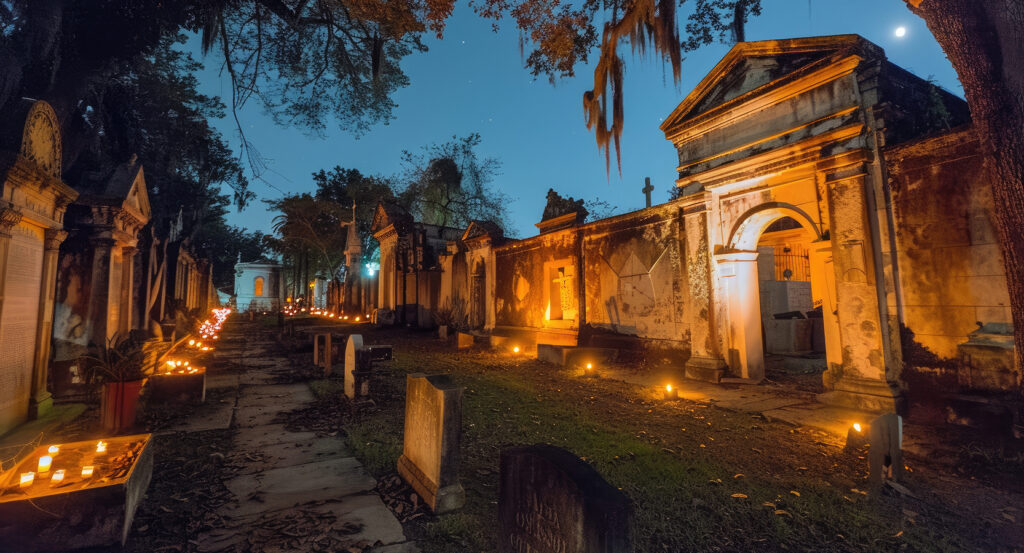
In 2004, they gathered to create a memorial that would give voice to those who had none, using materials that symbolized both bondage and redemption. The chains and crosses came from across the community, offered by families, neighbors, and local artists, each link a piece of collective memory. The tomb stands on sacred ground, near a site that once bordered the city's slave auction blocks and quarters. It also faces the tombs of free people of color who worshipped at the same church, bridging two worlds forever separated by law but united by faith. Each year, vigils and processions mark this site on Juneteenth and All Saints' Day, reminding visitors that history's wounds can only begin to heal when they are named, honored, and carried forward.
How to fold Tomb of the Unknown Slave into your trip.
Visiting Tomb of the Unknown Slave in New Orleans is less about sightseeing and more about witnessing.
Start at St. Augustine Church on Governor Nicholls Street, its open courtyard leads directly to the memorial, where silence feels sacred. Read the nearby plaques, then take a few quiet moments to reflect on the craftsmanship, the iron, the rust, the deliberate simplicity. Bring an offering if you feel moved: a flower, a ribbon, or simply a prayer. Combine your visit with a walk through Tremé, one of America's oldest African American neighborhoods, where resilience and art have flourished from the same soil that once bore chains. End your time at Louis Armstrong Park nearby, where music now rises from the same ground where sorrow once settled. Tomb of the Unknown Slave is not a place to pass by, it's a place to stop, listen, and remember what endurance truly means.
Where your story begins.
Start your planning journey with Foresyte Travel.
Experience immersive stories crafted for luxury travelers.