Why Torishi matters.
Torishi is an intimate yakitori izakaya where Baldwin Village's restaurant culture meets uncommon chicken cuts, skewer-by-skewer grilling and the late-night drinking traditions of Japan.
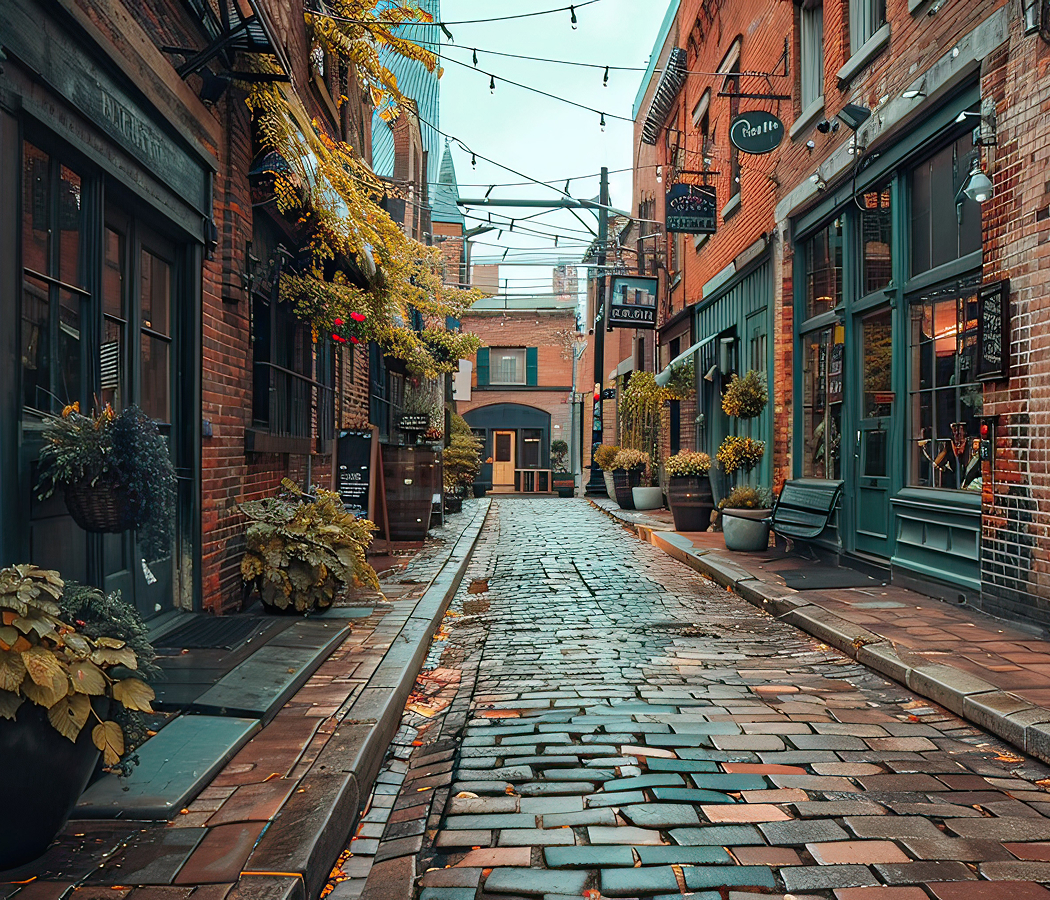
Set along Baldwin Street near McCaul Street and just steps from the eastern entrance to the village, the second-floor restaurant occupies a narrow dining corridor between Beverley Street and University Avenue, with Chinatown spreading south toward Dundas Street West, the University of Toronto campus extending north beyond College Street and the Queen West cultural district unfolding several blocks to the south. An upstairs position separates the dining room from the compact storefronts and converted houses lining the street below, creating a contained room above one of Central Toronto's densest restaurant strips. Skewers arrive individually as they leave the grill, breaking dinner into successive servings of chicken, beef, pork, seafood and vegetables. Beer and highballs accompany that staggered service through a format structured around repeated small orders and extended conversation. The result is a second-floor izakaya whose incremental grill service, uncommon poultry cuts and drinking-focused format translate Japanese yakitori dining into the compact scale of Baldwin Village.
What defines Torishi.
Torishi is best known for bringing a highly specialized yakitori menu to Baldwin Street, with the restaurant emerging in 2025 inside a block whose relationship with Japanese dining extends well beyond its arrival. A five-alarm fire tore through multiple Baldwin Street properties near McCaul Street on June 9, 2017, destroying the longtime Kon-nichi-wa restaurant and disrupting a dining strip already shaped by successive generations of immigrant restaurateurs. Torishi subsequently opened farther west at 23 Baldwin Street, occupying the second floor above Light Cafe in a building where the ground-level restaurant remains independently operated. Its arrival returned another Japanese grill concept to a street whose commercial transformation began decades earlier, after Baldwin Village moved from Jewish and Chinese retail toward an increasingly restaurant-centered economy. The surrounding strip had already become associated with dining by the late 1970s, when its first cafe opened amid converted residential properties. By the mid-1980s, restaurants ranging from French and Indian rooms to Chinese establishments occupied storefronts alongside surviving bakeries, clothing stores and food businesses. Torishi entered that lineage with a narrower specialization, concentrating the kitchen around skewered cooking and the small-plate structure of an izakaya. The restaurant's continued operation through 2026 places a newly established Japanese grill inside a Baldwin Street food culture assembled through nearly half a century of changing immigrant businesses and dining rooms.
How Torishi fits.
Torishi works as the dinner anchor for a Central Toronto outing connecting the city's oldest art-and-design university, a museum transformed by one of Toronto's most internationally consequential architects and Canada's largest museum of art, culture and natural history.
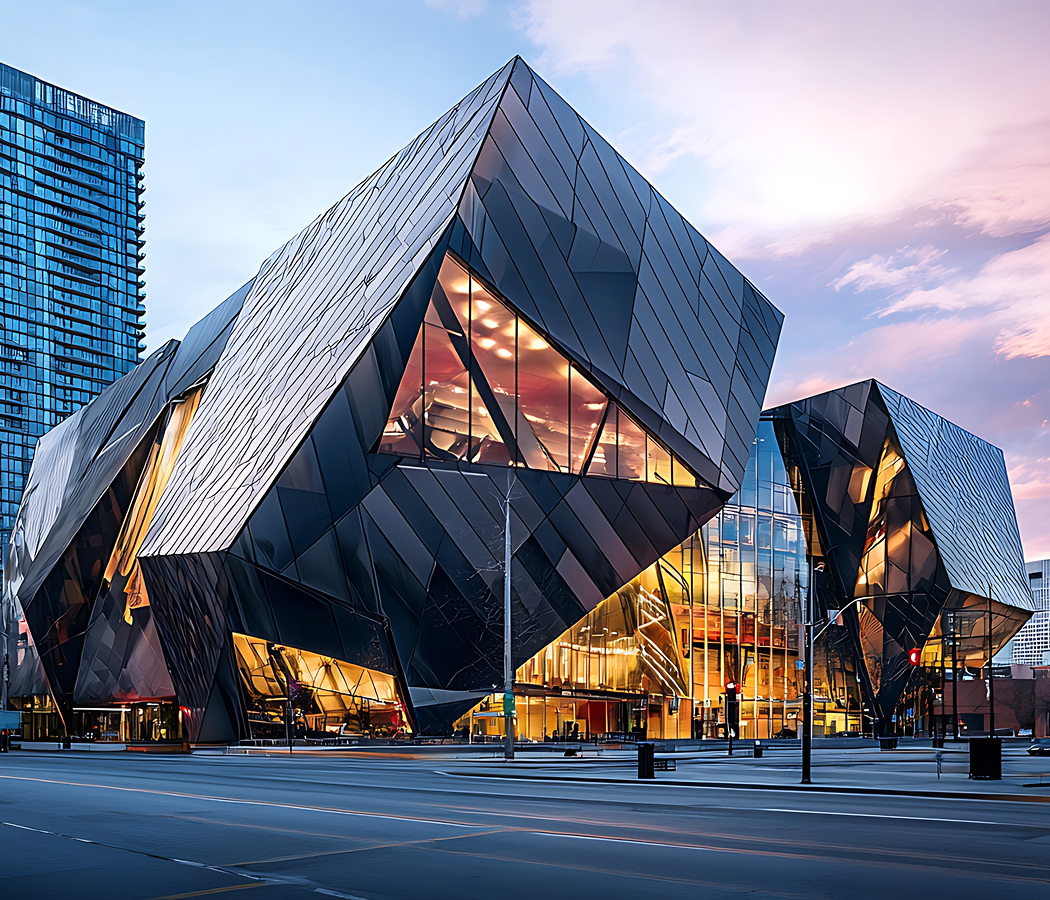
Begin at OCAD University, founded by the Ontario Society of Artists as the Ontario School of Art in 1876 with 14 registered students before its 1912 incorporation as the Ontario College of Art made it Canada's first school dedicated to educating artists. George Agnew Reid and Group of Seven member J.E.H. MacDonald later led the institution, and its first purpose-built Grange Park home opened in 1921 from Reid's own design. University status arrived in 2002, followed in 2004 by Will Alsop and Robbie/Young + Wright Architects' Rosalie Sharp Centre for Design, a black-and-white volume raised above the campus on 12 coloured steel legs as part of a $42.5 million redevelopment. Continue to Art Gallery of Ontario, founded as the Art Museum of Toronto on July 4, 1900 and eventually established around The Grange, the historic house transferred to the institution during its formative years. The collection now exceeds 120,000 works, with Ken Thomson's 2002 donation adding 2,000 artworks in the largest gift of its kind to a Canadian cultural institution. Toronto-born Frank Gehry reshaped the complex for its 2008 reopening, adding 97,000 square feet and increasing art-viewing space by 47 percent; Galleria Italia extended more than 450 feet along Dundas Street beneath a glass-and-wood façade supported by a $13 million contribution from 26 Italian-Canadian families. Conclude at Royal Ontario Museum, formally created by provincial legislation in 1912 and opened by the Duke of Connaught on March 19, 1914 inside Darling and Pearson's buff-brick and terracotta building. Its holdings have grown to 18 million artworks, cultural objects and natural-history specimens across 40 galleries and exhibition rooms. Daniel Libeskind won an international architectural search involving more than 50 firms in 2002, then developed the Michael Lee-Chin Crystal from sketches made on paper napkins during a family wedding at the museum. Five interlocking self-supporting prismatic structures formed the completed addition, physically separated from the original masonry building except for connecting bridges. The progression moves from a 14-student art school through a gallery enlarged by Thomson and Gehry and culminates inside a museum where Darling and Pearson's 1914 architecture confronts Libeskind's crystalline expansion, carrying Toronto's cultural development across three institutions surrounding Torishi's Baldwin Village setting.
Where your story begins.
Foresyte Travel reveals places that feel extraordinary long before you arrive.
Enjoy editorial crafted for luxury travelers.