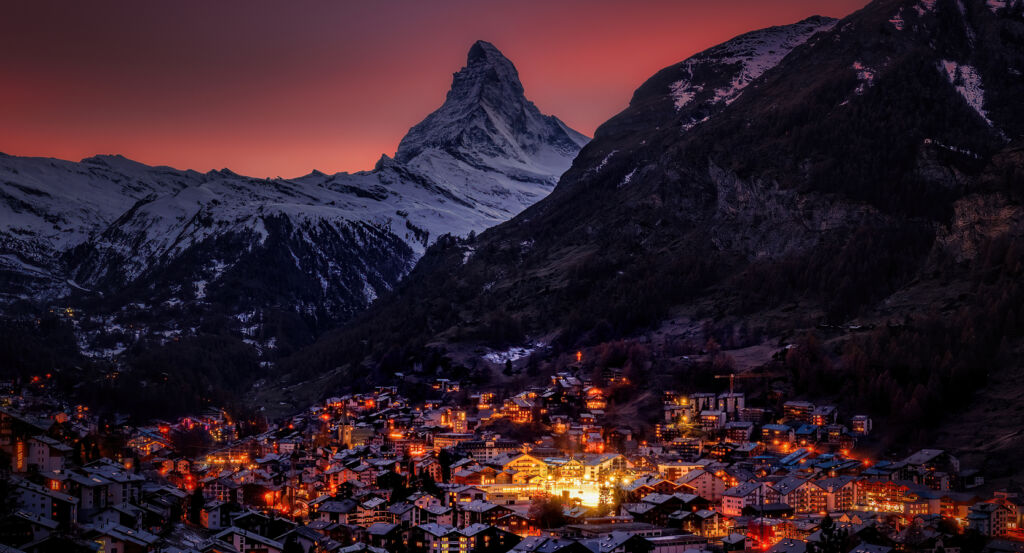
Why you should experience Zmutt in Zermatt, Switzerland.
Zmutt in Zermatt, Switzerland, feels like a doorway to another century, a tiny alpine hamlet frozen in time, tucked deep in the valley where the sound of cowbells replaces conversation and the scent of pine smoke lingers in the air.
Just a short hike from Zermatt's bustling center, this cluster of weathered wooden chalets sits at 1,936 meters, perched against a backdrop of rolling meadows and glacier-fed streams. The Matterhorn looms nearby, but here, it feels softer, not the untouchable icon seen from afar, but a quiet neighbor watching over the past. Walking through Zmutt's narrow lanes feels like entering a living museum: dark timber barns lean against one another, their foundations resting on stone “mushrooms” that once kept grain safe from mice; flower boxes spill over with geraniums; and a small chapel, the Kapelle St. Katharina, glows with candlelight and carved devotion. It's not designed for spectacle; it's designed for stillness. What makes Zmutt extraordinary is not what happens here, but what doesn't, no traffic, no rush, no noise but the wind. It's Zermatt stripped to its essence: mountain life in its purest, humblest form.
What you should know about Zmutt.
Though it looks untouched by time, Zmutt holds centuries of human endurance, a story written in smoke, wood, and prayer.
Founded around the 13th century, the hamlet is among the oldest settlements in the Zermatt valley, originally built by farmers and herdsmen who grazed cattle along the Zmuttbach River. The architecture remains largely original: chalets and barns built from larch wood blackened by sun and age, their construction methods passed down through generations. The heart of the village, the Chapel of St. Katharina, was erected in the 1700s and still hosts an annual mass each summer, when villagers and hikers gather to bless the season's cattle. Just beyond the hamlet lies the Zmutt Glacier, a receding river of ice that once defined local life, providing water for the valley's irrigation channels, or bisses, and shaping the terrain that farmers depended on. Even today, electricity in the area is partly supplied by the Zmutt hydroelectric plant, a testament to Zermatt's ongoing balance between progress and preservation. Few visitors realize that Zmutt also marks the starting point of several mountaineering routes toward the Hörnli Ridge and Zmuttgrat, two of the Matterhorn's legendary ascent paths. This is where the modern world fades, where life returns to rhythm, ritual, and respect for the land.
How to fold Zmutt into your trip.
To experience Zmutt is to understand the real heartbeat of Zermatt, one that pulses quietly beneath the glamour of ski chalets and luxury lodges.
The easiest way to reach it is on foot: a gentle, 45-minute hike from Zermatt's center along the Zmuttbach Gorge, following signs that lead you through forests, past small waterfalls, and over wooden bridges. The trail is well-marked and suitable for most fitness levels, with views that open dramatically as you approach the village. Once there, wander slowly. Every building, every creak of a wooden shutter, feels deliberate and storied. Stop by the St. Katharina Chapel, take in the view of the Zmutt Valley, and if you're lucky, catch the soft clang of cowbells echoing through the hills. In summer, the local Zmutt Restaurant serves traditional Swiss fare, rösti, alpine cheese, cured meats, on a terrace overlooking the glacier. From Zmutt, more adventurous hikers can continue toward Zmutt Glacier or loop back through Furi for a scenic descent. In winter, the trail becomes a snowy fairytale path, lined with candles and untouched drifts. Whether you stay for ten minutes or two hours, Zmutt leaves its mark not through grandeur, but through grace, a reminder that the Alps are more than mountains. They're memory, still breathing.
Where your story begins.
Start your planning journey with Foresyte Travel.
Experience immersive stories crafted for luxury travelers.