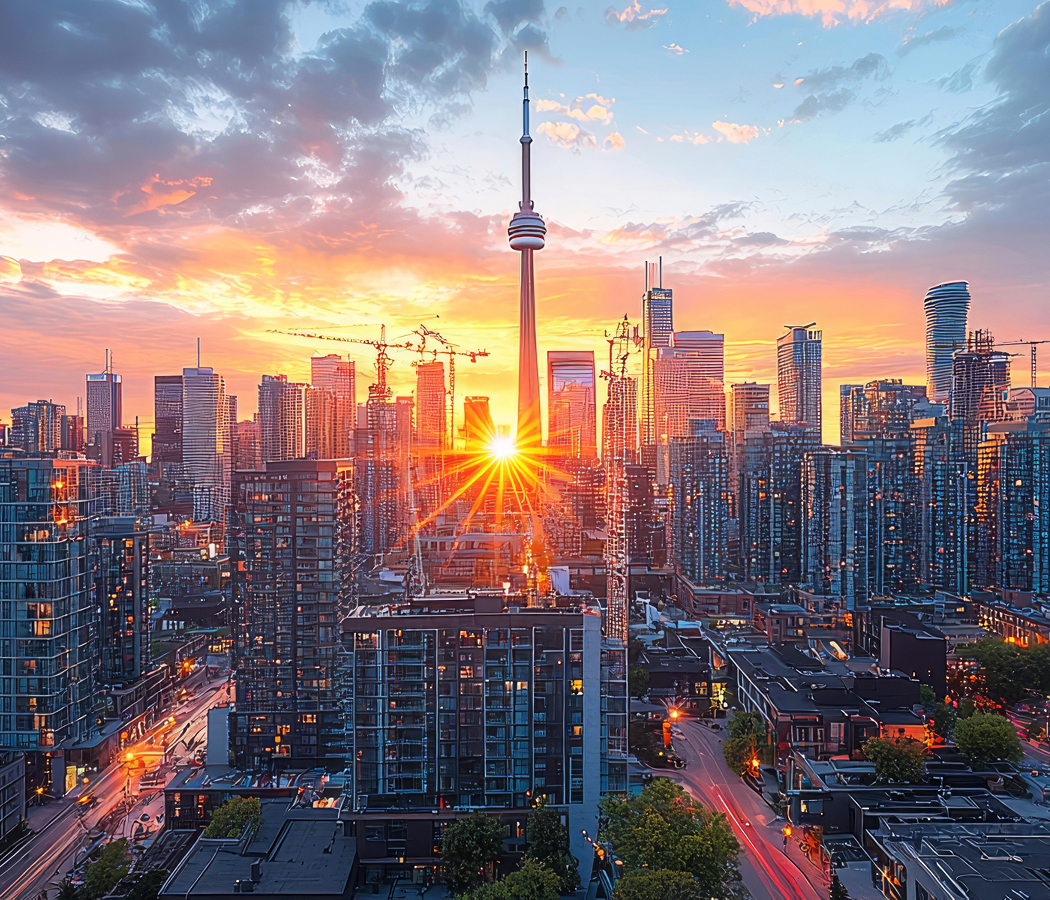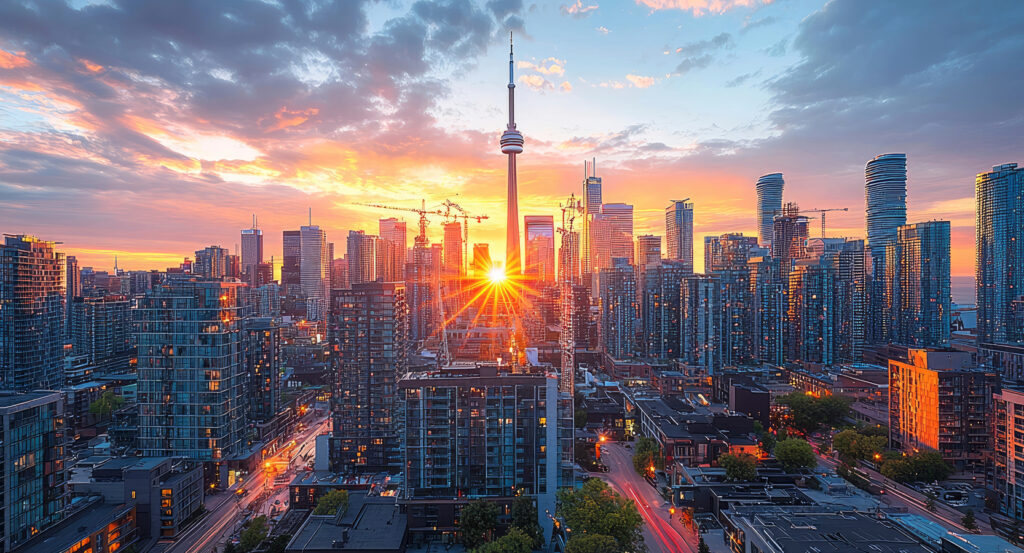
Why you should experience Market Street in Toronto, Ontario.
Market Street is a storied corridor where Old Town Toronto's mercantile heritage, architectural legacy, civic traditions, and entrepreneurial spirit reveal one of the city's most enduring historic streets.
Running through Old Town Toronto between the Financial District and Corktown, the corridor connects nineteenth-century commercial buildings, public institutions, warehouse architecture, and longstanding trading spaces that collectively trace Toronto's evolution from the colonial Town of York into Canada's commercial center. Successive blocks demonstrate how commerce, immigration, craftsmanship, and public enterprise shaped an avenue whose historical character remains firmly rooted in the city's earliest years. Throughout the corridor, preserved brick architecture, civic spaces, and commercial traditions remain closely intertwined, creating a cohesive expression of Toronto's historic core. The result is an experience defined by commercial heritage, architectural continuity, and one of downtown's most compelling historic corridors.
What you should know about Market Street.
Market Street is best known for serving as the historic commercial spine adjoining Toronto's original public marketplace, where agricultural producers, merchants, and traders supplied the growing Town of York throughout the early nineteenth century. Construction following Toronto's incorporation in 1834 introduced a distinguished collection of Victorian commercial buildings characterized by red brick masonry, stone detailing, cast-iron storefront elements, and warehouse construction that reflected the city's expanding mercantile economy. Wholesale merchants, commission houses, produce dealers, and food distributors established enduring commercial networks along the corridor while benefiting from close proximity to Toronto's harbor and regional transportation routes. Market Street consequently preserves an exceptional record of the commercial infrastructure that supported Toronto's emergence as one of Canada's leading business centers.
Development of specialized produce exchanges, meat wholesalers, commission merchants, and agricultural distribution businesses reinforced the corridor's importance within Ontario's regional food economy during the late nineteenth and early twentieth centuries. Surviving commercial buildings retain original masonry façades, decorative cornices, stone lintels, timber structural systems, and proportioned storefront openings that collectively demonstrate the craftsmanship associated with Victorian mercantile construction. Continued heritage conservation has preserved the corridor's historic building fabric, commercial scale, and streetscape character while maintaining one of Downtown's most complete collections of nineteenth-century mercantile architecture. Together, these commercial enterprises, preserved construction traditions, and long-term conservation efforts demonstrate how Market Street evolved into one of Old Town Toronto's defining historic corridors.
How to fold Market Street into your trip.
Market Street works as an exploration of Toronto's commercial origins, architectural heritage, and civic history.
Begin at Toronto's First Post Office, where the restored 1833 building introduces the communications network that supported the Town of York's expanding merchants and establishes the civic foundation for the surrounding commercial district before the route turns toward Toronto's historic marketplace. Continue to St. Lawrence Hall, whose elegant nineteenth-century assembly rooms, civic gatherings, and architectural refinement deepen the story by revealing how commercial prosperity fostered public institutions that shaped Toronto's growing identity. Conclude at St. Lawrence Market, where generations of merchants, farmers, artisans, and food producers provide the historical culmination by demonstrating the enduring commercial traditions that have animated Old Town Toronto since the city's earliest years. Together, the sequence progresses from civic infrastructure to public institutions before culminating in Toronto's most enduring marketplace, revealing why Market Street remains inseparable from the city's commercial history.
Where your story begins.
Foresyte Travel reveals places that feel extraordinary long before you arrive.
Experience premium editorial crafted for luxury travelers.