
Why Ekki Sushi Tremblant at Bel Air Resort matters.
Ekki Sushi Tremblant at Bel Air Resort is a Japanese dining destination where La Conception's Laurentian mountain landscape meets contemporary sushi craftsmanship, chef-led omakase and an ambitious resort restaurant whose culinary reputation has grown beyond Mont-Tremblant.
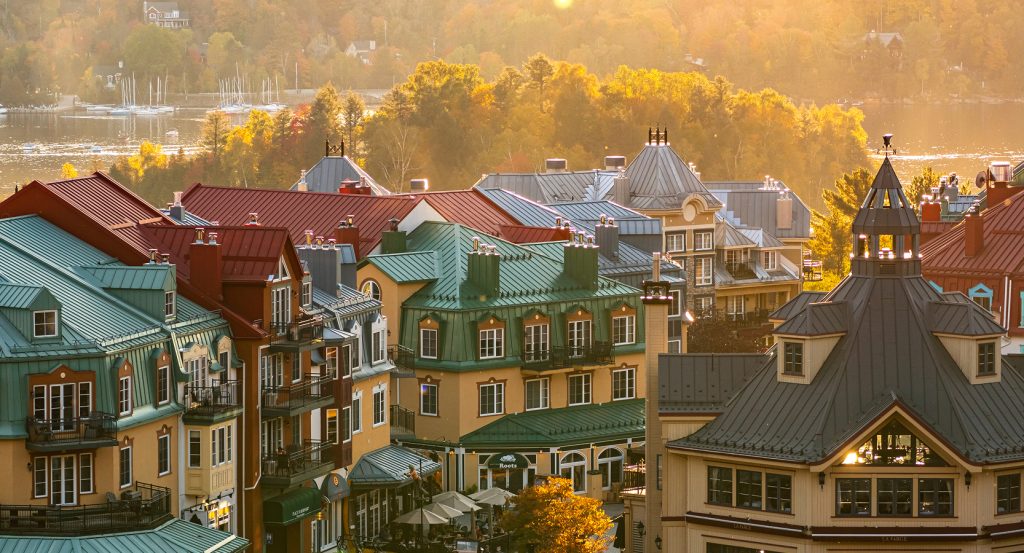
Set within Bel Air Tremblant above Chemin de la Station, Ekki Sushi occupies a wooded hillside near Rue des Sept Sommets, between the Rivière Rouge valley and Mont-Tremblant's Old Village, with Lac Mercier, the Laurentian foothills and the slopes of Mont Tremblant defining the surrounding landscape. The restaurant forms part of a secluded resort whose contemporary architecture introduces Japanese dining into a setting of forested mountain slopes and elevated private residences. Large windows, warm wood finishes and a restrained interior palette frame the dining room, establishing a close connection between the culinary counter and the surrounding landscape. At the sushi counter, chefs assemble nigiri, sashimi and composed selections in direct view of diners, with traditional Japanese preparations and carefully selected seafood forming the foundation of the meal. The result is a mountain restaurant whose intimate setting, visible culinary craftsmanship and Japanese cooking establish a distinctive dining destination within the Laurentians.
What defines Ekki Sushi Tremblant at Bel Air Resort.
Ekki Sushi Tremblant at Bel Air Resort is best known for bringing refined Japanese sushi craftsmanship to the Laurentians through a restaurant that became the culinary foundation of Bel Air Tremblant's developing hospitality enterprise. The restaurant emerged from a resort project established in 2018 on a 540-acre property in La Conception, where contemporary mountain accommodation and distinctive architectural structures became central to the development. Bel Air's expansion into gastronomy began in 2020 with Ekki Sushi, creating a dedicated Japanese restaurant within a destination originally organized around the wooded landscape and private mountain retreats. The culinary undertaking departed from the French-Canadian cooking long associated with Mont-Tremblant, introducing a restaurant centered on Japanese seafood preparation, precise knife work and the composition of individual sushi selections. Chef Claude played a prominent role in its early development, bringing high-end sushi craftsmanship to the restaurant during its first established period of operation. By July 2021, Ekki had attracted regional attention for its Japanese cooking and contemporary dining environment, establishing a culinary reputation during the resort's initial expansion. The restaurant subsequently developed an international seafood program emphasizing fish imported from Japan, allowing its kitchen to work with ingredients associated with traditional sushi and more elaborate omakase preparations. Bluefin tuna, yellowtail, scallops and sea urchin entered a culinary selection extending beyond conventional maki rolls, with differences in cutting, seasoning and preparation determining the character of individual courses. The chef's counter became a defining feature of the restaurant, placing the preparation of fish and the assembly of sushi directly before diners. Ekki's culinary leadership developed further through the work of chefs Merts and Jian, whose collaboration brought increasingly personalized chef-selected preparations into the restaurant's established Japanese format. Their work extended the counter's role through direct culinary exchanges, connecting individual selections with explanations of ingredients, preparation and technique. Chef Minh contributed another chapter to the kitchen's development, reinforcing the restaurant's emphasis on detailed seafood preparation and composed Japanese dishes. The broader hospitality group expanded its dining portfolio in 2023 with the introduction of Bistro Bel Air, establishing a French-Canadian counterpart to Ekki's Japanese culinary program. This development positioned the original restaurant within a growing collection of distinct dining concepts, preserving its specialized culinary character alongside the resort's expansion. Ekki also developed an established record of Tripadvisor recognition, including a 2025 Travellers' Choice distinction as the wider Bel Air property received multiple hospitality awards. By 2026, its Japanese culinary program had become a defining component of the resort's international dining character, connecting chef-led sushi preparation with a destination historically associated with skiing, mountain recreation and Quebec regional cooking. Ekki's significance rests on that development from a specialized Japanese restaurant into a recognized culinary destination whose craftsmanship, changing kitchen leadership and international seafood program expanded the gastronomic possibilities of Mont-Tremblant.
How Ekki Sushi Tremblant at Bel Air Resort fits.
Ekki Sushi Tremblant at Bel Air Resort works as the evening destination for a Mont-Tremblant outing connecting the Laurentians' nineteenth-century logging industry, the religious foundations of its early settlements and the railway that transformed the region into a recreational destination.
Begin at Parc des Chutes, where the Rivière Cachée preserves the natural landscape associated with the Laurentians' early timber industry. Surveyor George N. Allbright encountered commercial logging operations in the region in 1858, when the Hamilton brothers had begun exploiting the pine forests around the territory that later became Mont-Tremblant. Timber merchants John Roche and James Connelly subsequently acquired cutting rights near Lac Tremblant and the Rivière du Diable in 1868, extending the region's connection to the Ottawa River timber trade. Logs floated downstream during the spring thaw, linking remote forests with sawmills and shipping enterprises before the establishment of permanent agricultural settlements. Continue to Église du Village, the former Sacré-Coeur-de-Jésus church whose history grew from Catholic missionary activity around Lac Mercier. Priest Joseph-Eugène Limoges established the Mont-Tremblant mission during his tenure at Saint-Jovite beginning in 1918, extending religious services into a small community developing around the lake. Architect Joseph Sawyer designed the permanent church constructed between 1929 and 1930, establishing a substantial religious building during the village's early growth as a recreational settlement. Mont-Tremblant acquired the property in 2011 and converted the former sanctuary into a cultural venue, preserving its historical architecture through a new public function. Conclude at Place de la Gare, the former railway precinct whose original station opened in 1904 and became central to the arrival of recreational travelers from Montreal. The regional railway had reached Saint-Jovite in 1893 through the northern expansion championed by priest Antoine Labelle, strengthening access to Laurentian settlements and their surrounding forests. Beginning in 1927, trains carrying winter sports enthusiasts established a new relationship between the railway and the emerging ski economy. Passenger service subsequently declined, and railway operations ended in 1981. A reconstructed station completed in 1998 revived the architectural form of the original building, creating a cultural destination used for regional artistic exhibitions. The progression moves from the timber economy preserved in the landscape of Parc des Chutes through the religious foundations of Église du Village into Place de la Gare's railway heritage, tracing the transformation of Mont-Tremblant from a remote resource-producing region into an established mountain destination.
Where your story begins.
Foresyte Travel reveals places that feel extraordinary long before you arrive.
Enjoy editorial crafted for luxury travelers.























































































































