Why you should experience Howard Park Avenue in Toronto, Ontario.
Howard Park Avenue is a refined corridor where Roncesvalles Village's garden-suburb heritage, architectural craftsmanship, transportation legacy, and neighborhood character preserve one of Toronto's most distinguished residential avenues.
Running through Roncesvalles Village between High Park and Parkdale, the corridor connects early twentieth-century homes, historic streetcar infrastructure, mature tree canopies, and longstanding community institutions that collectively demonstrate Toronto's emergence as a premier streetcar suburb. Successive blocks reveal how visionary land subdivision, transportation investment, and enduring architectural stewardship produced a streetscape whose historic character has remained remarkably cohesive for more than a century. Throughout the corridor, period residences, neighborhood landmarks, and carefully maintained public spaces continue reinforcing the avenue's distinctive sense of place. The result is an experience defined by architectural continuity, thoughtful planning, and one of Toronto's most graceful historic corridors.
What you should know about Howard Park Avenue.
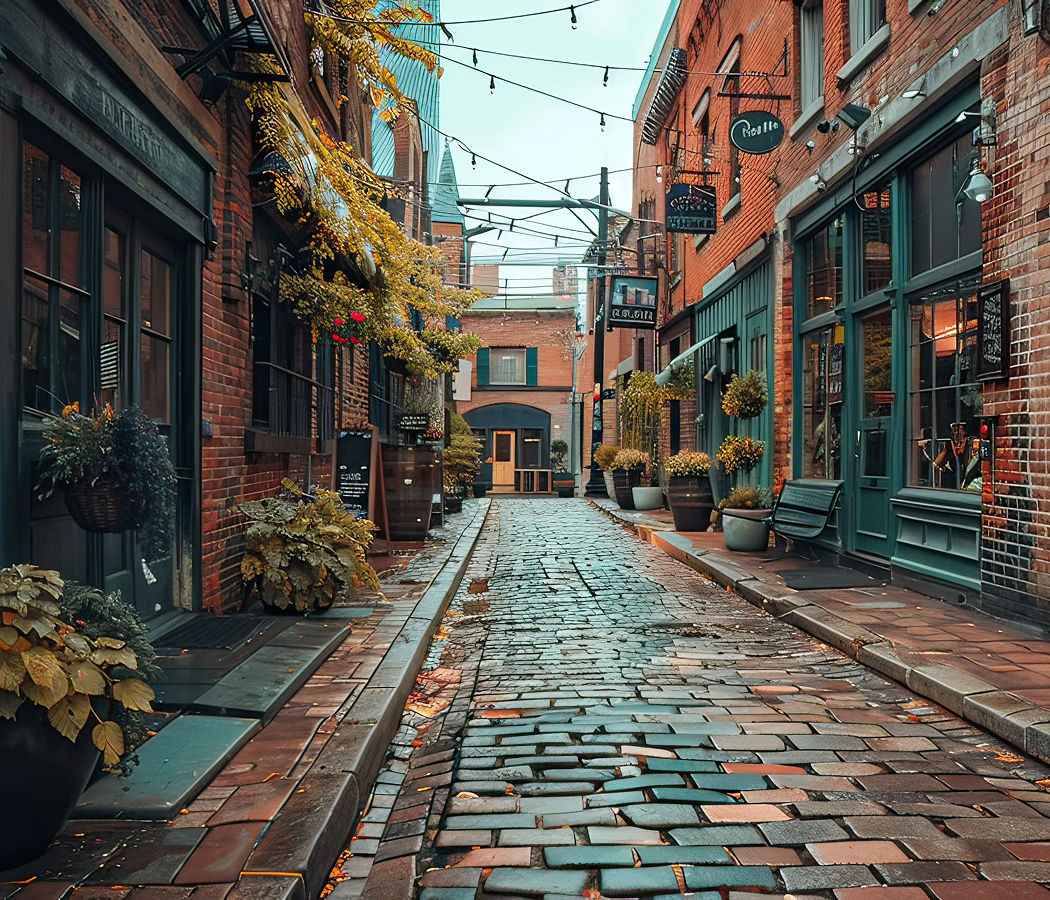
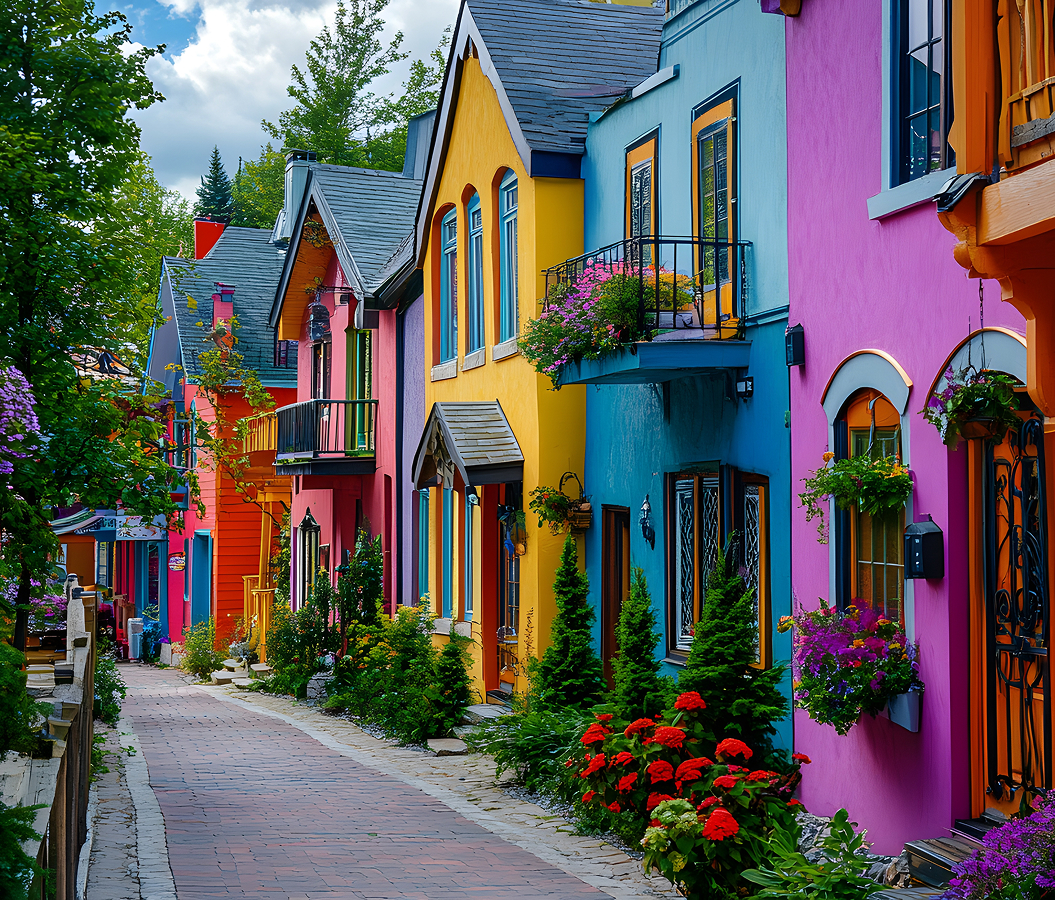
Howard Park Avenue is best known for occupying lands formerly owned by John George Howard, the English-born architect, engineer, and surveyor who acquired extensive property west of Toronto during the 1840s and later donated more than 120 acres to establish High Park in 1873. Residential development accelerated after the Toronto Railway Company constructed the Dundas Carhouse immediately north of the avenue in 1897, creating one of the city's principal streetcar maintenance facilities while encouraging subdivision of surrounding lands into streetcar-oriented neighborhoods. Builders between the 1890s and the 1920s introduced a cohesive collection of Victorian, Edwardian, and Arts and Crafts residences distinguished by red brick masonry, decorative gables, stained-glass transoms, carved stone lintels, and generous front porches that continue defining much of the corridor today. The avenue's proximity to High Park, Roncesvalles Avenue, and the expanding street railway network established Howard Park Avenue as one of West Toronto's most desirable residential addresses during the city's principal era of suburban growth. Together, these landholdings, transportation investments, architectural traditions, and public park initiatives established Howard Park Avenue among Toronto's most historically significant residential corridors.
Subdivision of the former Howard Estate established consistent lot dimensions and landscaped setbacks that produced a remarkably unified residential streetscape despite construction by numerous independent builders. Construction of Howard Park Methodist Church in 1909, following the earlier Boustead Avenue Methodist Mission, reinforced the avenue's role as a growing community center while adding an enduring institutional landmark to the neighborhood. Heritage conservation efforts documented by the City of Toronto continue protecting original brick façades, decorative masonry, period streetscapes, and surviving early twentieth-century residential fabric that distinguish Howard Park Avenue from later phases of urban expansion. Collectively, these subdivision patterns, community institutions, and preservation initiatives demonstrate how Howard Park Avenue evolved through coordinated planning and long-term stewardship into one of Roncesvalles Village's most architecturally cohesive historic corridors.
How to fold Howard Park Avenue into your trip.
Howard Park Avenue works as an exploration of Toronto's streetcar heritage, architectural character, and west-end neighborhood identity.
Begin at High Park, where expansive woodlands, formal gardens, and the legacy of John George Howard establish the landscape that shaped the avenue's earliest development before residential subdivision transformed the surrounding district. Continue to Roncesvalles Avenue, whose independent cafés, specialty shops, and longstanding Polish cultural institutions deepen the story by revealing the commercial traditions that have sustained the neighborhood for generations. Conclude at Museum of Contemporary Art Toronto, where a repurposed industrial building provides the historical culmination by illustrating the west end's continuing evolution from manufacturing district to creative center while preserving its architectural heritage. Together, the sequence progresses from foundational landscape to neighborhood commerce before culminating in adaptive reinvention, revealing why Howard Park Avenue remains one of Toronto's most distinctive historic corridors.
Where your story begins.
Foresyte Travel reveals places that feel extraordinary long before you arrive.
Experience premium editorial crafted for luxury travelers.