Why you should experience Richmond Street East in Toronto, Ontario.
Richmond Street East is an enterprising corridor where Old Town Toronto's commercial heritage, architectural legacy, civic evolution, and entrepreneurial spirit define one of downtown's most historically significant thoroughfares.
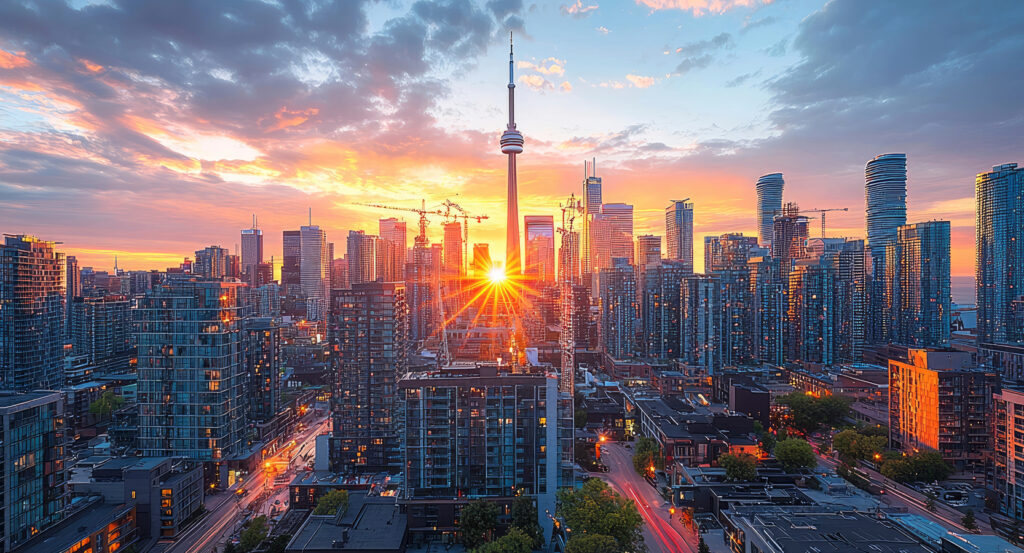
Running through Old Town Toronto between the Financial District and Corktown, the corridor connects nineteenth-century commercial buildings, early institutional landmarks, restored warehouses, and modern business districts that collectively reveal Toronto's transformation from colonial settlement into Canada's financial capital. Successive blocks demonstrate how commerce, industry, transportation, and urban renewal continually reshaped the avenue while preserving many of its earliest architectural and historical landmarks. Throughout the corridor, heritage buildings, contemporary development, and civic life remain closely intertwined, creating a remarkably cohesive expression of Toronto's urban evolution. The result is an experience defined by commercial history, architectural continuity, and one of the city's most compelling downtown corridors.
What you should know about Richmond Street East.
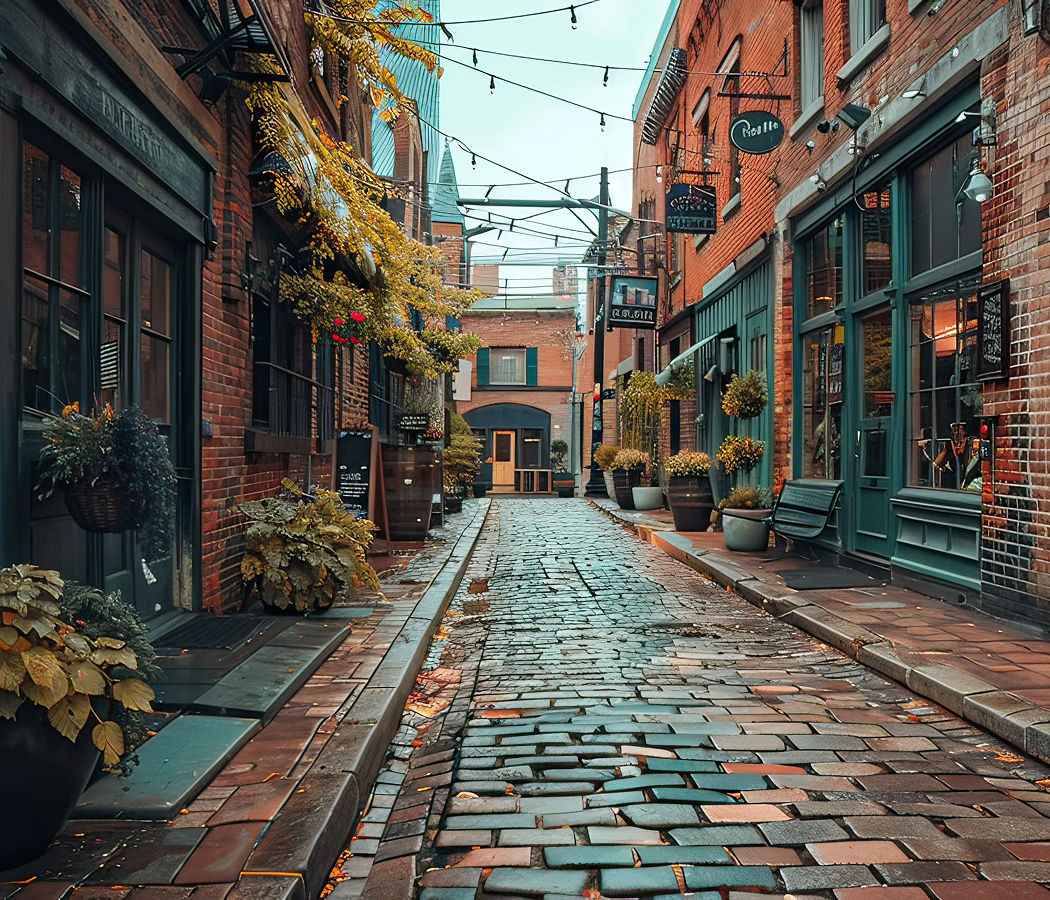
Richmond Street East is best known for forming part of the original street network established during the early development of the Town of York, remaining an essential east-west commercial route as Toronto expanded throughout the nineteenth century. Following incorporation in 1834, the corridor became increasingly lined with warehouses, mercantile buildings, printing houses, and financial offices that supported the city's emergence as Canada's leading commercial center. Much of the surviving streetscape reflects late Victorian and Edwardian construction, including richly detailed brick commercial blocks distinguished by decorative masonry, cast-iron storefronts, and classical architectural ornamentation that demonstrate the prosperity of Toronto's industrial era. Richmond Street East consequently preserves an exceptional architectural record of Downtown's commercial expansion across more than 175 years of continuous urban development.
Construction of St. Lawrence Hall, completed in 1850 to designs by architect William Thomas, established one of British North America's finest public assembly buildings while reinforcing the corridor's civic prominence during Toronto's formative decades. Nearby Toronto's First Post Office, operating from its restored 1833 building under the Town of York Historical Society, preserves one of the city's oldest surviving postal facilities and documents the development of early communications infrastructure. Continued rehabilitation of historic warehouse buildings into offices, residences, and technology workplaces has sustained the avenue's commercial vitality while preserving original masonry façades, stone detailing, and nineteenth-century streetscapes that distinguish the corridor today. Together, these civic landmarks, preserved commercial architecture, and adaptive reuse projects demonstrate how Richmond Street East evolved into one of Downtown's defining historic corridors.
How to fold Richmond Street East into your trip.
Richmond Street East works as an exploration of Toronto's commercial heritage, architectural legacy, and civic history.
Begin at St. Lawrence Market, where generations of merchants, farmers, and artisans established one of Canada's oldest continuously operating public markets and introduced the historic character of Old Town Toronto. Continue to Toronto's First Post Office, whose preserved nineteenth-century interiors reveal the communications network that supported the city's earliest commercial growth. Conclude at Gooderham Building, where Toronto's celebrated Flatiron landmark provides a fitting architectural finale while symbolizing the city's emergence as a prosperous commercial metropolis. The progression moves naturally from public commerce to civic infrastructure before concluding with one of Canada's most recognizable Victorian commercial buildings, revealing why Richmond Street East remains one of Downtown's defining historic corridors.
Where your story begins.
Foresyte Travel reveals places that feel extraordinary long before you arrive.
Experience premium editorial crafted for luxury travelers.