Why Riviera matters.
Riviera is a contemporary Canadian restaurant where Downtown Ottawa's historic financial district meets the architectural grandeur of a former Imperial Bank, internationally recognized cocktail craftsmanship, and the culinary ambitions of chefs Matthew Carmichael and Jordan Holley.
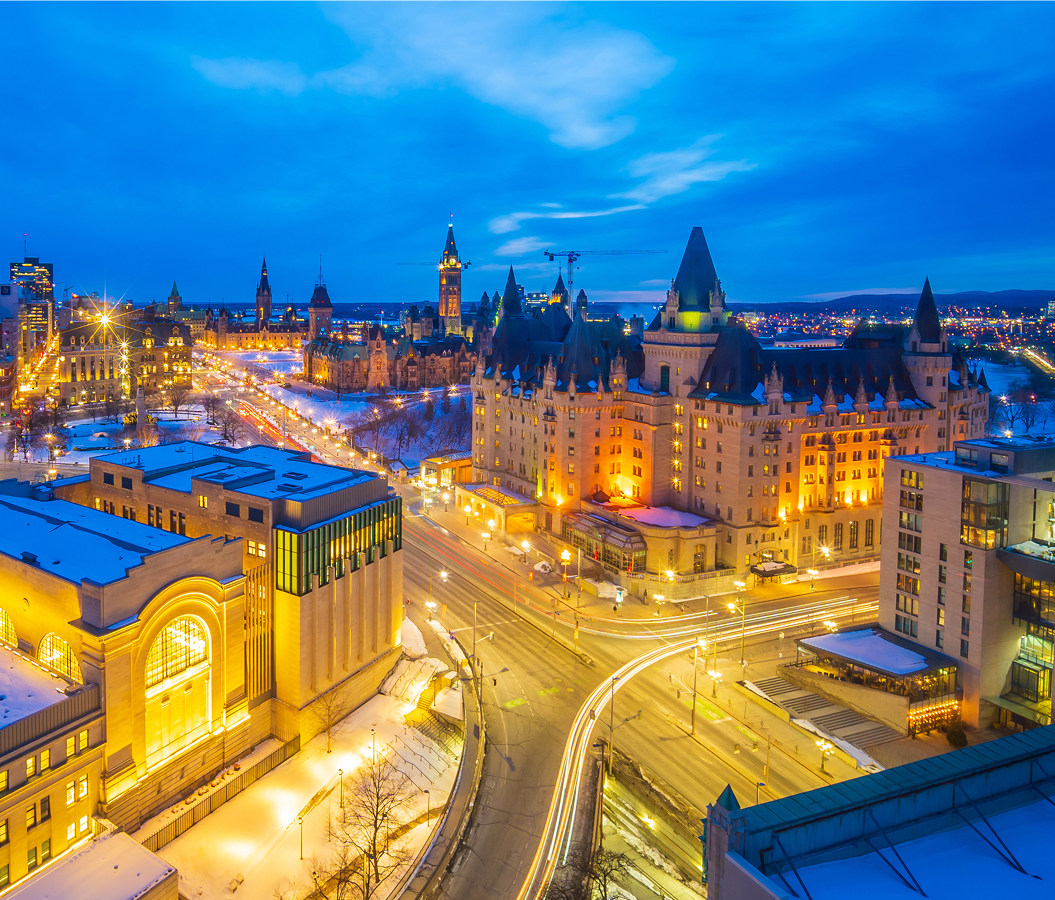
Occupying a landmark commercial building along the pedestrianized section of Sparks Street, Riviera stands one block south of Parliament Hill, between the institutional architecture of Wellington Street and the historic commercial corridors extending toward Confederation Square. Its expansive banking hall preserves an extraordinary Art Deco interior, with a twenty-five-foot sculpted ceiling rising above polished stone floors, marble wainscoting, and Corinthian pilasters. Tall windows introduce natural light through the narrow frontage, emphasizing the vertical proportions of a room originally conceived for financial transactions. An eighty-foot brass-topped bar extends along the dining room, its polished surface, upholstered stools, and decorative lighting establishing a dramatic focal point opposite the open kitchen. Leather banquettes and closely arranged dining tables introduce a more intimate scale beneath the soaring ceiling, and carefully positioned lighting accentuates the building's original stonework. Former banking facilities contribute additional private dining spaces, including the bank manager's office and a converted vault beneath the principal floor. The architectural composition combines expansive proportions with a sophisticated restaurant interior, preserving the physical character of Ottawa's commercial heritage within a lively dining environment. The result is an exceptional capital-city restaurant whose historic banking architecture, theatrical open kitchen, and expansive brass bar establish one of Ottawa's most distinguished contemporary dining settings.
What defines Riviera.
Riviera is best known for transforming a historic Ottawa bank into a nationally celebrated restaurant and cocktail destination, connecting the commercial evolution of Sparks Street with the professional partnership of chefs Matthew Carmichael and Jordan Holley. The property's history reaches to 1869, when a jewellery business occupied the site during Ottawa's early development as the capital of the newly established Canadian Confederation. Sparks Street had emerged as a principal commercial thoroughfare, accommodating banks, retailers, hotels, and businesses serving the expanding federal administration. Financial institutions subsequently occupied the property, establishing its longstanding association with Ottawa's banking industry. The surviving Art Deco banking hall was constructed in 1936 and 1937 for the Imperial Bank of Canada, introducing an expansive architectural expression of the financial confidence associated with the interwar period. Its limestone exterior incorporated ornamental carvings by sculptor Fred Winkler, whose architectural work also appeared on prominent commercial buildings in Toronto. The bank's history acquired an extraordinary criminal episode in 1958, when chief teller Boyne Lester Johnston stole $260,000 from the institution. Johnston, twenty-seven years old at the time, fled Canada and traveled through the United States, becoming known as the Champagne Bank Robber through his taste for expensive entertainment and conspicuous spending. His journey ended in Denver after a nightclub waitress recognized him from a wanted poster, leading to his arrest seventeen days after the theft. Johnston subsequently served four years in Kingston Penitentiary, and the stolen funds were recovered. The Imperial Bank merged with the Canadian Bank of Commerce in 1961, creating the Canadian Imperial Bank of Commerce and placing the Ottawa premises within the newly consolidated institution. The branch eventually closed in 1982, beginning a succession of commercial uses that included the Civil Service Co-operative and stamp dealer Ian Kimmerly. Sparks Street underwent its own transformation during this period, following the removal of its streetcar tracks and the introduction of a pedestrian shopping mall in 1960. The street's commercial fortunes fluctuated as suburban shopping centers expanded and federal offices increasingly occupied the surrounding downtown district. A new chapter began when chefs Matthew Carmichael and Jordan Holley recognized the former bank's potential for a substantial restaurant project. Their professional partnership had already produced El Camino, a Mexican-inspired restaurant established in 2013, and Datsun, an Asian-inspired establishment opened in 2015. Both ventures contributed to Ottawa's emerging independent restaurant culture through distinctive menus and carefully developed interiors. Riviera represented a more ambitious undertaking, introducing a sophisticated dining room devoted to contemporary Canadian cooking and an extensive cocktail program. The partners secured the former bank premises in 2015 and collaborated with architect Andrew Reeves and Ottawa's Linebox Studio on its transformation. The design retained the banking hall's most consequential architectural features, incorporating original travertine surfaces, ornamental plasterwork, and decorative metal elements into a contemporary hospitality environment. Custom millwork by Millwork North, leather banquettes produced by Siècle en siècle, and metalwork by Fluxworx contributed to the extensive renovation. Art curator Guy Bérubé assembled works for the interior, extending the design program into the visual arts. Construction also exposed human remains associated with Ottawa's earliest cemetery, established in 1828 beneath an area extending toward Queen Street. The discovery connected the restaurant project with an earlier chapter of the capital's urban development. Riviera opened on July 29, 2016, establishing an important new dining destination within a commercial corridor undergoing renewed investment. Its name continued the partners' interest in automotive references, drawing inspiration from the Buick Riviera and its association with midcentury American design. The restaurant's opening attracted substantial attention through its architectural transformation and the professional reputations of its founders. Air Canada's annual restaurant awards ranked Riviera seventh among Canada's best new restaurants in 2017, establishing national recognition during its first year of operation. The building's unusual history resurfaced in August 2018, when Boyne Johnston returned to the former bank at the age of eighty-five. Restaurant staff welcomed him into the converted vault, where he signed the wall with his name, the date, and his former prisoner number. His return attracted international attention, connecting the restaurant's hospitality program with one of Ottawa's most unusual banking stories. Riviera's national standing developed further through repeated appearances in Canada's 100 Best Restaurants, including twenty-sixth place in 2020, forty-third in 2022, and forty-ninth in 2023. Its cocktail program achieved a particularly consequential distinction in 2025, when Canada's 100 Best awarded Riviera the title of Best Restaurant Bar. The restaurant also placed eighty-eighth in the organization's national restaurant ranking that year. These achievements established Riviera as a significant contributor to Ottawa's culinary reputation, demonstrating the influence of independent restaurant development on the capital's historic commercial center.
Jordan Holley's culinary program develops contemporary Canadian cooking through classical restaurant techniques, premium regional ingredients, and a repertoire of substantial dishes designed for an extended evening of dining. His professional approach combines the familiarity of traditional steakhouse cooking with carefully prepared seafood, fresh pasta, and seasonal vegetables, establishing a menu suited to the architectural grandeur of the former banking hall. The kitchen's open arrangement places food preparation directly before the dining room, connecting the movement of cooks with the restaurant's principal gathering spaces. Steak tartare introduces one of its enduring classical preparations, balancing finely prepared beef with complementary seasonings and accompaniments. Fresh seafood occupies a prominent position through oysters, ceviches, and composed raw preparations, extending the menu into the coastal culinary traditions of Canada and the wider Atlantic world. Lobster spaghetti represents a defining expression of the kitchen's approach, combining freshly prepared pasta with substantial seafood and a carefully developed sauce. Dry-aged Alberta striploin steak frites introduces a direct relationship with Canadian beef production, incorporating bordelaise sauce and traditional accompaniments into a refined steakhouse preparation. Fogo Island cod extends the regional emphasis through Newfoundland seafood, with potato crust, mussels, and dill contributing a distinctive combination of maritime ingredients and European technique. The kitchen's seasonal selections introduce additional preparations involving mushrooms, root vegetables, and carefully selected meats, maintaining a relationship between familiar dishes and the changing availability of ingredients. Desserts continue the restaurant's emphasis on recognizable preparations through elaborate interpretations of traditional pastries and sweets. Stephen Flood's cocktail program forms an equally consequential component of Riviera's culinary reputation, drawing upon classic European and American drinking traditions through an extensive collection of spirits, fortified wines, and carefully prepared house ingredients. The Negroni receives particular attention through numerous variations that develop the relationship between gin, vermouth, bitter aperitifs, and alternative spirits. The Red Right Hand introduces mezcal verde and coffee-and-chipotle-infused Campari, creating a distinctive expression of the Italian classic through smoky and bitter flavors. The bar's selection of amari, vermouths, gins, and mezcals supports a substantial repertoire of spirit-forward cocktails. Sommelier Connor Gallagher's wine program emphasizes established European producers, connecting the kitchen's classical influences with bottles selected for their compatibility with substantial seafood and meat preparations. Private dining extends into the former bank manager's office and converted cellar vault, preserving architectural connections with the building's financial history. Riviera's distinction rests upon the close integration of Holley's contemporary Canadian cooking, Flood's nationally recognized cocktail program, and a historic dining room whose expansive proportions contribute directly to the occasion.
How Riviera fits.
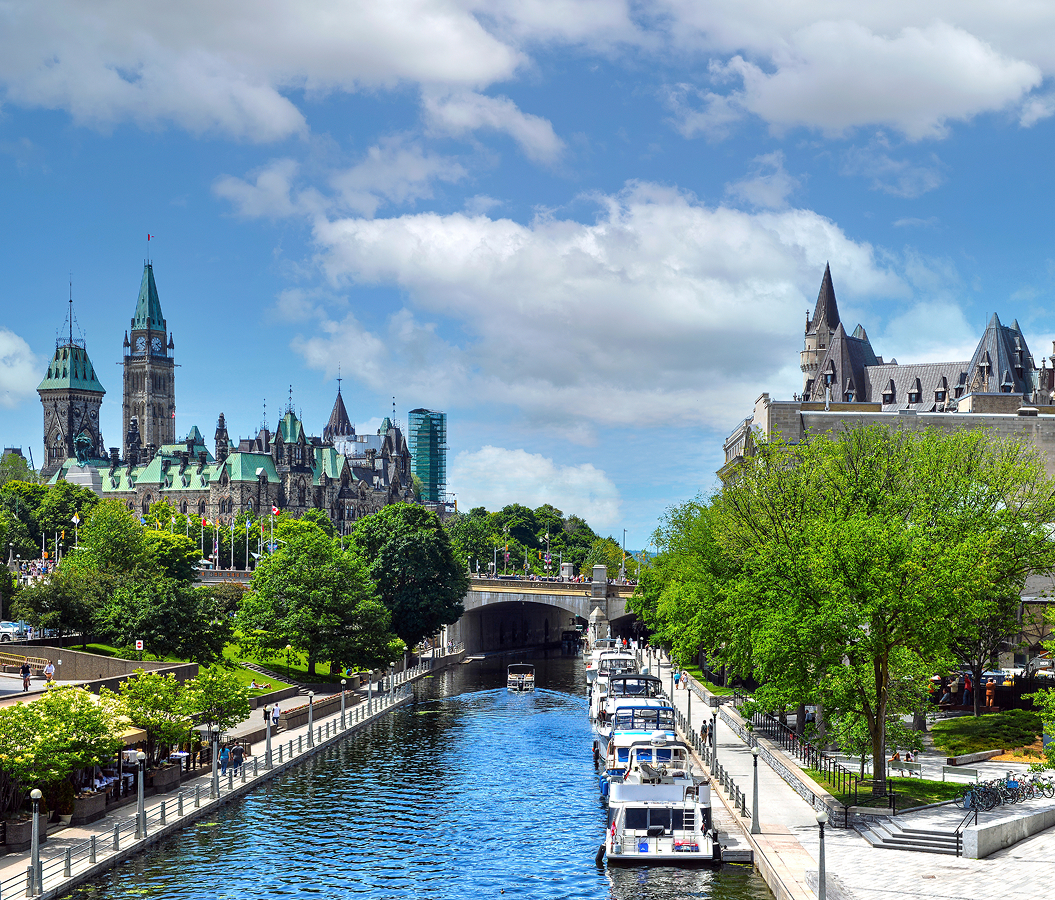
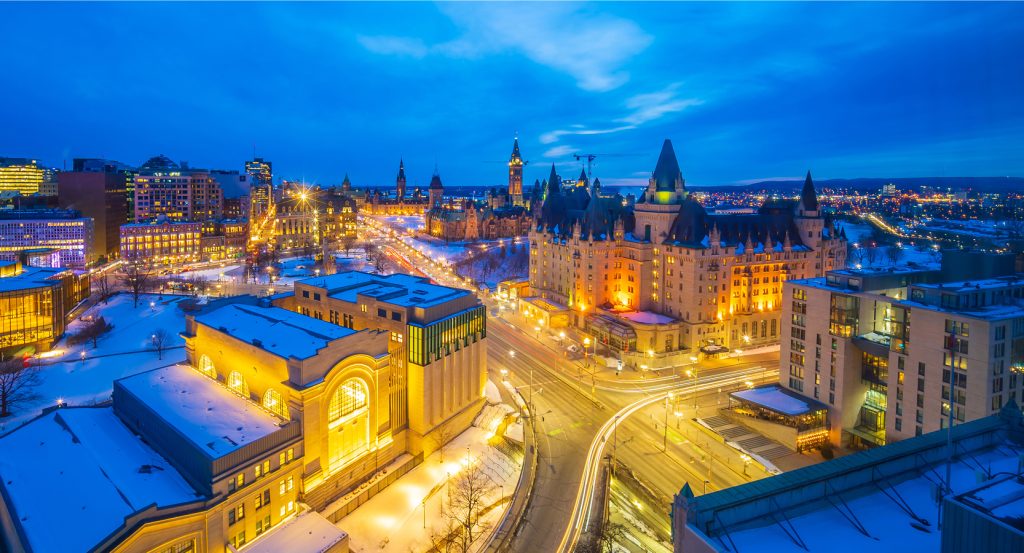
Riviera works as the dining centerpiece of a Central Ottawa exploration connecting Canada's monetary history, its parliamentary institutions, and the expansive public spaces commemorating national military service.
Begin at Bank of Canada Museum, the cultural institution occupying the central bank's headquarters complex near the western end of Parliament Hill. Its origins reach to the late 1950s, when Governor James Coyne proposed establishing a collection devoted to Canada's monetary heritage. His successor, Louis Rasminsky, authorized the project in 1963, expanding its scope to incorporate international currency, banking artifacts, and historical financial instruments. The collection received formal recognition as the National Currency Collection in 1975, establishing the foundation for a permanent public museum. The original Currency Museum opened in December 1980 within the Bank of Canada's expanded headquarters, introducing thousands of coins, banknotes, tokens, and printing artifacts. A major institutional transformation accompanied the headquarters' rehabilitation beginning in 2013. The redesigned Bank of Canada Museum opened on July 1, 2017, incorporating interactive exhibitions devoted to monetary policy, inflation, financial systems, and the history of currency. Continue east to Parliament Hill, the expansive Gothic Revival complex occupying the limestone escarpment above the Ottawa River. Queen Victoria selected Ottawa as the capital of the United Province of Canada in 1857, initiating plans for a permanent legislative precinct. Architects Thomas Fuller and Chilion Jones designed the original Centre Block, and Thomas Stent and Augustus Laver received commissions for the flanking departmental buildings. Construction began in 1859, establishing an architectural ensemble whose towers, pointed arches, and elaborate stonework became central to Canada's national image. Confederation transformed the complex into the seat of the Dominion's Parliament in 1867. A devastating fire destroyed the original Centre Block in 1916, prompting a reconstruction designed by John A. Pearson and Jean-Omer Marchand. The Peace Tower, dedicated in 1927, introduced a national memorial to Canadians who died during the First World War. Conclude at National War Memorial, the expansive granite arch occupying Confederation Square at the eastern end of the central government district. British sculptor Vernon March developed the principal composition, incorporating a procession of twenty-two bronze military figures beneath allegorical representations of Peace and Freedom. Following his death in 1930, members of the March family completed the sculptural program and supervised its installation. King George VI unveiled the memorial on May 21, 1939, before a crowd at 100,000 people. The Tomb of the Unknown Soldier was added in May 2000, receiving the remains of an unidentified Canadian serviceman repatriated from a cemetery near Vimy Ridge. The memorial serves as the principal setting for Canada's national Remembrance Day ceremonies. The progression moves from Bank of Canada Museum's interpretation of Canadian monetary history through Parliament Hill's expansive legislative architecture and culminates at National War Memorial, where sculptural commemoration preserves the country's military history.
Where your story begins.
Foresyte Travel reveals places that feel extraordinary long before you arrive.
Enjoy editorial crafted for luxury travelers.
Foresyte may earn a commission when you book.