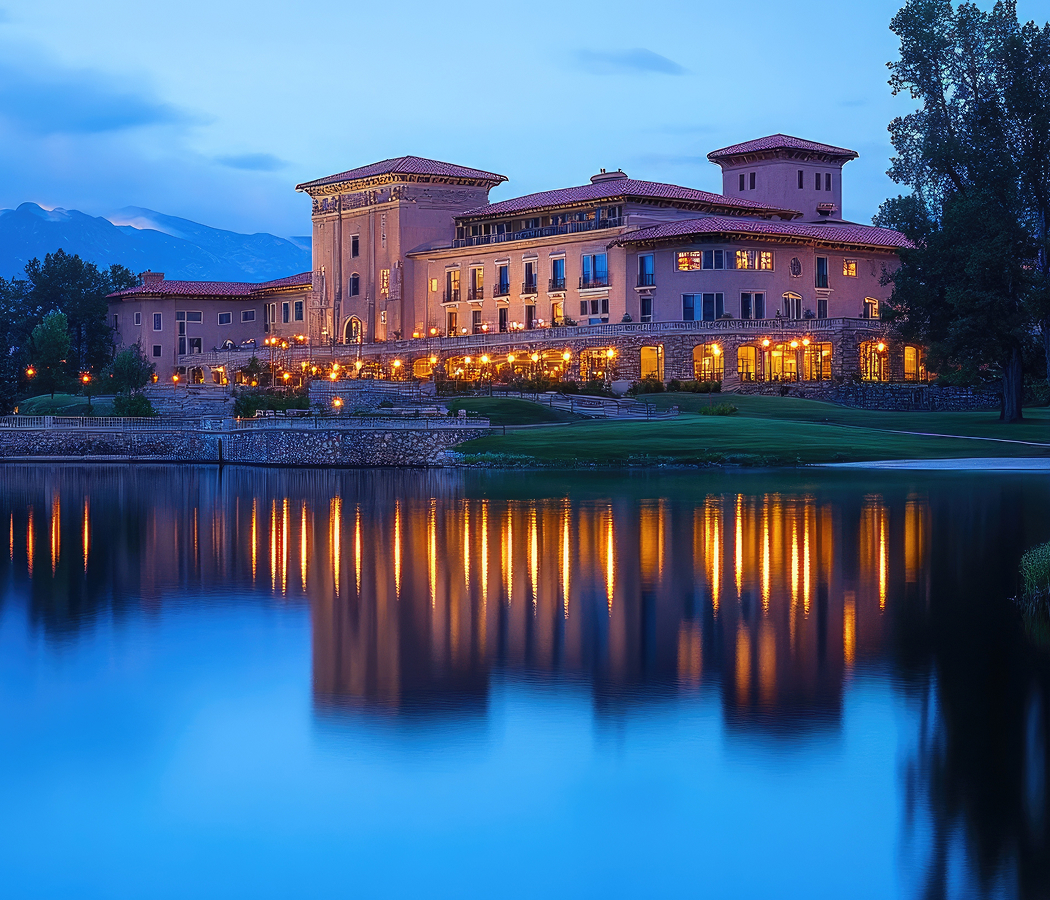
Why The Oxford Hotel matters.
The Oxford Hotel is where Gilded Age elegance meets contemporary boutique comfort, where Denver's railroad-era sophistication still whispers through marble, velvet, and carved oak, and where your stay feels like slipping inside a living time capsule of beauty, history, craft, and urban romance.
Opened in 1891 as Denver's first true luxury hotel, The Oxford rises today with the same stately grace that once welcomed miners, merchants, opera stars, political elite, and cross-country travelers arriving on the rails of the American West. Its façade, a blend of Romanesque arches, red brickwork, stone bands, terracotta detailing, and a classic Denver silhouette, presents a structure at once strong, elegant, and exquisitely preserved. The building feels like a landmark that has always belonged to the city's skyline. Step inside and the lobby unfolds in a sweep of carved wood columns, polished marble surfaces, Tiffany-style stained glass, deep rugs, sculptural chairs, antique brass fixtures, and warm lighting that glows against original 19th-century design elements. The atmosphere feels cinematic, like walking into the glamorous, early decades of Downtown, when carriages rattled down Wynkoop Street and the hotel served as a social hub for the city's rising aristocracy. Rooms extend this historic charm with a balance of vintage detail and modern refinement. Expect plush bedding wrapped in crisp linens; upholstered headboards; antique-inspired furniture; curated artwork; warm lighting; and color palettes of cream, navy, burgundy, sage, and soft gold. Each room carries its own personality, some with restored Victorian trim, others with exposed brick from the original structure, others with decorative moldings, beveled mirrors, or elegant seating nooks. Many rooms feature clawfoot tubs or soaking tubs that amplify the hotel's timeless mood. Bathrooms blend old-world romance with modern comfort: marble vanities, polished chrome fixtures, glass showers, warm lighting, and amenities chosen with boutique care. The design speaks softly, elegantly, and intimately, historical charm elevated by contemporary ease. Suites expand the experience even further with original architectural details, arched windows, deep wood paneling, fireplaces, vintage art, and layouts that feel like private residences suspended inside Denver's history. Some suites include bay windows overlooking LoDo, giving guests the same vantage point early travelers once enjoyed when they arrived in the city by train. Public spaces within The Oxford are rich with character. The lobby library, filled with antique leather chairs and dark wood shelves, feels like a retreat for reading or quiet conversation. Hallways display museum-quality art collections, including Western pieces, mid-century works, and rare prints chosen to reflect Denver's cultural evolution. The fitness center, though modern, still reflects the hotel's boutique warmth through natural materials and soft lighting. One of the most iconic areas of the hotel is The Cruise Room, Denver's longest-operating bar. Opened the day after Prohibition ended in 1933, this Art Deco masterpiece was modeled after the bar on the Queen Mary ocean liner. Soft neon glow, geometric wall panels, chrome trim, red leather seating, and a glamorous atmosphere make it feel like a portal to the Jazz Age. Sipping a martini here is an experience that transcends time. Another defining feature of The Oxford Hotel is its deep connection to Union Station across the street. For more than a century, the hotel served as the first stop for travelers stepping off the train. Its corridors have hosted railroad tycoons, silent film stars, World War I officers, businessmen from the silver boom, and early Colorado politicians. Today, guests enjoy the same advantage: steps away from Denver's transit hub, energetic restaurants, thriving bars, and the architectural grandeur of the station itself. Dining at The Oxford revolves around both the hotel's own offerings and the extraordinary culinary scene just outside its doors. From classic steakhouses to modern bistros, from rooftop venues to cozy wine bars, the surrounding streets form one of Denver's richest food ecosystems. The Oxford's own restaurant offers refined dishes served in a warm, classic setting, white tablecloths, polished silverware, candlelight, and plates presented with both tradition and creativity. Wellness is interwoven through the hotel's serene spa, which offers massages, treatments, and experiences rooted in relaxation and restorative energy, an atmospheric counterbalance to the historic architecture. Throughout the building, the design philosophy remains constant: preserve the past, elevate the present, and create resonant resonance through beauty, craft, and storytelling. Every piece of furniture, every light fixture, every artwork feels chosen with intention, not as décor, but as memory. Service is warm, convivial, polished, and grounded in tradition. Staff members embody the hotel's legacy of hospitality, offering thoughtful guidance, personal touches, and a sense of care that aligns with the property's historic identity. And the location is exceptional. Set in LoDo, guests are steps from Union Station, the riverfront, Ballpark District, Larimer Square, boutiques, galleries, historic warehouses, cocktail bars, and the best of Downtown's architecture and culture. The Oxford Hotel is romantic, historic, atmospheric, elegant, soulful, architectural, intimate, and ideal for travelers seeking an experience shaped by heritage, style, and the timeless beauty of Denver's oldest luxury hotel.
What defines The Oxford Hotel.
The Oxford Hotel stands on land layered with the stories of Denver's rise, railroad expansion, economic booms, architectural ambition, and more than a century of cultural evolution.
Built in 1891, the hotel was designed by Frank Edbrooke, the celebrated architect behind the Brown Palace and numerous Denver landmarks. Its construction marked the city's transformation from frontier outpost to modern metropolis, symbolizing the wealth generated by mining, railroads, and emerging commerce. A lesser-known detail: The Oxford was built before Union Station reached its present form. For years, travelers stepped off trains into a simpler depot and walked directly across the street to check into the city's first luxury hotel. During early restoration efforts, teams discovered remnants of the hotel's original infrastructure, square nails, hand-carved wood blocks, early elevator machinery, vintage wallpaper fragments sealed behind plaster, and structural timbers bearing handwritten carpenter markings from the 1890s. The Cruise Room holds its own historic secrets. During World War II, murals depicting “toasted nations” were painted on the wall, but one mural celebrating Japan was quietly removed after Pearl Harbor. The remaining murals are preserved as rare examples of Art Deco narrative art. Another fascinating layer of history: The Oxford once housed a radio station during the early era of broadcast, sending music and news across Colorado from inside its walls. The hotel also played a role in Prohibition enforcement. Hidden beneath floorboards, preservationists discovered compartments believed to have been used for storing bottles during Denver's dry years, small markers of the city's complicated social history. Throughout the 20th century, The Oxford saw Denver's evolution firsthand. It survived economic downturns, population shifts, changing architectural trends, and the decline and rebirth of LoDo. Its preservation in the 1980s and 1990s was pivotal in revitalizing the district, helping spark the movement that transformed Downtown into a spirited cultural hub. Many of the building's original design features, doors, molding profiles, stonework, ceiling medallions, and tiled details, are still intact thanks to painstaking restoration. Today, The Oxford stands as one of the most important historic buildings in the city: a place where Denver's stories live inside brick, wood, metal, and memory.
How The Oxford Hotel fits.
The Oxford Hotel becomes your elegant Denver sanctuary, where mornings begin with sunlight warming marble and wood, afternoons unfold into historic wandering and cultural exploration, and evenings settle into Art Deco glow, classic cocktails, and the soft hum of downtown.
Start the morning with breakfast in the hotel's dining room or grab a pastry from Union Station just steps away. Wander through LoDo's historic streets, where brick warehouses from the 1800s now house boutiques, cafés, and galleries. Continue toward the riverfront for scenic pathways and views of the skyline reflected in the water. Midday, explore the nearby museums, shop along Larimer Street, or walk into the Ballpark District for lunch. If you're visiting during baseball season, the energy around Coors Field adds a lively pulse to the day. Return to The Oxford for an afternoon pause, relax in your warmly appointed room, sink into an antique armchair in the lobby, or enjoy a spa treatment. In the early evening, step into The Cruise Room for a martini beneath glowing neon light and Art Deco beauty. Then follow the warm atmosphere of LoDo into dinner, rooftop restaurants, cozy taverns, elegant bistros, and creative kitchens fill the surrounding blocks. After dinner, stroll through Wynkoop Street, where historic architecture glows beneath lamppost light, or wander to Union Station to enjoy the nighttime ambiance. Return to your room at The Oxford and let the soft lighting, historic textures, and quiet elegance draw your day to a peaceful close.
Where your story begins.
Foresyte Travel reveals places that feel extraordinary long before you arrive.
Enjoy editorial crafted for luxury travelers.
Foresyte may earn a commission when you book.