Why Wexford Golf Club matters.
Wexford Golf Club is a strategically composed private golf course where South End's residential character meets Willard Byrd's 1983 routing, Arnold Palmer Design Company's classical redesign and a lock-controlled inland harbour woven through a 525-acre community.
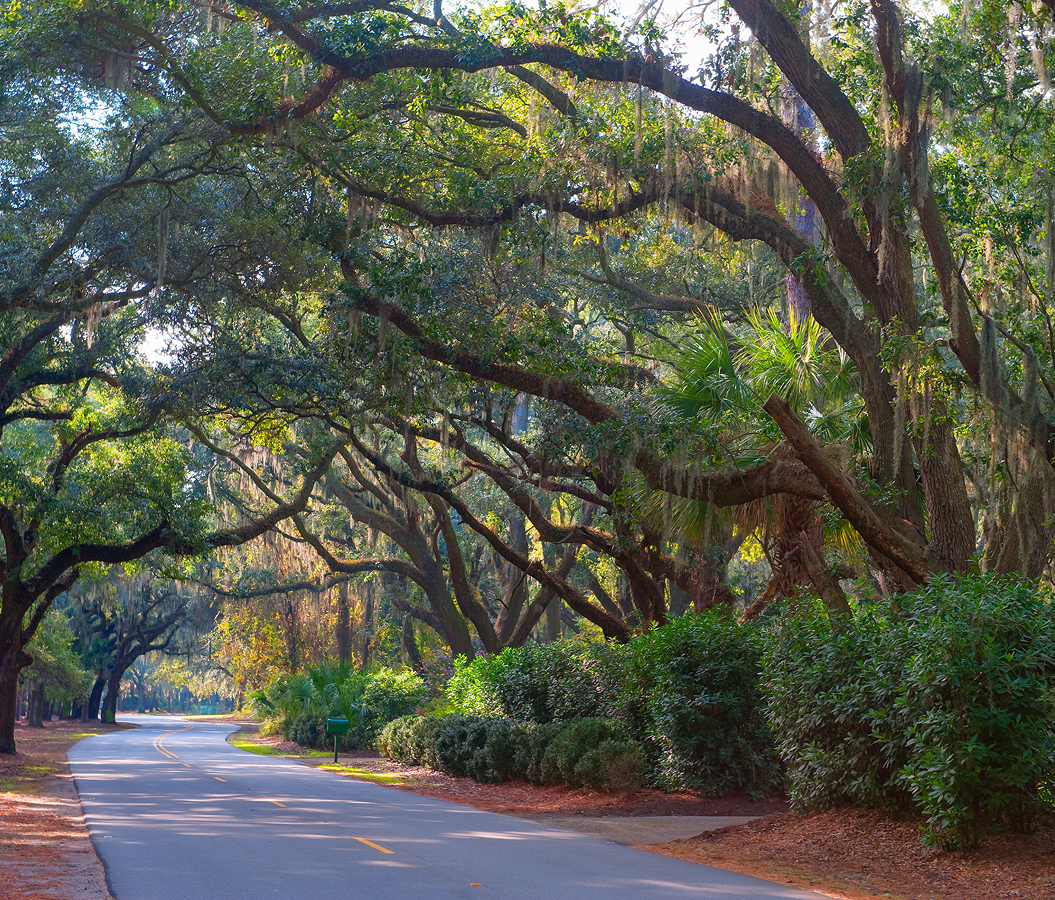
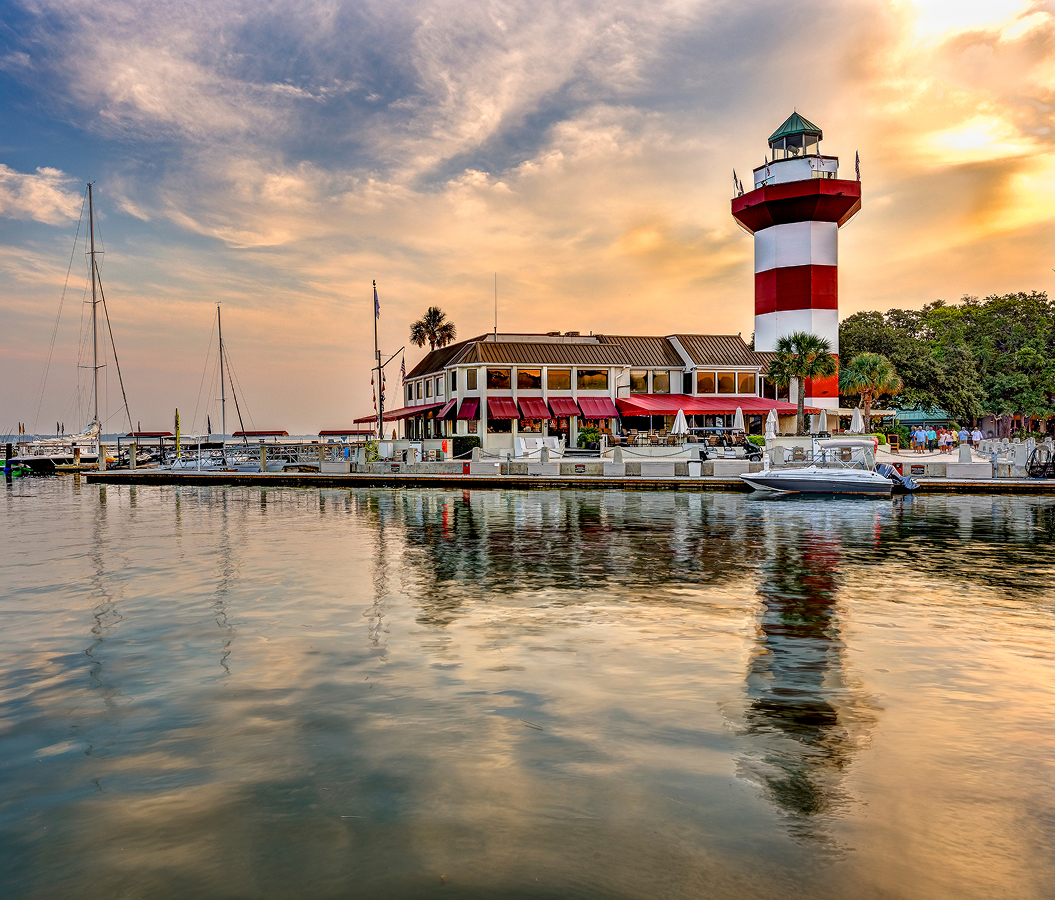
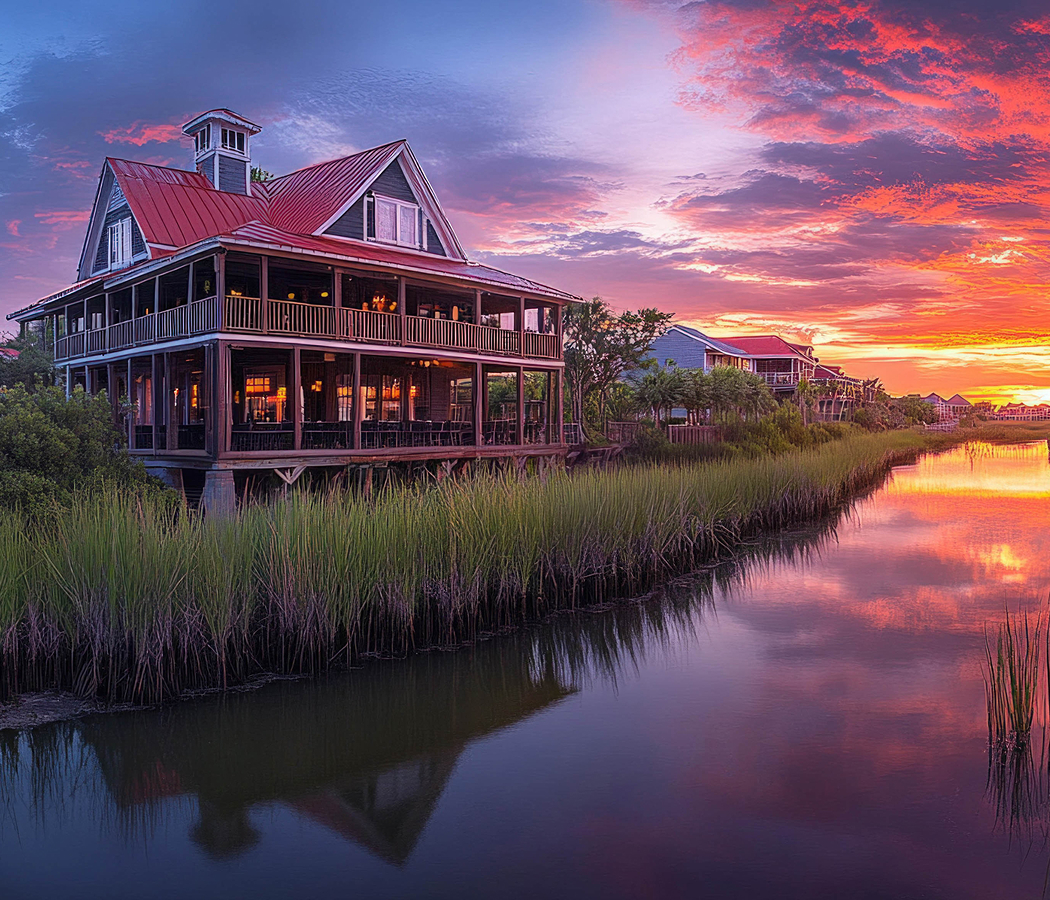
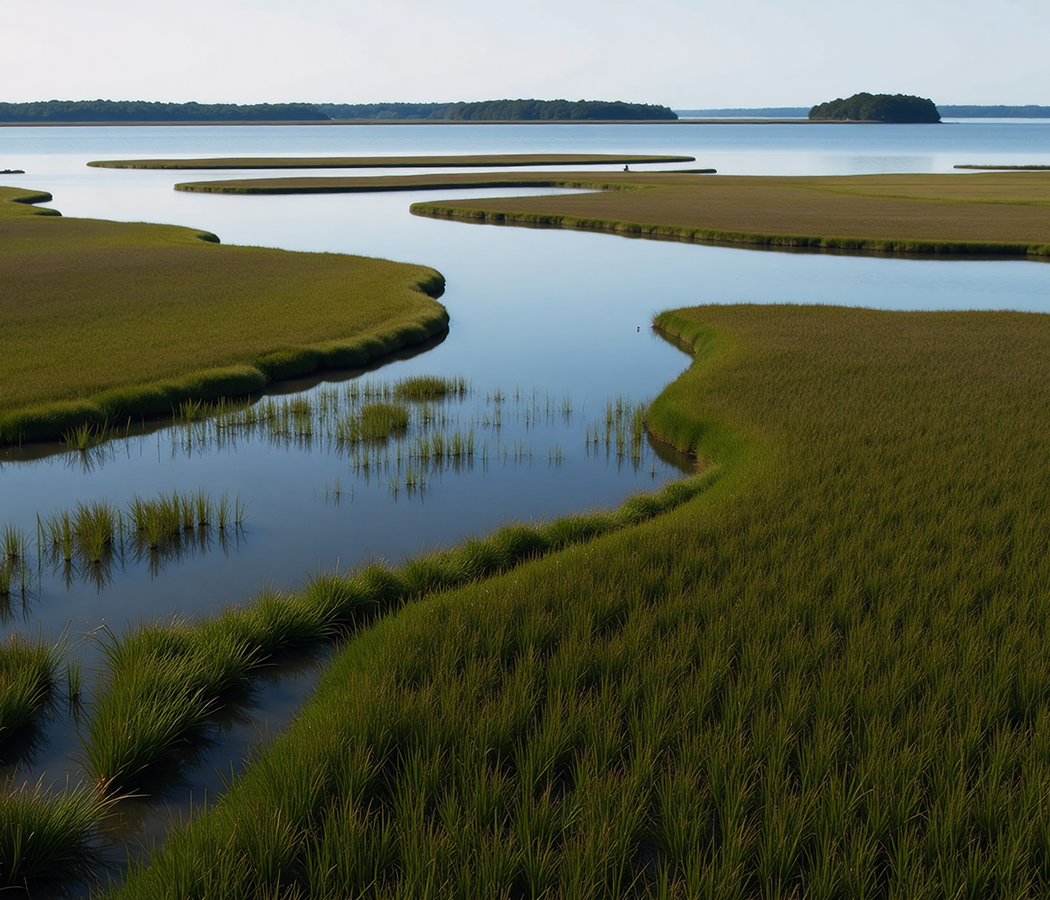
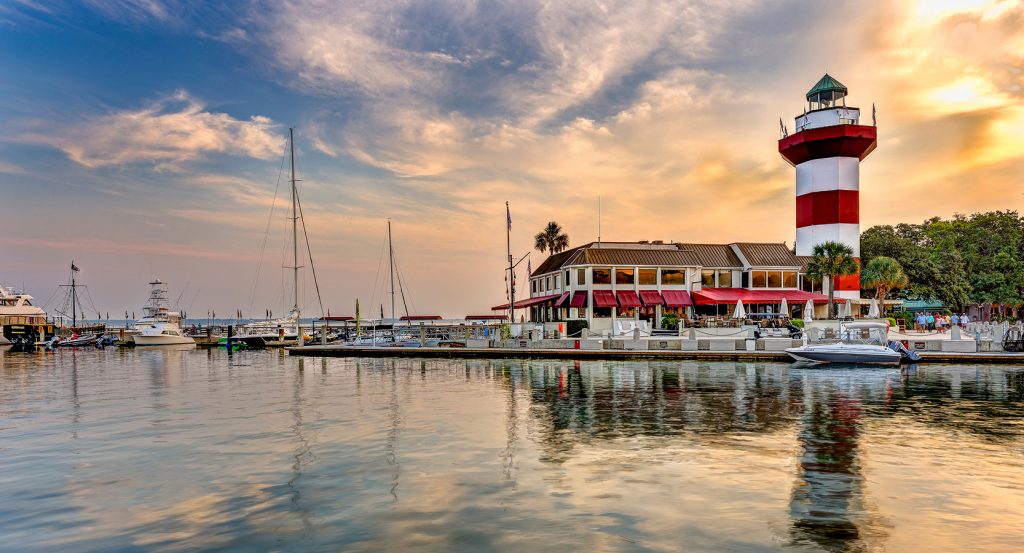
Set within Wexford near William Hilton Parkway and Arrow Road and just inland from Broad Creek, the course occupies the island's South End between Shipyard, Long Cove and the marshlands surrounding Broad Creek, with Calibogue Sound opening southwest beyond Sea Pines and the Atlantic shoreline extending east across Hilton Head. Fairways thread among mature oaks, pines, lagoons and residential parcels, allowing wooded corridors to alternate with broader views toward marsh and water. The community's 37.5-acre tide-free harbour brings another body of water through the property, crossing beneath seven stone bridges and placing portions of the golf routing beside an engineered boating landscape. Palmer's redesign widened playing corridors and repositioned bunkers so angles, visibility and alternate routes shape decisions from tee through green. The result is a private course whose wooded Lowcountry terrain, internal harbour, marsh edges and strategic architecture bind golf closely to Wexford's unusual waterfront plan.
What defines Wexford Golf Club.
Wexford Golf Club is best known for the reinvention of Willard Byrd's 1983 course as an Arnold Palmer Signature Course through a comprehensive 2011 reconstruction. Byrd created the original 18-hole layout as Wexford was taking shape under Marathon Oil Company, which began development in 1983 around a community plan combining golf, residential parcels and an inland harbour. His routing used narrow corridors among oaks and pines, with waterways and residential development defining much of the original strategic character. Arnold Palmer Design Company began its reconstruction in April 2011 under lead designer Brandon Johnson, closing the course through the summer before Palmer returned to Hilton Head for its October reopening. The project altered tee complexes, removed hundreds of trees, widened fairways, reduced total bunker area and repositioned remaining hazards where they carried greater strategic consequence. Drainage improvements and reduced maintenance requirements accompanied the architectural changes, joining playing strategy with long-term course performance. Johnson and the Palmer team drew selectively from classical golf architecture, developing interpretations of Road, Redan, Alps and Biarritz concepts without turning the course into a collection of replicas. Multiple routes emerged from the wider corridors, giving position off the tee greater influence over the approach and leaving recovery possibilities beyond the primary line. The reconstruction arrived after Wexford had invested $3.9 million in renovation of its Coastal-style clubhouse, making the golf redesign part of a broader renewal of the club during its third decade.
Classical strategic principles become clearest around the redesigned hazards and green approaches, where width gives the golfer room to select a line before subsequent hazards reveal the consequences of that choice. The Palmer team removed bunker acreage yet made the remaining sand more visible and strategically consequential, replacing confinement with angles that reward deliberate positioning. Tree removal reopened corridors that decades of growth had narrowed, restoring sunlight to turf and exposing lines that Byrd's mature landscape had gradually obscured. Redan influence brings diagonal green orientation and approach angles into play, Road principles use hazard placement to complicate the preferred route, and Alps concepts employ partial concealment to make position influence what becomes visible on the next shot. Biarritz inspiration adds another classical reference through elongated putting geometry and the strategic use of pronounced green contours. Those ideas operate inside Lowcountry conditions of trees, water and coastal vegetation, giving historical architectural concepts a site-specific setting far removed from their British precedents. The redesign consequently changed Wexford less through raw difficulty than through the number of decisions embedded between tee and hole, turning width, angle, visibility and recovery into the course's principal architectural tools.
How Wexford Golf Club fits.
Wexford Golf Club works as the anchor for a Hilton Head outing connecting prehistoric coastal settlement, the plantation economy that reshaped the island during the eighteenth and nineteenth centuries and the surviving religious site where colonial families, Revolutionary War Patriots and Sea Island cotton planters left an unusually concentrated physical record.
Begin at Sea Pines Shell Ring, a circular shell deposit created 4,800 years ago and preserved inside Sea Pines Forest Preserve. The mound spans 200 feet, placing its construction in the same broad period as the Egyptian pyramids and making it one of Hilton Head's oldest surviving archaeological sites. Indigenous communities accumulated oyster shell and other material into the circular form long before European settlement, leaving a physical trace of human occupation that reaches thousands of years deeper than the island's plantation era. Archaeological work by Binghamton University between 2015 and 2019 expanded study of the site, which remains close to its ancient physical condition inside the preserve. Continue to Stoney-Baynard Ruins, where Irish-born privateer Captain Jack Stoney acquired the 1,000-acre Braddock Point Plantation in 1776 and began construction of a tabby mansion with enslaved laborers in 1793. The residence stood on a 40-by-46-foot foundation and later passed to William E. Baynard, whose family held the plantation until Union occupation transformed Hilton Head in 1861. Federal forces used the property during the Civil War before fire reduced the mansion to tabby foundations, a surviving corner wall and remnants of associated outbuildings. Conclude at Zion Chapel of Ease Cemetery, where an Episcopal chapel built under Isaac Fripp and Captain John Stoney was completed in 1788 near a militia muster house and Masonic lodge. The burial ground preserves graves or memorials for Revolutionary War Patriots Isaac Baldwin, James Davant, John Stoney and Charles Davant, the last mortally wounded in a Tory militia ambush. William Baynard constructed his massive mausoleum there in 1846, creating the oldest extant building on Hilton Head; the chapel itself disappeared after abandonment in 1868, leaving cemetery and mausoleum as the surviving physical core of the site. The progression moves from a 4,800-year-old shell ring created by Hilton Head's Indigenous inhabitants through the tabby remains of a plantation built through enslaved labor and culminates at Zion, where colonial worship, the Revolutionary War and the Sea Island plantation economy survive together in the island's oldest standing structure and surrounding burial ground.
Where your story begins.
Foresyte Travel reveals places that feel extraordinary long before you arrive.
Experience premium editorial crafted for luxury travelers.