Why you should experience Black Tusk Trail in Whistler, British Columbia.
The Black Tusk Trail is Whistler's rite of passage written in volcanic stone and alpine air.
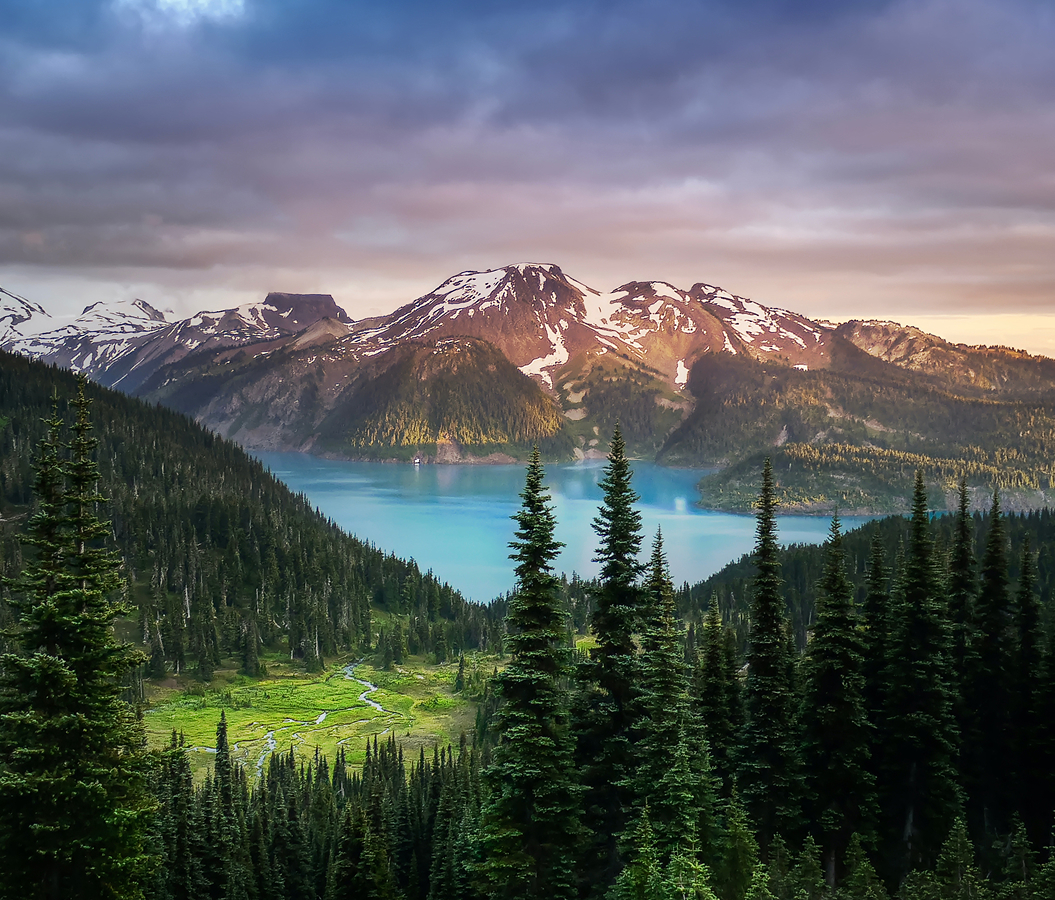
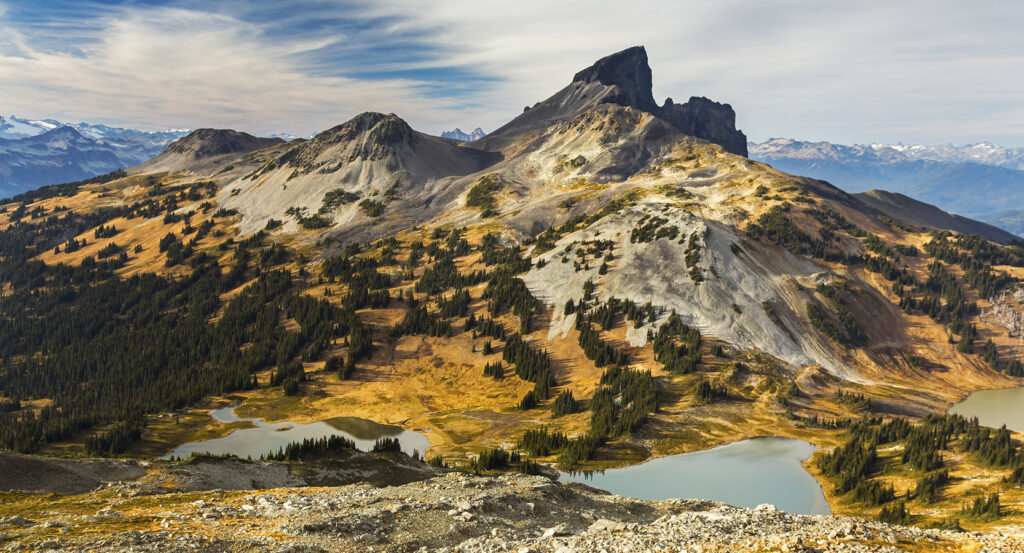
Rising from the heart of Garibaldi Provincial Park near Whistler, British Columbia, the trail winds upward through forests, meadows, and ridgelines toward one of the most iconic peaks in Canada's Coast Mountains, the jagged, obsidian spire of the Black Tusk itself. Formed millions of years ago by volcanic eruptions that carved the landscape into raw sculpture, the Tusk now stands as both a beacon and a challenge, visible for miles in every direction. The journey begins in dense hemlock and cedar forest, where sunlight flickers through moss-draped branches and the air smells of pine and wet earth. As you climb higher, the trees thin and the world opens, sweeping views of Garibaldi Lake's surreal turquoise waters spill into sight, ringed by snow-streaked ridges that look almost otherworldly. By the time you reach the alpine meadows, filled with wildflowers and wind, it feels as if you've stepped into another planet, one defined not by cities or sound, but by scale. The Tusk looms ahead, dark and impossible, a shard of earth that pierces the sky. Standing before it, you understand why the local Squamish Nation calls it t'ák't'ák mu'yin tl'a in7in'áx̌en, the “Landing Place of the Thunderbird.” To hike the Black Tusk Trail is to walk in the shadow of myth, where the land itself feels alive with story.
What you should know about Black Tusk Trail.
The Black Tusk isn't just a geological marvel, it's a cultural and ecological landmark layered with meaning that most hikers never see beyond the summit.
Its dark color comes from hardened volcanic lava that cooled into basalt more than a million years ago, leaving behind the eerie toothlike spire that gives the mountain its name. But beyond its geology, the Tusk has always held deep spiritual resonance. For the Squamish people, it's a sacred site, believed to be where the Thunderbird struck lightning into the earth, shaping both the landscape and the weather that sweeps across the valleys. The surrounding Garibaldi Park itself, established in 1927, was one of British Columbia's earliest protected areas, created to preserve its wild alpine beauty and diverse habitats. Along the trail, you'll pass ecosystems that shift dramatically with elevation: old-growth forests give way to subalpine heather meadows, which fade into rocky tundra where only the hardiest mosses survive. Black bears, marmots, and ptarmigans are frequent companions, while overhead, golden eagles circle on thermals rising from the ridges. In summer, snowmelt feeds crystalline streams that glint across the path, while in late fall, frost silvers every blade of grass, turning the world still and quiet. The final approach to the Tusk is not for the faint-hearted, a steep scree scramble that demands both nerve and respect for the mountain's power. Those who climb to the shoulder beneath the spire find themselves standing at nearly 2,300 meters, with the entire Pacific Range unfurled before them like a living map. Yet even for those who stop short of the summit, the journey itself is reward enough, each step upward a meditation on endurance and humility. What few realize is that the trail's design deliberately mirrors this transformation: from rooted forest to raw stone, it leads hikers through the Earth's biography, layer by layer.
How to fold the Black Tusk Trail into your trip.
To experience the Black Tusk Trail fully, you have to give it time, not just in hours, but in mindset.
Start early from the Rubble Creek trailhead, ideally just after dawn, when the air still carries the night's chill and mist lingers low in the trees. The round-trip hike stretches 29 kilometers (18 miles) with a 1,740-meter elevation gain, demanding preparation, pacing, and plenty of water. Take your time through the lower switchbacks, the forest canopy is thick and lush, the sound of birdsong and rushing creeks guiding your rhythm. Around the 6-kilometer mark, the trail splits toward Taylor Meadows, a perfect place to rest, snack, and take in views of Garibaldi Lake shimmering below. If you have the energy, push onward toward the alpine saddle beneath the Tusk itself. The climb steepens, the air thins, and the trail grows quieter until the only sounds are wind and your own breath. Bring layers, even in summer, temperatures can drop quickly, and storms can roll in. For those camping overnight, both Taylor Meadows and Garibaldi Lake campsites offer unforgettable backdrops, star-filled skies mirrored in glacier-fed waters. On descent, pause often; the view changes with every angle, the lake glowing electric blue beneath the shifting sun. If you're lucky, you'll catch the black silhouette of the Tusk reflected in its surface, a perfect symmetry of fire and ice. The Black Tusk Trail isn't a simple hike, it's a pilgrimage through time, myth, and endurance. Every meter climbed reveals a new layer of the Earth's story, told not in words but in wind, stone, and silence. You don't conquer the Tusk, you earn its acknowledgment.
Where your story begins.
Foresyte Travel reveals places that feel extraordinary long before you arrive.
Experience premium editorial crafted for luxury travelers.