Why Fairmont Pacific Rim matters.
Fairmont Pacific Rim is a contemporary Vancouver hotel where Coal Harbour's Pacific setting meets the city's international business culture, Canadian design and the cultural energy of a modern waterfront skyline.
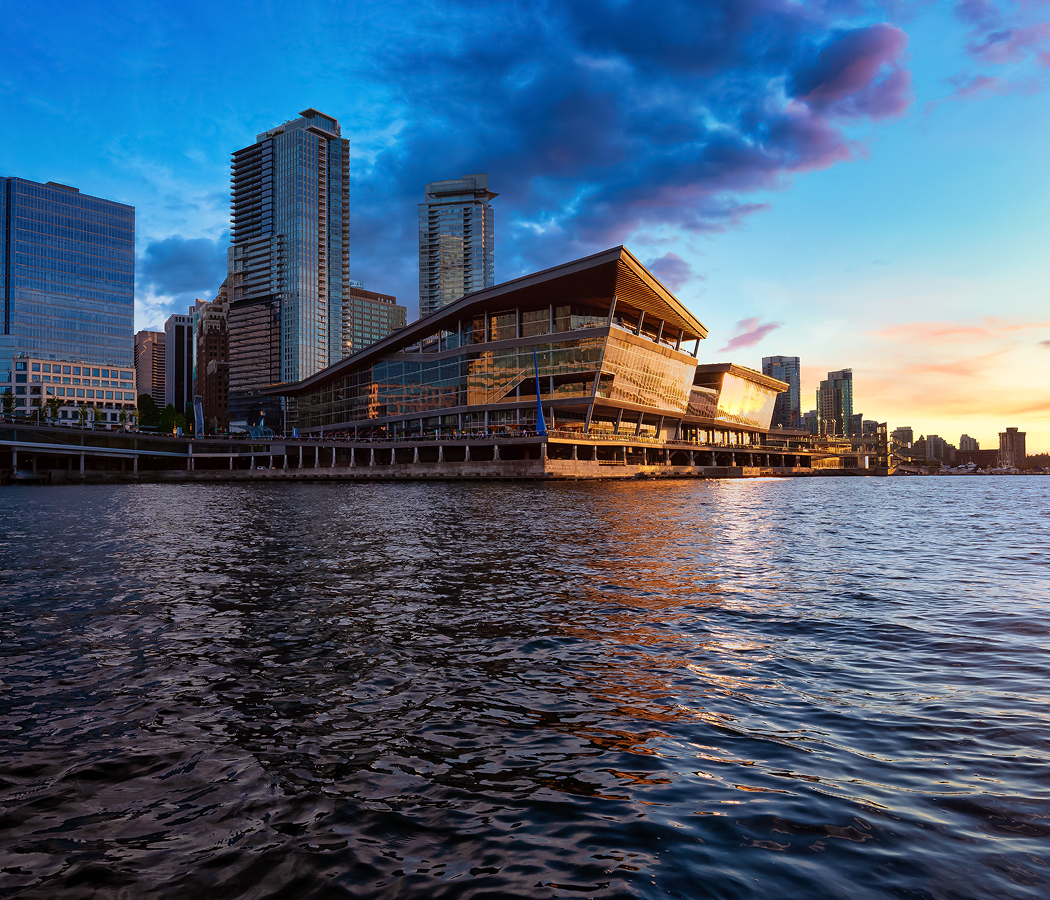
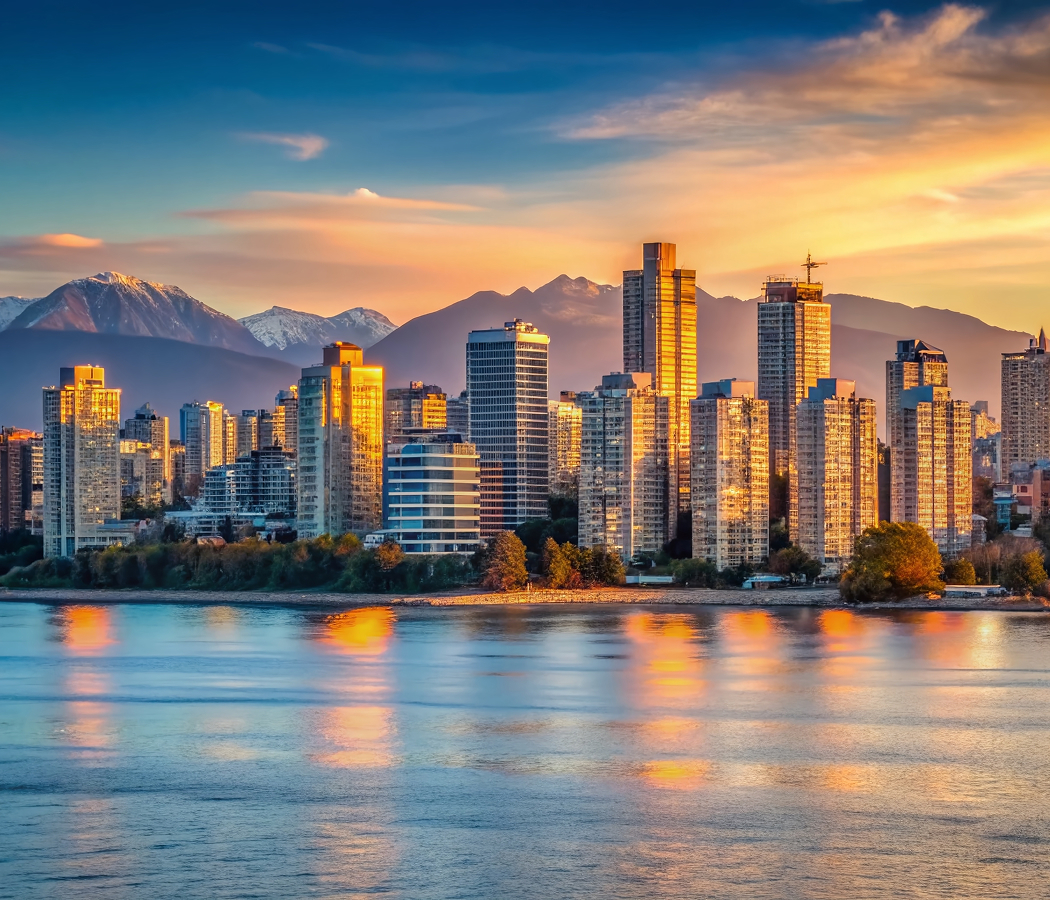
Standing at 1038 Canada Place at the foot of Burrard Street, Fairmont Pacific Rim occupies the downtown waterfront between West Cordova Street, the Vancouver Convention Centre, Waterfront Station and the streets leading toward Coal Harbour. The tower faces Burrard Inlet and the North Shore Mountains, while the city's financial district and shopping streets extend behind it. The Vancouver Art Gallery lies south along Burrard Street, Gastown begins east beyond the waterfront transit corridor and the Stanley Park Seawall continues northwest beside the harbour. The result is a hotel whose character depends on the close relationship between contemporary architecture, Pacific geography, public culture and Vancouver's central business district.
What defines Fairmont Pacific Rim.
Fairmont Pacific Rim emerged from Vancouver developer Westbank's ambition to unite contemporary architecture, international hospitality, private residential ownership and public art within a single waterfront development. Westbank and the Peterson Group conceived the project during the transformation of Coal Harbour into one of Canada's most prestigious residential and commercial districts, extending the city's architectural evolution toward the Pacific waterfront. Construction began in the summer of 2006 on one of the remaining major development parcels in Coal Harbour, establishing an ambitious mixed-use complex whose completion would coincide with Vancouver's preparations for the 2010 Winter Olympic Games. Architect James K. M. Cheng, whose career helped define Vancouver's internationally recognized residential tower architecture, developed the building's composition through carefully differentiated glass façades, projecting floor slabs and sculptural architectural elements. Cheng's professional formation included graduate study at Harvard and an apprenticeship under Arthur Erickson, connecting the project with two influential traditions of North American modernism. The development incorporated 820,000 square feet of hotel, residential and associated commercial space, integrating an international luxury property with 175 privately owned residences. Landscape architecture practice PFS Studio contributed to the project's outdoor environments, establishing a complementary relationship between the building's contemporary structure and its landscaped terraces. The architectural program also responded to the neighboring Marine Building, whose celebrated Art Deco composition influenced Cheng's treatment of the new tower's visual relationship with Vancouver's historic skyline. British conceptual artist Liam Gillick received a commission for an expansive installation extending across the building's lower façades, incorporating a repeated poetic statement in stainless-steel lettering between the fifth and twenty-second floors. The installation transformed the exterior into a work of contemporary public art, establishing a visible distinction between the hotel and residential portions of the development. Cheng contributed another architectural artwork through Forest Screen, a 9,500-square-foot perforated stainless-steel installation developed with Adeline Lai from a photograph of a North Vancouver rainforest. Its intricate surface evokes the changing relationship between trees and natural light, bringing the region's forest landscape into the building's urban architectural language. Fairmont Pacific Rim opened on February 4, 2010, shortly before the Vancouver Winter Olympics, introducing a major new luxury hospitality institution during a defining period in the city's international development. The property's artistic character subsequently expanded through commissions and acquisitions involving Canadian photographers and contemporary artists, including Fred Herzog, Ian Wallace and Omer Arbel. A significant institutional development followed in 2021 with the opening of the Pacific Gallery, inaugurated through Douglas Coupland's Green Light Red Light exhibition and developed in partnership with Vancouver's Equinox Gallery. The gallery introduced a rotating exhibition program that connected the hotel with the city's contemporary art community and extended Westbank's original vision of integrating cultural production into commercial architecture. Fairmont Pacific Rim occupies a distinctive position in Vancouver's architectural history through the convergence of Olympic-era investment, contemporary Canadian art, private residential development and the international ambitions of the Pacific waterfront.
Executive Chef Amanda Healey develops Botanist's culinary character through the agricultural diversity of British Columbia, the maritime character of the Pacific coast and a contemporary approach to regional Canadian gastronomy. Her kitchen draws upon sustainably sourced seafood, organically cultivated produce and the changing availability of ingredients from the province's farms, forests and coastal waters, establishing a culinary philosophy closely connected to the natural environments surrounding Vancouver. Pacific Northwest cooking derives much of its character from the relationship between delicate marine ingredients, seasonal vegetables, aromatic herbs and the contrasting richness of regional agricultural products. Botanist interprets these relationships through preparations that emphasize freshness, carefully controlled cooking and the interaction of natural sweetness, savory depth and bright acidity. Seafood occupies a central place in this culinary vocabulary, reflecting the influence of cold Pacific waters on British Columbia's food traditions and the importance of responsible sourcing to contemporary coastal restaurants. Vegetables and botanical ingredients contribute an equally significant dimension, introducing seasonal changes in flavor, texture and fragrance that shape the kitchen's interpretation of regional abundance. The restaurant's relationship with local growers extends this philosophy into the agricultural communities supplying Vancouver's dining establishments, connecting refined hotel gastronomy with the province's productive landscapes. Botanist's cocktail program develops a parallel approach through its dedicated Cocktail Lab, where experimental techniques, botanical infusions and carefully composed aromatic elements extend the kitchen's attention to natural ingredients into contemporary mixology. The restaurant's wine program emphasizes smaller producers and sustainable viticulture, establishing another connection between agricultural practice, regional character and the physical character of the dining experience. Its garden setting and adjoining TASCHEN Library contribute to a distinctive social environment in which contemporary design, visual culture and gastronomy operate as complementary expressions of the hotel's creative identity. The Lobby Lounge & RawBar introduces another interpretation of Pacific Rim hospitality through Japanese culinary influences, particularly the precision of sushi preparation and the relationship between seafood quality, knife work and balanced seasoning. Its cocktail culture develops alongside a substantial live-music program, establishing a social setting shaped by performances, contemporary art and the informal traditions of Vancouver's metropolitan hospitality. The lounge's custom Fazioli piano, developed through collaborations involving Vancouver designers and origami artist Joseph Wu, contributes a distinctive connection between musical performance and the property's wider creative program. Rotating exhibitions and fashion installations extend that relationship into the public interiors, bringing works associated with internationally recognized designers and Canadian artists into the hotel's daily social life. Fairmont Pacific Rim's hospitality character emerges through a sustained relationship between Pacific Northwest culinary traditions, experimental mixology, contemporary artistic expression and Vancouver's position as an international cultural gateway.
How Fairmont Pacific Rim fits.
Fairmont Pacific Rim works as a base for understanding Vancouver through its contemporary art institutions, historic port district and forested waterfront peninsula.
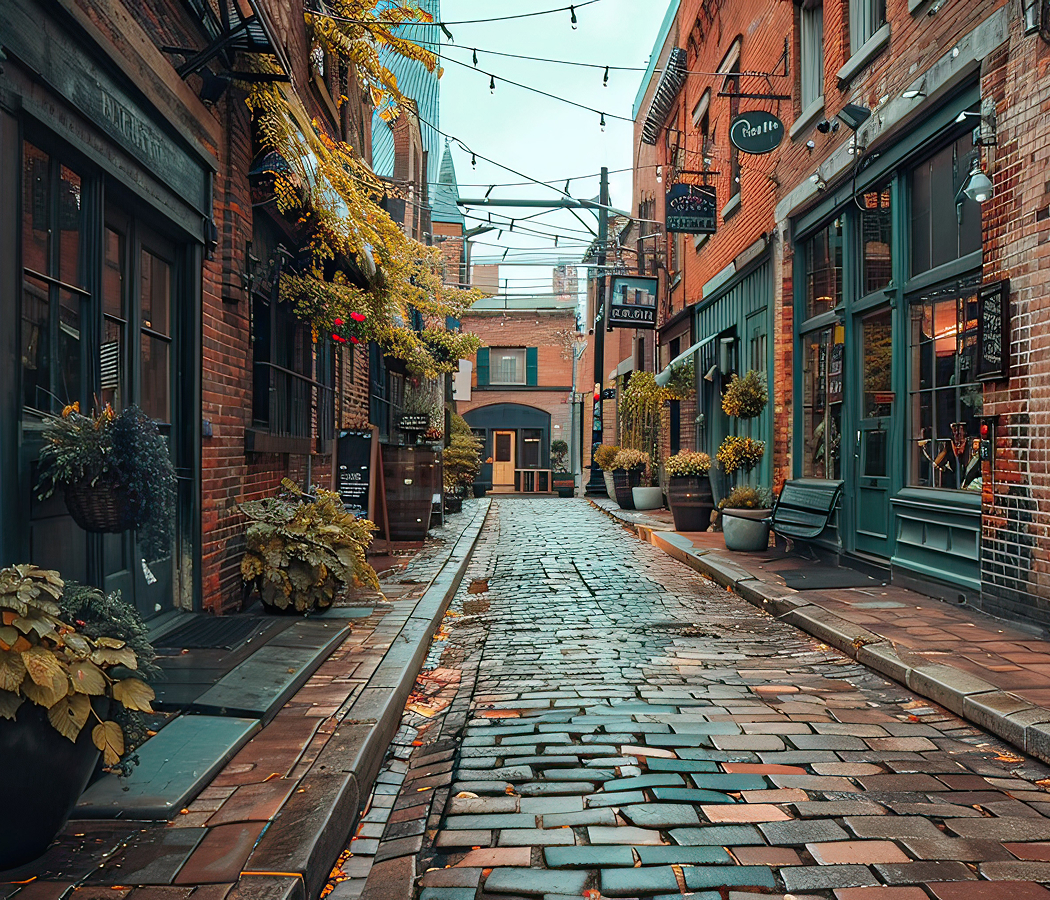
Begin at the Vancouver Art Gallery, the major public art institution on Hornby Street south of the hotel. The gallery occupies the former courthouse designed by Francis Rattenbury, whose expansive architecture reflects the civic ambitions of British Columbia during the early twentieth century. Its collection includes Canadian, Indigenous and international works, with particular strength in the art of Emily Carr and the Group of Seven. The building's former courtroom spaces and surrounding plaza connect art to the legal and governmental history of the city centre. Continue to Gastown, Vancouver's oldest surviving commercial district and the area associated with the city's nineteenth-century port development. Water Street preserves a concentration of brick warehouses, narrow sidewalks, loading areas and historic façades built for shipping, timber, railways and wholesale trade. The district grew around the settlement associated with John “Gassy Jack” Deighton, whose saloon helped establish the commercial community that preceded modern Vancouver. Gastown's restaurants, galleries, design shops and independent businesses now occupy buildings whose original forms remain visible through the streetscape. Conclude at Stanley Park, the forested peninsula extending from downtown between Burrard Inlet and English Bay. The park contains more than 400 hectares of forest, trails, gardens, beaches and cultural landmarks, creating a large public landscape immediately beyond the city's towers. Its seawall follows the harbour and ocean edge, offering views toward the North Shore Mountains, Vancouver Island and the working water routes that define the region. The Vancouver Aquarium, Brockton Point, beaches, gardens and Indigenous cultural markers give the park a layered relationship with ecology, recreation and Vancouver's wider history. The progression moves from the Vancouver Art Gallery's civic art setting through Gastown's port-era commercial fabric to Stanley Park's forested Pacific landscape, placing Fairmont Pacific Rim within the city's cultural, historical and environmental geography.
Where your story begins.
Foresyte Travel reveals places that feel extraordinary long before you arrive.
Enjoy editorial crafted for luxury travelers.
Foresyte may earn a commission when you book.